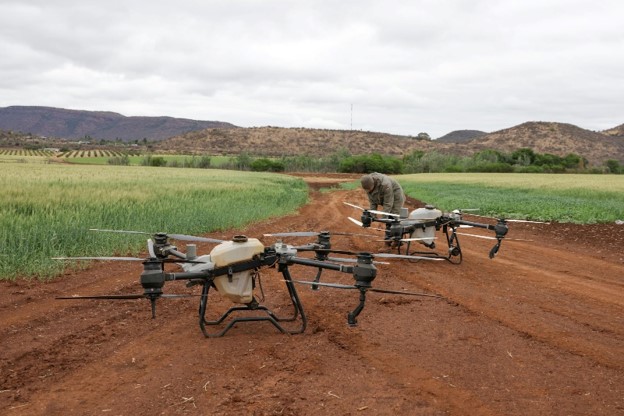
Precision agriculture relies heavily on raw data collection from the sky. Flying blindly over hundreds of acres simply wastes battery voltage and valuable time. The success of precision agriculture aerial operations depends heavily on selecting the correct drone payload. Capturing usable telemetry requires highly specific hardware mounted securely.
Matching the correct payload to the specific crop problem dictates the success of any agricultural UAV mission. Selecting improper hardware leads to noisy data, compromised flight times due to unnecessary weight, and failed yield predictions. Understanding complex sensor types actively prevents these costly operational errors.
What Makes Multispectral Imaging Essential for Crop Health?
Multispectral sensors capture near-infrared light reflecting off leaves to calculate exact vegetation indices. Identifying plant stress early saves entire harvests. When outfitting agricultural drones, partnering with UAV specialists like Talos Drones ensures your multispectral payload includes essential radiometric calibration. This vital calibration prevents capturing useless agricultural data.
Sunlight intensity changes drastically throughout a single battery cycle. This requires an incident light sensor mounted on the UAV. Without active correction constantly adjusting for shadows, the resulting agricultural maps provide highly inaccurate reflectance values. These false readings severely mislead agronomists and ruin spray schedules.
Where Do Thermal Cameras Fit Into Irrigation Management?
Identifying water leaks and uneven soil moisture requires specialized thermography. Standard RGB visual spectrum cameras cannot reliably detect the microclimate temperature variations necessary for irrigation management. Here is exactly how thermal payloads identify subsurface irrigation issues effectively:
Radiometric Thermal Sensors
A truly radiometric thermal camera captures absolute temperature data in every single pixel. This allows agronomists to measure exact heat signatures rather than just relative hot and cold spots. Absolute measurements remain strictly necessary for accurately diagnosing failing irrigation lines hidden deep beneath the soil.
Emissivity and Calibration
Different crops and soil types radiate heat uniquely based on their exact physical surface properties. Failing to adjust the sensor emissivity settings before takeoff guarantees corrupted data. Operating these payloads early in the morning prevents solar reflection from masking the actual moisture evaporation temperatures completely.
Why Are LiDAR Sensors Superior to Photogrammetry in Dense Orchards?
A common misconception asserts that standard RGB photogrammetry handles all 3D mapping needs perfectly. Standard visual cameras cannot penetrate dense orchard canopies to generate accurate bare-earth topographical models. Laser scanners send thousands of pulses downward, slipping between foliage to measure the actual ground topography with extreme accuracy.
Generating accurate digital elevation models prevents severe water pooling. Relying solely on standard photos over thick vegetation creates false elevation spikes that ruin drainage plans. Upgrading to an active laser scanner guarantees precision terrain modeling, ensuring automated tractors always run on highly reliable topographic data.
How Do Aviation Regulations Impact Your Sensor Payload Capacity?
Payload weight directly dictates your regulatory compliance with commercial drone aviation laws. The Federal Aviation Administration strictly mandates that commercial UAVs operating under Part 107 must weigh less than fifty-five pounds at takeoff. Bolting massive multispectral rigs onto large airframes easily pushes systems dangerously close to this legal limit.
Exceeding weight boundaries requires waivers, heavily complicating daily operations. Organizations like the European Union Aviation Safety Agency enforce similar payload restrictions globally. Selecting lighter sensors preserves your flight time and keeps the aircraft safely within visual line of sight regulations without violating strict airspace laws.
When Should You Use Hyperspectral Payloads Instead of Multispectral?
Standard multispectral setups capture a few broad light bands, which handle basic crop stress monitoring easily. Hyperspectral units capture hundreds of extremely narrow bands simultaneously. This excessive detail proves necessary only when identifying highly specific chemical deficiencies or precise fungal diseases across large vegetation expanses.
Processing these massive hyperspectral datasets requires high-performance computing hardware and specialized agricultural photogrammetry software. Operating these advanced sensors demands a deeper understanding of light wavelengths. For general daily farming operations, stick to multispectral systems to avoid capturing uselessly complex and unmanageable telemetry files.
What Are Common Questions About Agricultural Drone Sensors?
What causes firmware glitches during a sensor update?
Corrupted data packets or sudden voltage drops during the flashing process often cause these glitches. Always ensure the UAV battery remains above eighty percent capacity and avoid magnetic interference near the computer when updating complex multispectral payload firmware.
Why do vegetation index maps sometimes show incorrect colors?
Improper white balancing and failing to use a calibrated reflectance panel prior to takeoff guarantee false readings. You must place a calibration target on the ground and capture an image of it before every single flight to establish an accurate baseline.
How does cold weather affect your agricultural payload performance?
Freezing temperatures drastically reduce both the drone battery voltage and the internal sensor operating efficiency. Store your equipment in a warm vehicle until right before takeoff to prevent sudden voltage sag and unexpected gimbal shutdowns during routine flight operations.
Cover image- Pexels