The Floral Wander Loop, designed by DL Atelier, is situated along the scenic banks of the Tiegang River in Longtan Town, Huizhou City, Guangdong Province, China. This pavilion is part of the larger Nankunshan-Luofushan Rim Pioneer Zone Architectural Art Project, which comprises sixteen carefully designed pavilions inspired by the Northern Song literary figure Su Shi.
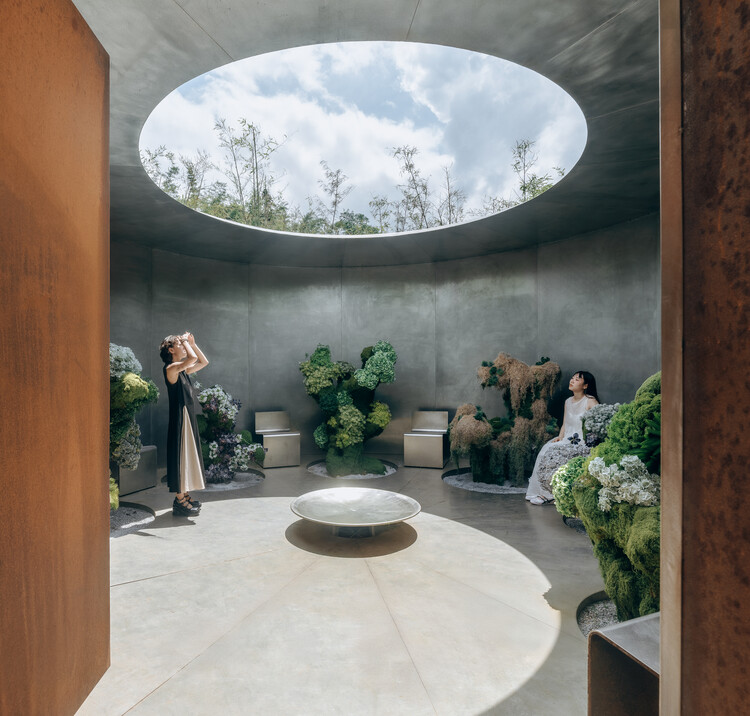
Over a millennium ago, Su Shi was exiled to Huizhou, where he drew creative inspiration from the Lingnan landscape along the Tiegang River. His observations and reflections during this period informed the literary work Sixteen Joys of Life in Huizhou, which celebrates the natural beauty, local customs, and cultural richness of the region. The series of pavilions, including the Floral Wander Loop, seeks to translate these historical and cultural narratives into contemporary architectural interventions that respond to both landscape and public use.
Completed in 2025, the Tiegang River Pavilion occupies approximately 800 m² and was developed under the leadership of lead architects Liu Yang and Zhang Mowei. The pavilion’s design explores the intersection of natural landscapes, cultural heritage, and public engagement, forming a circuit that connects Nankun Mountain and Luofu Mountain. The resulting sequence of pavilion experiences encourages visitors to move through a carefully orchestrated spatial journey that merges observation, reflection, and interaction.

Design Concept
The design of the Floral Wander Loop is guided by several interrelated principles that blend cultural storytelling with environmental sensitivity:
- Cultural Reference: The pavilion interprets Su Shi’s writings, translating the Sixteen Joys into spatial sequences that evoke moments of reflection, leisure, and engagement with nature.
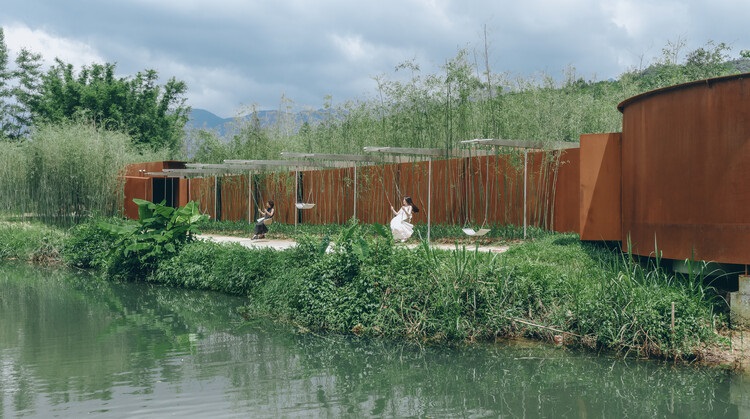
- Landscape Integration: The pavilion aligns with the natural flow of the Tiegang River and frames views of surrounding mountains, gardens, and open landscapes, creating a seamless dialogue between architecture and environment.
- Sequential Pavilions: The Floral Wander Loop functions as one of sixteen nodes in the larger network, creating a continuous experiential loop that guides visitors from pavilion to pavilion along the river corridor.
- Materiality: A combination of steel frameworks, concrete, and wood ensures structural durability while offering transparency, warmth, and a tactile quality that complements the surrounding landscape.
Spatial Organization
The pavilion’s internal and external circulation is designed to encourage sequential engagement with the site’s natural and cultural elements. Key features include:
- Open walkways connecting interior spaces with outdoor gardens, blurring the boundary between built form and natural landscape.
- Raised platforms and staircases that provide elevated vantage points, enabling visitors to frame views of the river and surrounding mountains.
- Interior garden spaces that allow for direct interaction with flora, offering sensory experiences of texture, fragrance, and shade.
- Flexible gathering areas designed to accommodate small events, informal meetings, or passive public engagement.

Architectural Elements
- Steel Framework: Forms the primary structural system, supporting modular components and open façades.
- Wood Cladding and Detailing: Used extensively on interior and exterior surfaces to provide warmth, visual softness, and tactile contrast to concrete.
- Concrete Elements: Serve as structural foundations, seating platforms, and bases for elevated sections of the pavilion.
- Garden Integration: The combination of interior courtyards and exterior landscaping strengthens the pavilion’s connection to the Tiegang River and broader natural surroundings.
Visitor Experience
The pavilion offers a multi-layered visitor experience that merges cultural, spatial, and natural engagement:
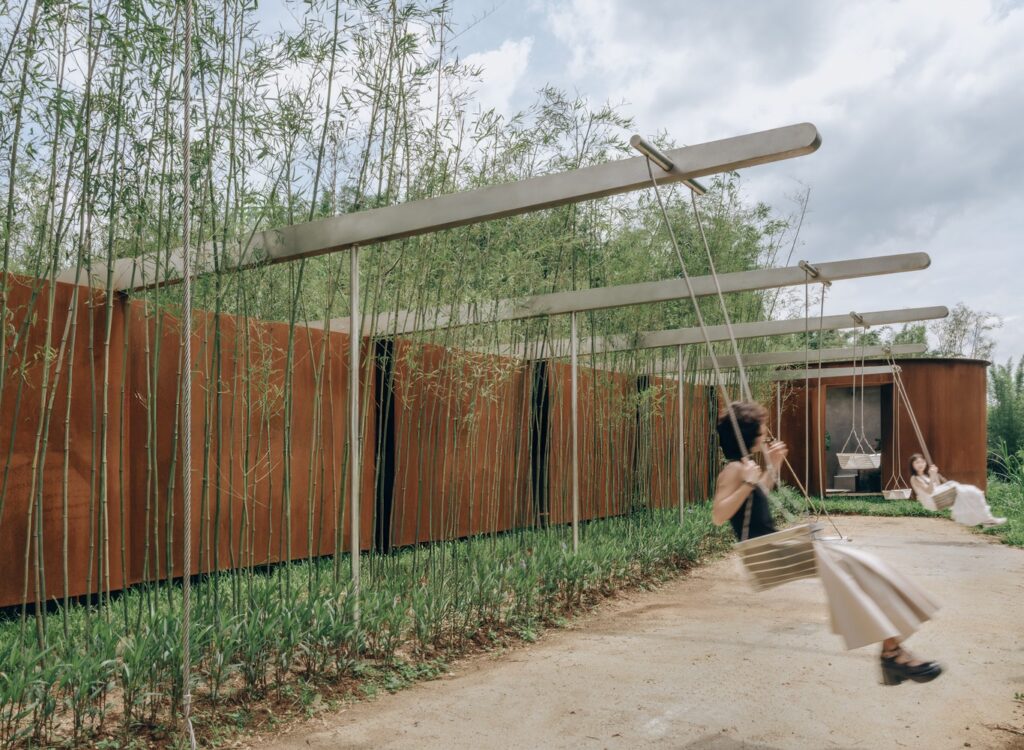
- Movement along interconnected pathways and elevated platforms creates a sense of discovery.
- Strategic pauses within garden courtyards and shaded areas encourage reflection and appreciation of the surroundings.
- Visual engagement with the Tiegang River and nearby mountains enhances the immersive quality of the experience.
- Cultural storytelling is embedded throughout the pavilion, with each spatial sequence referencing Su Shi’s writings and connecting visitors to historical narratives.
Context within the Larger Project
- The Floral Wander Loop is part of a sixteen-pavilion network linking Nankun and Luofu mountains.
- Collectively, these pavilions constitute the Nankunshan-Luofushan Rim Pioneer Zone Architectural Art Project, blending cultural heritage with contemporary design strategies.
- The pavilion network creates a continuous cultural and ecological trail that encourages exploration, learning, and public interaction while preserving the environmental and historical context of the region.
The Floral Wander Loop exemplifies DL Atelier’s commitment to blending cultural storytelling, landscape integration, and public engagement. By interpreting historical references through contemporary architectural forms, the pavilion fosters a meaningful interaction between architecture, nature, and culture. Its position within a sequence of sixteen pavilions ensures that it contributes to a broader narrative, linking Huizhou’s past and present while offering visitors an immersive and reflective spatial journey.
Images- Archdaily, Photographs:Yumeng Zhu