
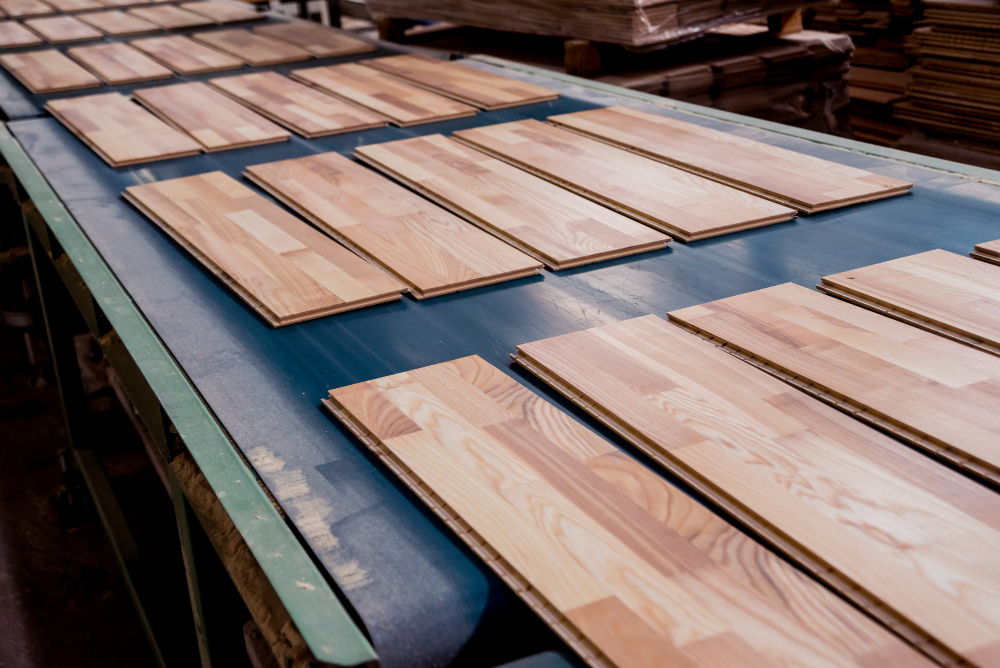
Engineered wood delivers consistent strength and versatility for projects where solid wood may not be ideal. With options like ply, MDF, HDF, and eco-friendly alternatives, it fits a variety of construction, furniture, and interior applications. Knowing the characteristics, advantages, and limits of each type helps professionals make informed decisions that align with performance, cost, and sustainability goals.
Engineered Wood Types and Applications
Plywood (Ply)
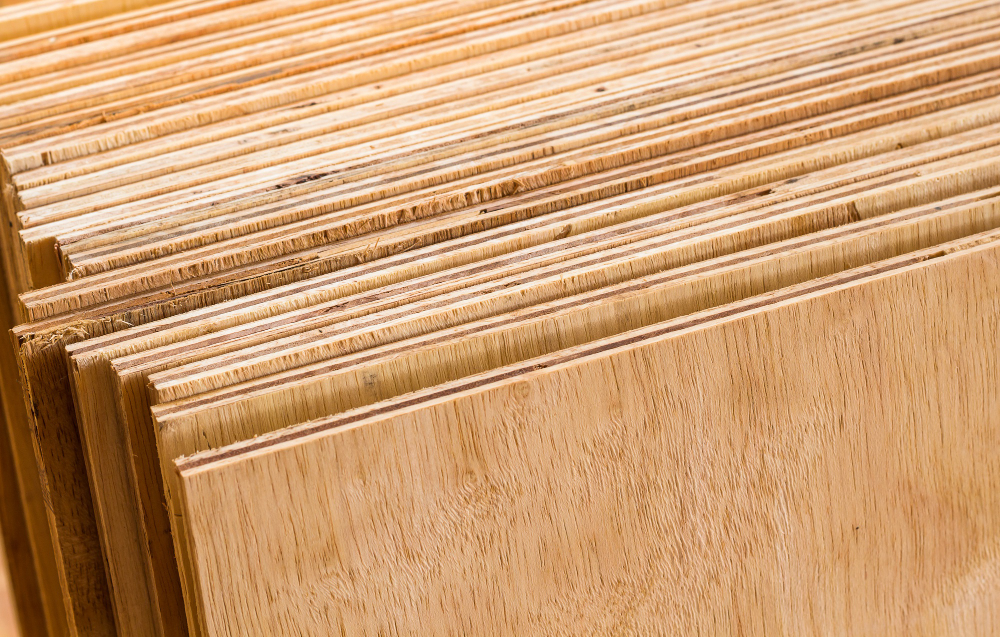
Plywood is made by gluing thin layers of wood veneer with alternating grain directions. It is used in construction, furniture, and interior work.
Applications and Advantages:
Plywood works for flooring, doors, wall panels, furniture, and cabinetry. It is suitable for residential, commercial, and government projects. It is strong but lightweight, making it easy to handle and install. It stays stable and resists cracking, shrinking, and warping. It can be cut, shaped, or joined for different designs. Some types resist fire.
Key Factors:
Plywood strength comes from the type of adhesive and the number of layers. Use marine-grade or treated boards if the plywood may get wet. For large or government projects, choose certified plywood that is durable, fire-safe, and structurally sound.
Medium-Density Fiberboard (MDF)
MDF is made by compressing wood fibers with resin under high pressure. It creates a smooth, uniform panel that works well for detailed finishing and interior applications.
Applications and Advantages:
MDF works for interior panels, doors, partitions, and furniture. It fits residential, commercial, and office projects. Its surface can be laminated or veneered. It is cheaper than solid wood, easy to cut and shape with minimal gaps, and some varieties resist fire and moisture.
Key Factors:
MDF is heavier than plywood of the same thickness and is not naturally moisture-resistant. In humid or critical areas, use moisture- or fire-resistant MDF and seal the edges to extend its life.

High-Density Fiberboard (HDF)
With higher density and strength than MDF, HDF performs well in heavy-use environments.
Applications and Advantages:
HDF is ideal for flooring, wall panels, doors, and furniture in busy areas. It can carry heavy weight, has a smooth surface for laminates, and maintains its strength over time. This makes it a practical choice for commercial and public use.
Key Factors:
HDF needs careful handling to prevent chipping. It is also slightly more expensive than MDF.

Eco-Friendly Engineered Wood Options
Eco-friendly engineered wood reduces environmental impact while keeping performance reliable. Types include bamboo plywood, recycled wood composites, and low-emission MDF or HDF.
Applications and Advantages:
Eco-friendly engineered wood suits interiors, furniture, partitions, and certified government projects. It lowers carbon footprint and energy use, meets green building standards like LEED and IGBC, and maintains safer indoor air quality with low VOC emissions. Its durability and efficiency can reduce lifecycle costs over time.
Key Factors:
Check certifications such as FSC, PEFC, or ISI to ensure both environmental and quality standards are met.
Selecting the Right Engineered Wood
Choose engineered wood based on the needs of the project.
Applications and Key Factors:
- Support and load factors: Use plywood or HDF for structural support and MDF for lighter interior work.
- Environmental conditions: Take moisture, temperature, and exposure into account when selecting materials.
- Sustainability goals: Select eco-friendly options to meet policy or certification standards.
- Cost versus durability: Check lifecycle costs, including maintenance and longevity, to balance budget and performance.
Conclusion
Engineered wood—ply, MDF, HDF, and eco-friendly types—fits construction, interiors, and infrastructure projects. Knowing the properties, applications, and limits of each material allows clear decisions that balance performance, safety, sustainability, and cost. The right choice meets technical requirements, supports environmental goals, and ensures long-term durability for professional and government projects.



