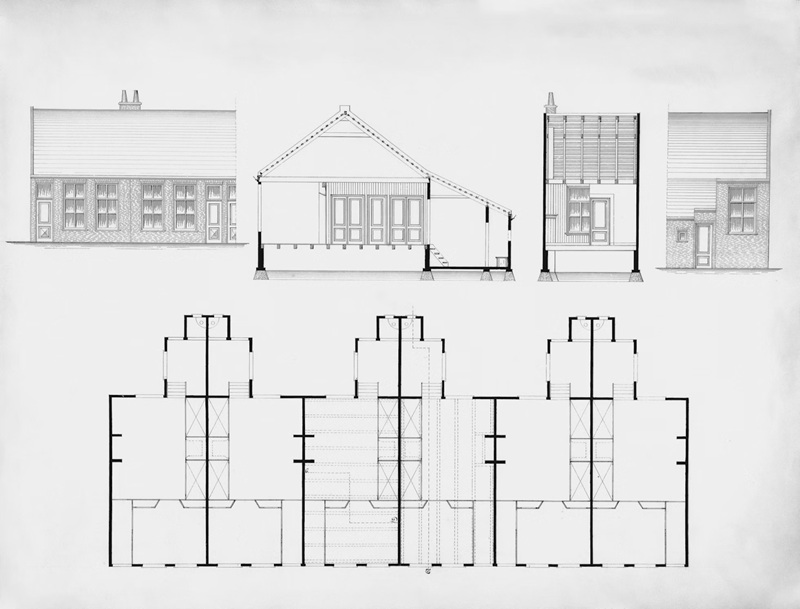
The push toward organic, site-specific, and sustainable architecture in the United States has accelerated in 2025, driven by client demand for healthier buildings, stricter carbon targets, updated certification frameworks, and rapid advances in design technology. Forward-looking architects and builders are merging Frank Lloyd Wright’s organic principles with contemporary sustainability tools—ranging from embodied-carbon calculators to digital floor plan creator platforms—so they can fine-tune form, orientation, materials, and building systems long before ground is broken. The result is a new generation of projects that respect landscape and climate, slash operational and embodied emissions, and still deliver the comfort, craft, and identity that owners crave.
Organic Architecture: Lessons From Wright to 2025
Frank Lloyd Wright famously argued that buildings should “belong” to their sites, borrowing patterns from local geology, vegetation, and light rather than imposing alien forms. PBS’s retrospective on Wright’s work underscores how his idea of “nature filtered through intelligence” still resonates with today’s climate-aware designers. Recent restorations—such as Barbara Bestor’s expansion of a 1953 Wright-protégé house in Pomona Valley—show that organic modernism can be updated for contemporary needs without losing its ecological spirit.
Key takeaways for current practice:
- Celebrate topography. Step foundations with the land, embed living roofs, or sculpt berms that merge structure and terrain, reducing grading and storm-water impacts.
- Borrow local palettes. Regionally quarried stone, rammed-earth walls, and unfinished cedar age in harmony with surrounding flora, minimizing long-term maintenance.
- Frame biophilic moments. Window seats that hug tree canopies or clerestories that trace the path of the sun improve occupant wellbeing and productivity.
Designing for the Site: Contextual Responsiveness
True sustainability begins with placing the right building in the right way. Architects are leveraging climate data, shading analyses, and GIS overlays to orient mass, windows, and outdoor rooms for passive gains. The Passive House movement’s success—spurred by new incentives and wider code recognition—demonstrates the energy savings unlocked by meticulous siting and envelope tuning.
Other emerging code shifts are also unlocking contextual possibilities. For example, advocates across 15 states are revisiting the double-stair mandate in mid-rise housing, arguing that single-stair layouts can increase natural light and cross-ventilation while shaving 10 percent off construction costs. When site-driven circulation strategies align with envelope efficiency, architects can achieve dramatic operational savings without exotic technology.
Sustainable Frameworks and Certification Landscape
LEED v5 and Beyond
USGBC’s April 2025 release of LEED v5 pivots scorecards toward decarbonization, ecological restoration, and quality-of-life metrics, giving project teams clearer pathways to quantify carbon, water, and health impacts. Meanwhile, the International WELL Building Institute’s 2024 addenda streamline performance pathways for indoor air, thermal comfort, and mental health.
Living Building & Regenerative Design
Early adopters of the Living Building Challenge 4.1 are pushing past “net-zero” to “net-positive,” harvesting more energy and water than they consume and returning material nutrients to local ecosystems. The RIBA Journal’s survey of regenerative exemplars highlights five design lessons—such as closed-loop material flows and landscape-positive grading—that can scale to mainstream practice.
Cutting Embodied Carbon Through Materials & Structure
Operational energy is only half the battle; embodied emissions now dominate up-front impact. The Carbon Leadership Forum’s 2025 case-study collection documents projects lowering embodied carbon 30–60 percent through salvaged steel, low-cement concrete, and mass-timber hybrids. Mass timber’s rise is underpinned by new Type IV-A/B/C provisions in the 2021 IBC, with further relaxations on exposed timber ceilings arriving in the 2024 cycle. States from Oregon to Massachusetts are issuing tall-wood amendments and special-inspector programs to streamline approvals.
Material strategies to consider:
- Hybrid frames. Pair CLT floors with steel cores to balance carbon, seismic, and supply-chain constraints.
- Bio-based finishes. Hemp-lime panels and algae-based paints sequester CO₂ while improving indoor air quality.
- Adaptive reuse. Re-stitching vintage shells—as the Pomona Valley project did—preserves cultural memory and avoids new-build carbon.
Integrated Design Workflow: From Concept to Construction
Early, cross-disciplinary collaboration is essential for weaving organic and sustainable priorities into the bones of a building. The American Institute of Architects’ Integrated Project Delivery Guide stresses that bringing constructors, fabricators, and consultants to the table during schematic design reduces clashes and optimizes cost and carbon outcomes. AIA’s policy directory likewise argues that collaborative delivery methods outperform siloed models on sustainability benchmarks.
Digital tools amplify that process. When teams gather around a shared BIM model or a cloud-based floor plan creator, they can give clients immersive visual feedback. This rapid prototyping short-circuits costly late-stage revisions and helps value-engineering sessions stay aligned with performance goals.
Cost, ROI, and Market Demand
While cutting-edge materials can carry premiums, the long-term economics favor sustainable design. A Greenplaces market report shows that 72 percent of U.S. architecture clients list sustainability as a top priority, and the green-building market is projected to grow 16 percent annually through 2027. Passive House data indicate that airtightness and superior insulation can slash heating and cooling loads up to 90 percent, often paying back incremental costs in under a decade. Integrated value-engineering guidelines from AIA emphasize that aligning budgets with performance early—rather than trimming green features late—maximizes owner satisfaction and life-cycle ROI.
Meanwhile, scenario forecasts for 2025 highlight investor premiums for net-zero and regenerative portfolios and rising tenant demand for wellness-certified spaces. In short, the market is rewarding teams that can prove both operational savings and carbon leadership.
Putting It All Together: A Project Checklist
- Map the ecosystem. Begin with a thorough site and climate analysis: solar angles, prevailing winds, soil permeability, and ecological corridors.
- Set measurable targets. Establish LEED v5 or LBC performance goals and embodied-carbon thresholds before schematic design.
- Integrate the team. Use IPD or progressive design-build contracts to secure builder and fabricator input on mass-timber procurement, low-carbon concrete mixes, and prefabrication.
- Prototype digitally. Iterate daylighting, ventilation paths, and structural spans in a shared BIM platform or floor-plan tool; validate with energy and carbon simulations.
- Specify low-carbon materials. Favor FSC-certified timber, high-recycled-content steel, and Environmental Product Declaration-verified finishes.
- Design for adaptability. Modular partitions, raised floors, and demountable façades extend building life and reduce future renovation waste.
- Monitor and verify. Commission building systems, track post-occupancy data, and feed lessons learned back into firm-wide climate action playbooks.
Conclusion
Incorporating organic, site-specific, and sustainable strategies into floor plans is no longer a boutique aspiration; it is a market expectation and a planetary imperative. By fusing Wright-inspired contextual sensitivity with today’s rigorous performance frameworks and low-carbon material palettes, U.S. architects and builders can deliver buildings that nurture occupants, honor place, and actively heal the climate. Integrated delivery models and digital design tools streamline this evolution, allowing teams to balance aesthetics, budget, and carbon with unprecedented agility. In 2025 and beyond, the most successful projects will be those that treat sustainability not as an add-on but as the organizing principle of every line drawn and every beam set.