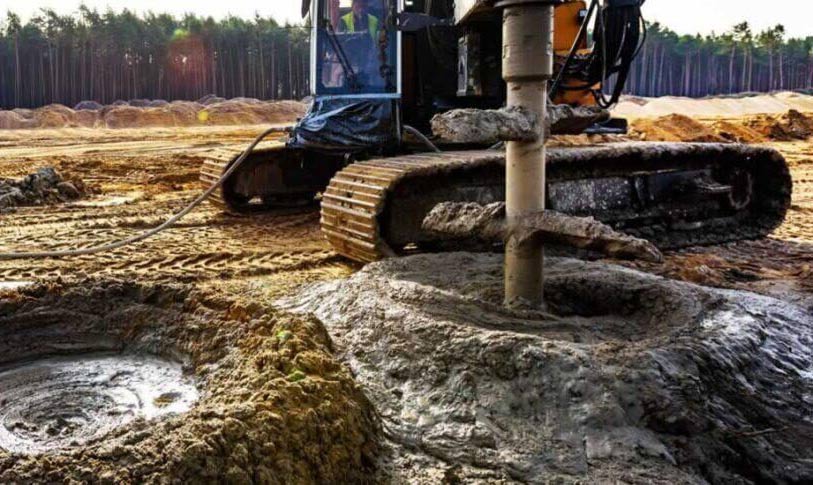
Deep Soil Mixing (DSM) is a ground improvement technique where weak soil is mixed in place with cement or lime to improve strength. Engineers apply this technique where soft clay, loose soil, or high groundwater conditions make conventional foundations difficult. DSM improves soil strength and stiffness without excavation, making it suitable for infrastructure, industrial, and public sector projects that require controlled settlement and stable ground performance.
How Deep Soil Mixing Works on Site
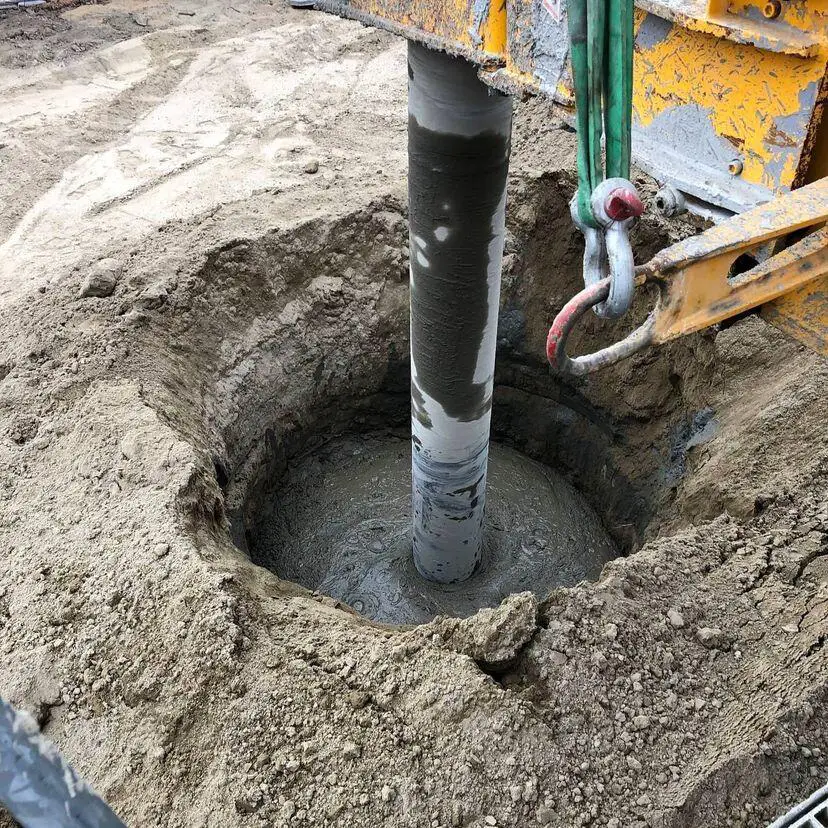
DSM improves soil properties by mechanical blending rather than excavation or replacement. Specialized mixing tools penetrate the ground and combine native soil with binders at the required depth.
The process generally includes:
- Controlled penetration of mixing shafts to design depth
- Injection of slurry or dry binders during rotation
- Uniform mixing to create consistent soil-cement columns
- Gradual withdrawal to maintain column continuity
The treated ground behaves as a composite mass with improved stiffness and load resistance.

Common Deep Soil Mixing (DSM) Methods
The choice of DSM method depends on soil type, groundwater conditions, and performance requirements.
- Wet Mixing Method
Cement slurry is injected during mixing. Suitable for deep soft clay and saturated soils. - Dry Mixing Method
Powder binders are blended directly with soil. Common in shallow soft soils with moderate moisture. - Single-Axis and Multi-Axis Systems
Single axis forms individual columns, while multi-axis systems create panels for earth retention or cutoff walls.
Each technique allows flexibility in layout and strength control.
Key Engineering Applications of DSM
DSM is widely used across infrastructure and industrial developments where soil improvement is critical.
- Foundation support for bridges, flyovers, and metro structures
- Embankment stabilization for highways and railways
- Liquefaction mitigation in seismic regions
- Excavation support and retaining systems
- Seepage control and groundwater cutoff barriers
Government projects often adopt DSM where vibration, noise, and spoil disposal must be minimized.
When DSM Is Preferred for Ground Improvement
DSM is often selected when conventional solutions face technical or practical limits.
- When piling is costly due to large depths or changing soil layers
- When stone columns are ineffective in very soft clays
- When soil replacement is restricted by space or disposal limits
- When uniform improvement over large areas is required
This makes DSM a practical option during early design evaluations.
Key Design and Quality Control Factors
DSM design is performance-based and relies on proper investigation and testing.
Important considerations include:
- Soil profiling and laboratory mix trials
- Binder type, dosage, and mixing energy
- Column diameter, spacing, and depth
- Verification through coring and strength testing
- Monitoring of installation parameters during execution
Advantages for Public and Large-Scale Projects
DSM supports both technical and project delivery goals.
- Improves shear strength and reduces settlement
- Minimizes excavation and material transport
- Reduces construction time compared to deep foundations
- Suitable for confined or urban sites
- Aligns with sustainable construction practices
These advantages make DSM suitable for large infrastructure and government-funded works.
Final Thoughts on Using DSM
Deep Soil Mixing is a reliable and adaptable ground improvement technique when applied under proper design and quality control. While not suitable for every soil condition, DSM provides a balanced solution for strength improvement, settlement control, and constructability. For engineers, consultants, and public authorities, understanding DSM capabilities helps in selecting efficient and responsible foundation solutions for modern infrastructure projects.
Image Credit: geplus.co.uk, structville.com