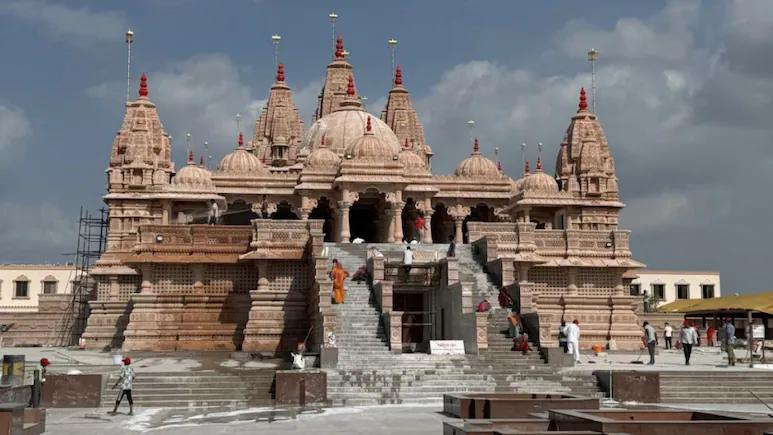
The BAPS Swaminarayan Mandir in Jodhpur, Rajasthan, is set to be inaugurated on Thursday. Constructed entirely with Jodhpur sandstone, the temple follows an interlocking stone system that does not require cement or mortar. This construction method aligns with traditional Indian temple-building practices while integrating modern techniques for durability and structural stability.
The temple aims to provide a space for devotion, cultural activities, and social engagement. It reflects the teachings of Bhagwan Swaminarayan (1781–1830 CE), the founder of the Swaminarayan Sampradaya, who emphasized moral living, discipline, and social upliftment.
Vision and Guidance
The project was inspired by Pramukh Swami Maharaj, under whose leadership BAPS established over 1,200 temples, cultural centres, schools, and humanitarian projects globally. The construction of the Jodhpur Mandir was guided by Mahant Swami Maharaj, the current spiritual successor.
The temple’s design and planning were intended to preserve the Nagara style of architecture, which is characterized by its curvilinear towers and detailed stone carvings. By reviving this style, the project connects modern construction with historical Indian architectural principles.
Architectural Features
- Main Temple Structure: The temple spans three dimensions of 191 ft, 181 ft, and 111 ft. It features five main shikhars, one grand dome, and 14 smaller domes.
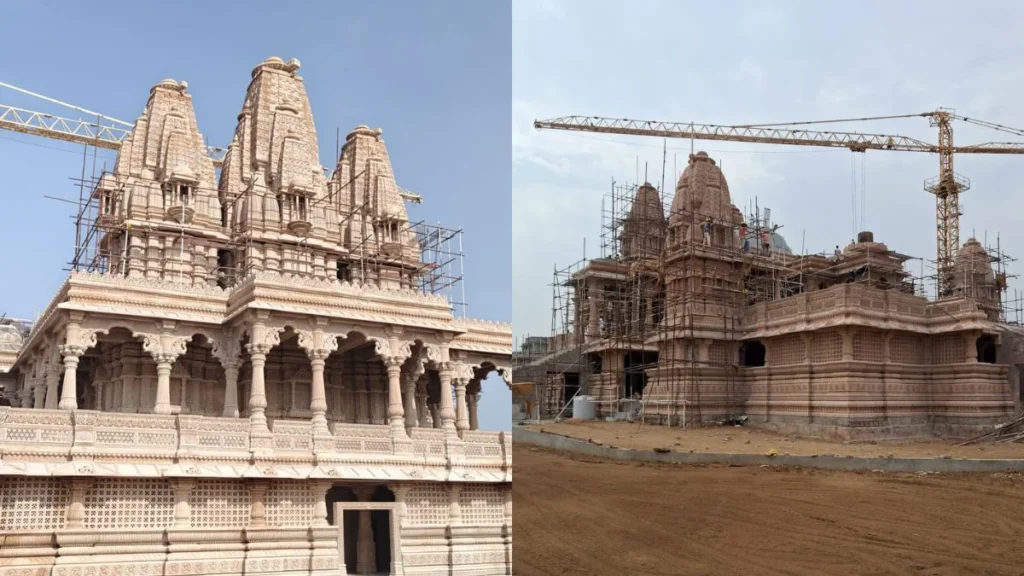
- Interlocking Stone System: No cement or mortar was used; instead, precisely cut stones interlock to provide structural integrity.
- Natural Cooling and Ventilation: Stone lattice walls allow airflow, reducing the need for artificial cooling systems.
- Temple Campus: The entire complex covers 42 bighas of land. Ten bighas are dedicated to landscaped gardens, with over 500 trees and 5,500 plants.
Functional Spaces
The temple complex includes facilities designed to support worship, community gatherings, and education:
- Sacred Worship Hall: Provides space for darshan and prayer.
- Nilkanth Abhishek Mandapam: Houses a five-metal idol of Bhagwan Swaminarayan as Nilkanth Varni. This reflects the teenage travels of Nilkanth Varni, who journeyed 12,000 kilometers across India over seven years, practicing renunciation and devotion.
- Assembly Hall: Designed for discourses, devotional music, and satsang gatherings.
- Gardens and Children’s Park: Offers recreational space for families and serves as a green buffer within the temple complex.
Construction and Labor
Over 500 artisans contributed to the temple’s construction over seven years. The project provided housing, healthcare, and cultural support to these workers, ensuring that laborers were accommodated while maintaining high-quality craftsmanship standards.
BAPS Organization
Bochasanwasi Shri Akshar Purushottam Swaminarayan Sanstha (BAPS) was founded in 1907 by Shastriji Maharaj. It is a global socio-spiritual Hindu organization with more than 5,000 centers worldwide. BAPS temples are known for combining traditional Indian architecture with large-scale community services.
The Jodhpur Mandir joins a lineage of internationally recognized BAPS temples, including Akshardham in Delhi and Gandhinagar, as well as centers in London and Abu Dhabi. Each temple serves as a hub for spiritual learning, cultural education, and social initiatives.
The temple represents an intersection of religious devotion, cultural preservation, and architectural innovation. By employing traditional techniques, it highlights sustainable construction practices, while the integration of gardens and community spaces promotes social engagement.
The inauguration of the temple is expected to attract devotees from across India and abroad, reinforcing Jodhpur as a center for cultural and spiritual activity. It also demonstrates the continued commitment of BAPS to promoting community-based development alongside religious observance.
Source-ndtv.com