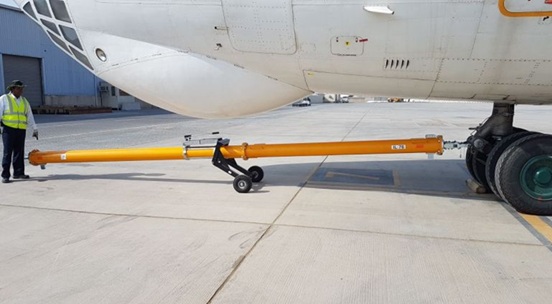
The world aviation industry is presently going through a phase where constant changes are being experienced. This is mainly due to the growing number of air travelers, the expansion of airports, and the quest to be efficient. The aircraft towbars market has become more significant as the focus has turned to efficiently handling aircraft on the ground. Aircraft towbars connect the landing gear of the aircraft to the towing machine. They are very significant in the efficient handling of aircraft. With more activity and growth in aviation globally, there is a greater need for advanced and efficient aircraft towbars. These towbars are required to integrate with other technologies.
Key Drivers of the Aircraft Towbars Market:
1. Expansion of Global Aviation Networks
The growth of the aviation industry globally, particularly in regions such as Asia-Pacific, Middle East and Africa is a significant factor for the increasing demand for aircraft towbars. There has been a significant increase in passenger traffic, as global air traffic has increased by 10.4% compared to the previous year. This is 3.8% higher than the pre-pandemic levels which shows a high rate of recovery for airline operations.
2. Increasing Focus on Operational Efficiency
The goal of the airlines is to minimize the turnaround time without compromising safety. The recorded passenger load factor globally was 83.5% which is the highest recorded. This reflects how effectively aircraft are being utilized and highlights the demand for safe and efficient towing services.
- Reduced ground delays
- Optimized gate utilization
- Improved aircraft scheduling
3. Growth in Air Cargo Operations
This has been fueled by the rapid expansion of the e-commerce industry and the presence of international logistics companies. With more goods being transported via air freight and airports as well as airlines alike face the challenge of increased demand for reliable and durable ground handling equipment. This has created the need for sturdy and powerful aircraft towbars to efficiently and effectively handle various types of cargo aircraft.
Innovation Trends Shaping the Market:
- Lightweight and Composite Materials
Aircraft towbars are now constructed using aluminum alloys and composite materials. These have resulted in a weight reduction of up to 35%.
Benefits include:
- Improved maneuverability
- Reduced physical strain on ground crews
- Lower transportation and maintenance costs
- Smart and Sensor-Enabled Towbars
The integration of smart technologies has enabled the transformation of traditional towing equipment to intelligent devices. Towbars equipped with sensor technology have the capability to:
- Monitor stress and load conditions
- Provide real-time operational data
- Enable predictive maintenance
These features assist in minimizing equipment failure and increasing safety in the movement of aircraft.
- Automation and Autonomous Ground Handling
Automation is slowly being introduced in airport ground handling. The pilot programs for the autonomous pushback systems indicate the way the aircraft towbars market is headed in the future, where human involvement is kept at a minimum in the process.
Emphasis on Safety Standards and Compliance
Safety is still an essential factor in the development and implementation of aircraft tow bars. Aircraft accidents on the ground result in losses in terms of money and time. Thus, it is imperative for safety standards to be followed at an international level.
- Regulatory Framework
Aircraft Towing Devices must adhere to stringent aviation safety standards as stipulated by different regulatory authorities, e.g.:
- International Civil Aviation Organization
- Federal Aviation Administration
- European Union Aviation Safety Agency
- Design Enhancements for Safety
The latest in towbars has several features for safety:
- Shear pins to avoid overloading
- Adjustable heads to accommodate different kinds of aircraft
- Ergonomic designs to avoid fatigue
These innovations have ensured that the risk of accidents is minimalized during the towing process.
Shift Toward Sustainability
- Electrification of Ground Support Equipment
Electric and hybrid-based towbar systems are catching up as part of the larger sustainability drive. This technology provides:
- Environmental protection in terms of emissions
- Noise reduction
- Decreased dependency on fuels
- Alignment with Green Airport Initiatives
Airports are increasingly adopting ‘green airport’ initiatives, which include the usage of eco-friendly equipment. This is seen as a potential growth driver for electric and smart towbar systems.
Regional Insights:
- North America and Europe
These regions hold the highest share in the aircraft towbars market due to:
- Availability of well-developed aviation infrastructure
- High adoption of advanced technologies
- Well-developed regulatory systems
- Asia-Pacific
The Asia-Pacific region is growing at the highest rate in the aircraft towbars market due to:
- High rate of urbanization
- Growing middle class
- High investments in airport infrastructure
Countries such as India and China are leading contributors to regional growth.
Competitive Landscape
The aircraft towbars industry has several key players in the overall ground support equipment industry. The focus of the players in the industry has been on:
- Product innovation
- Strategic partnerships
- Expansion into emerging markets
The key players in the aircraft towbars industry have been focusing on research and development to launch advanced aircraft towbars with multi-functionality.
Challenges in the Market
Despite the positive growth prospects for the market, there are challenges to be faced:
- High investment required for advanced technology used
- Maintenance and lifecycle costs
- Compatibility challenges for different aircraft types
- Infrastructural challenges in developing countries
This has to be addressed by constant innovation and cooperation between players in the industry.
Future Outlook
The aircraft towbars market has a bright future in the coming years with the constant innovation in aviation technology and infrastructure. Some of the trends in the aircraft towbars market’s future include:
- Increasing usage of universal and multi-head towbars
- Artificial intelligence and IoT integration
- Expansion of autonomous ground handling systems
- Focus on sustainability and energy efficiency
The coming together of digitalization, automation, and sustainability will change the face of ground support equipment, and the aircraft towbars market will be a key enabler in the future aviation technology infrastructure.
According to Pristine Market Insights, the aircraft towbars market is in a state of change due to the ever-changing requirements of the aviation industry globally. Innovation in terms of materials, smart technology, safety, and sustainability is defining the future of the aircraft towbars market. With the aviation industry growing globally, the need for effective ground handling is always on the rise. Aircraft towbars, though not given much importance, will always be at the heart of safe, effective, and sustainable aviation operations globally.
Author Bio:
Teja Kurane is a research analyst specializing in global aviation and industrial markets. With a strong focus on aircraft ground support equipment, Teja delivers data-driven insights on innovation, safety standards, and emerging trends, helping businesses navigate evolving market dynamics and identify growth opportunities across the expanding global aviation sector.