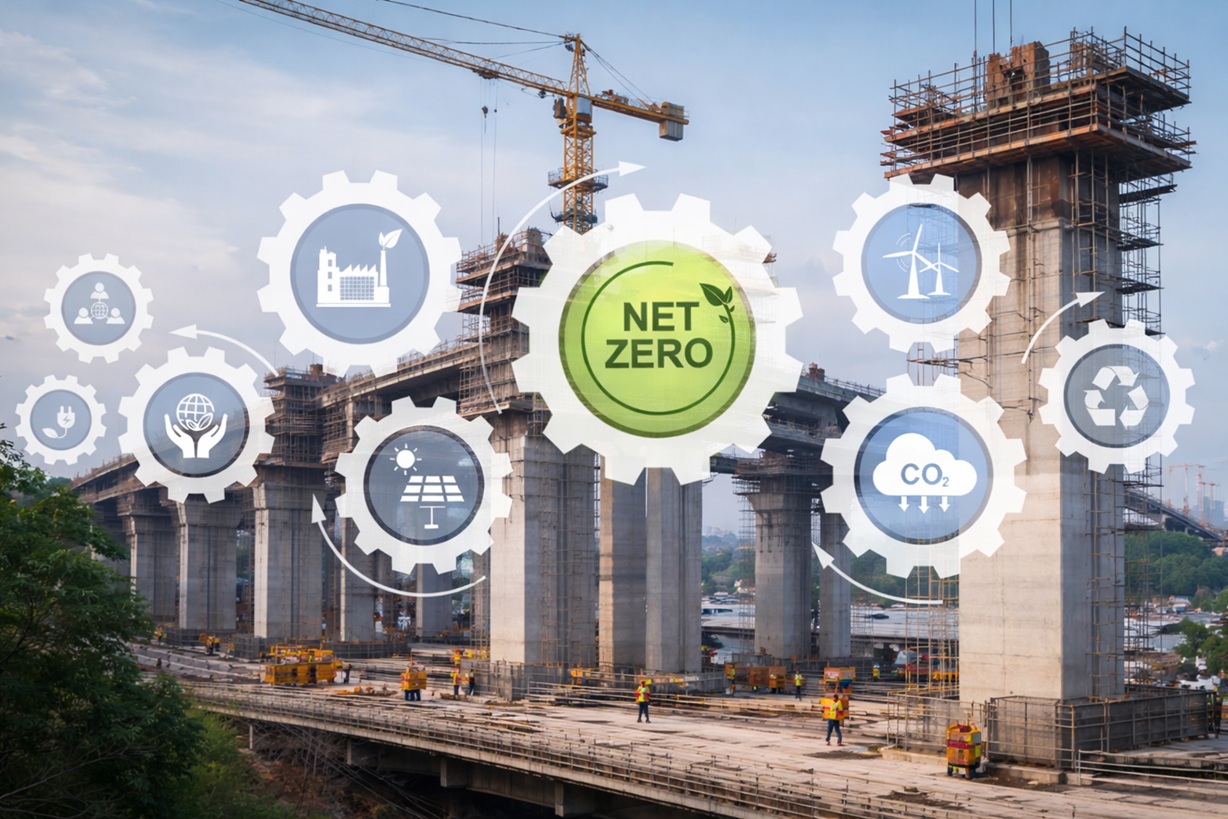
Environmental, Social, and Governance (ESG) principles are rapidly reshaping how construction and infrastructure projects are planned, executed, and evaluated. Much like how advanced construction materials improve performance and durability, ESG frameworks enhance the long-term sustainability, resilience, and social value of the built environment. As governments, investors, and developers increasingly prioritise responsible growth, ESG has moved from a compliance-driven concept to a strategic driver of modern construction and infrastructure development.
ESG in the Context of Construction and Infrastructure
The construction and Infrastructure sectors are the largest contributors to global carbon emissions, resource consumption, and employment generation. ESG provides a structured approach to address these impacts holistically. Environmental factors focus on reducing ecological damage, social factors emphasise worker safety and community well-being, and governance ensures transparency, accountability, and ethical decision-making across project lifecycles. Integrating ESG helps infrastructure projects align economic growth with climate goals and social responsibility.

Environmental Role of ESG in Construction
Environmental considerations form the foundation of ESG implementation in construction and infrastructure.
Sustainable material selection
Developers are increasingly opting for low-carbon cement, recycled aggregates, green adhesives, and energy-efficient building systems to minimise embodied carbon. Sustainable sourcing reduces resource depletion and supports circular construction practices.
Energy efficiency and emissions reduction
Infrastructure projects now prioritise energy-efficient designs, renewable energy integration, and optimised construction processes to cut operational and construction-phase emissions. According to the International Energy Agency, buildings account for nearly 30% of global energy-related CO₂ emissions, making ESG-driven efficiency measures critical.
Waste and water management
ESG encourages responsible waste segregation, recycling of construction debris, and efficient water usage through rainwater harvesting and wastewater reuse. These practices significantly reduce environmental stress, especially in urban infrastructure projects.
Social Role of ESG in Infrastructure Development
The social pillar of ESG focuses on people—workers, communities, and end users of infrastructure.
Worker health and safety
Construction remains a high-risk industry. ESG-driven projects adopt stricter safety protocols, skill training, and health monitoring to reduce accidents and improve workforce well-being. This leads to higher productivity and lower project disruptions.
Community impact and inclusivity
Large infrastructure projects influence local communities through land use, mobility, and employment. ESG frameworks promote fair resettlement practices, local hiring, and stakeholder engagement to ensure that development benefits are shared equitably.
Improved living standards
Infrastructure guided by ESG principles supports access to clean water, sanitation, transportation, and resilient housing. The World Bank highlights that sustainable infrastructure is essential for inclusive economic growth and poverty reduction

Governance Role of ESG in Construction Projects
Strong governance ensures that environmental and social commitments are effectively implemented.
Transparency and compliance
ESG-driven governance requires clear reporting on sustainability targets, safety performance, and financial disclosures. This builds trust with investors, regulators, and the public while reducing legal and reputational risks.
Ethical procurement and risk management
Governance standards promote fair contractor selection, anti-corruption practices, and robust risk assessment. This is especially important in large public infrastructure projects involving multiple stakeholders and long timelines.
Long-term asset performance
Good governance ensures infrastructure assets are designed for durability, adaptability, and lifecycle cost efficiency rather than short-term gains. This approach supports resilient cities and reduces long-term maintenance burdens.
Advantages of ESG Integration in Construction and Infrastructure
- Reduces environmental footprint and resource consumption
- Enhances worker safety and community acceptance
- Improves access to green financing and ESG-linked investments
- Strengthens regulatory compliance and risk management
- Increases project credibility among global investors
- Supports climate-resilient and future-ready infrastructure
- Encourages innovation in materials, design, and construction methods
According to the United Nations Environment Programme, sustainable construction is vital to achieving global climate and development goals
ESG and the Future of Infrastructure Development
Governments and financial institutions increasingly mandate ESG compliance for infrastructure funding. Green bonds, sustainability-linked loans, and ESG ratings are now influencing which projects receive capital. As a result, contractors and developers who embed ESG early in project planning gain a competitive advantage while contributing to long-term environmental and social resilience.
Conclusion
ESG is no longer optional in construction and infrastructure development—it is a critical framework guiding responsible growth. By integrating environmental stewardship, social responsibility, and strong governance, the construction sector can deliver infrastructure that is not only durable and efficient but also ethical, inclusive, and future-ready. As sustainability expectations continue to rise, ESG-driven construction will play a central role in shaping resilient cities and infrastructure systems worldwide.