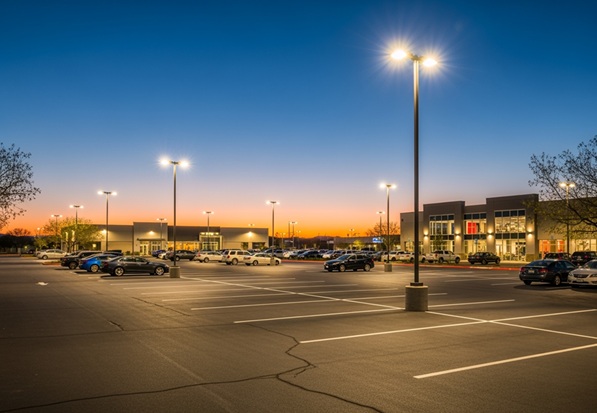
Why Proper Lighting is a Critical System for Any Property
A well-lit parking lot is more than just bright. It’s crucial to property safety, security, and even customer experience. For any commercial property, adequate lighting prevents accidents, deters crime, and makes your business more inviting. It also helps with energy savings and overall aesthetics.
We understand the challenges of maintaining essential systems, so we’ve put together this guide. We will explore the vital role of professional parking lot lighting and show you how to find reliable parking lot lighting companies in your area.
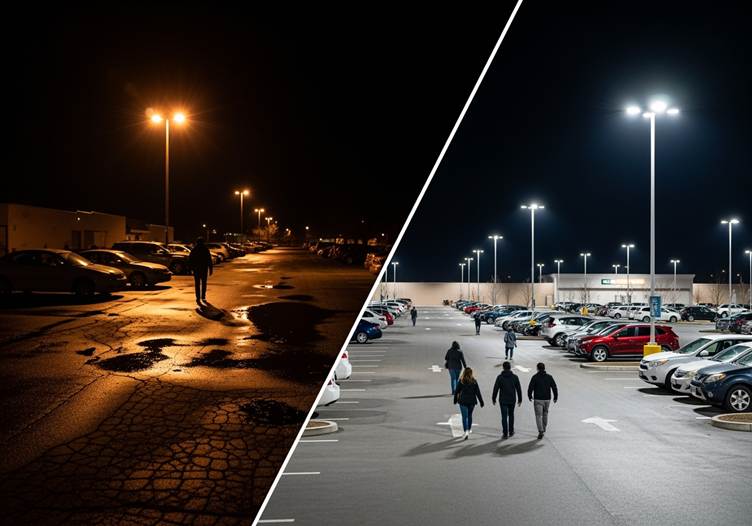
The difference between a dimly lit, hazardous parking area and a brightly, uniformly illuminated one is stark. Proper lighting isn’t merely about visibility; it’s a foundational element for any commercial or industrial property’s safety, security, and overall success.
Crime Deterrence and Security
One of the most immediate and impactful benefits of professional parking lot lighting is its role in crime deterrence. Well-lit areas leave fewer shadows and hiding spots, making potential criminal activity more visible and less appealing. This improved visibility is a powerful deterrent against theft, vandalism, and other illicit behaviors, creating a safer environment for customers, employees, and visitors. A sense of security instilled by adequate lighting can also significantly improve the overall perception of your business or property.
Accident Prevention and Safety
Poor lighting is a major contributor to accidents in parking lots. Potholes, uneven surfaces, misplaced objects, and even other vehicles can become invisible hazards in the dark. Professional lighting design ensures uniform illumination, eliminating dark spots and glare that can impair vision. This significantly reduces the risk of slips, trips, and falls for pedestrians and minimizes collisions between vehicles. For properties with high foot traffic or complex layouts, optimal lighting is not just a convenience but a necessity for preventing injuries and potential liabilities.
Improved Visibility and Business Appeal
Beyond safety and security, adequate parking lot lighting improves your property’s overall visibility and aesthetic appeal. A well-lit exterior signals professionalism and care, inviting customers and making them feel more comfortable visiting your establishment, especially after dark. This can translate into increased foot traffic and a more positive brand image for businesses. For industrial or municipal properties, it ensures operational efficiency and a safer working environment for staff.
Core Services of Commercial Lighting Specialists
Parking lot lighting companies provide a full range of services tailored to the needs of commercial and industrial properties. These services go beyond just installing lights, covering the entire life cycle of a lighting system.
- Installation: For new constructions or complete overhauls, lighting specialists handle everything from initial design and planning to the physical installation of poles, fixtures, and associated electrical infrastructure. This includes digging foundations, pouring concrete bases, and installing underground conduit and wiring to ensure a robust and compliant system.
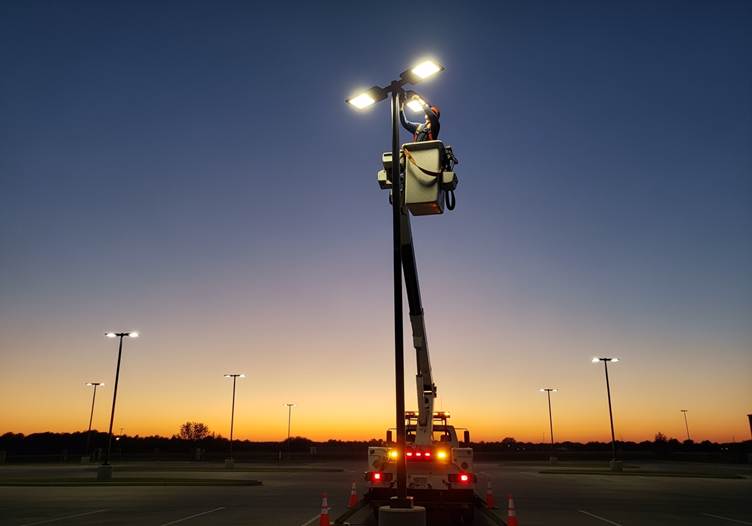
- Maintenance and Repair: Regular maintenance is key to keeping any lighting system running smoothly and reliably. These companies offer routine inspections, lamp and ballast replacements, wiring repairs, and help with troubleshooting issues like flickering lights or complete outages.
- Upgrades and Retrofits: Older systems can become inefficient and costly as lighting technology evolves. Specialists offer upgrade services, often retrofitting existing fixtures with newer, more energy-efficient components like LEDs or replacing entire systems to leverage the latest advancements.
- Pole Installation and Repair: The structural integrity of light poles is as important as the lights themselves. Services include installing new poles, repairing damaged poles (e.g., from vehicle impacts), and even painting or finishing to maintain aesthetic appeal and protect against corrosion.
- Troubleshooting and Controls: Modern lighting systems often incorporate complex controls, timers, and sensors. Professionals can diagnose issues with these systems, calibrate them for optimal performance, and even upgrade them to smart lighting solutions.
- Emergency Services: Unexpected outages can compromise safety and security. Many reputable companies offer 24/7 emergency services to address critical lighting failures promptly, minimizing downtime and potential risks. Some providers also offer monthly light checks to proactively identify and address issues before they escalate.
Modern Lighting Technologies and Their Advantages
Technological advancements have revolutionized the landscape of parking lot lighting, offering more efficient, durable, and intelligent solutions than ever before.
- LED Lighting: Light Emitting Diode (LED) technology has become the standard for commercial outdoor lighting. LEDs provide unmatched energy efficiency, converting up to 95% of energy into light, with only 5% lost as heat. This significantly lowers electricity bills and reduces carbon footprints. LED lights have an exceptional lifespan, often lasting over 50,000 hours, which means minimal maintenance and replacement costs. They also deliver superior light quality with an excellent Color Rendering Index (CRI), making colors look more natural. They come in various Color Temperatures (CCTs) to match different aesthetic preferences and needs.
- Solar-Powered Lighting: Solar-powered LED lighting systems are an excellent choice for properties seeking off-grid solutions or minimizing trenching and wiring costs. Companies like Greenshine, with over 30 years of experience in solar-powered LED systems, highlight the benefits: these systems are self-sufficient, drawing power from photovoltaic panels during the day and storing it in batteries for nighttime use. They are ideal for remote locations, new developments, or existing paved lots where digging trenches for electrical lines would be disruptive and expensive. Modern solar lighting systems incorporate smart power technology to prevent overcharging and ensure reliable illumination even during extended periods of cloudiness.
- Smart Controls: Beyond the light source, intelligent control systems further improve efficiency and functionality.
- Dusk-to-Dawn Sensors: Automatically turn lights on at dusk and off at dawn, ensuring illumination only when needed.
- Motion Sensors: Activate lights to full brightness only when movement is detected, saving energy during inactivity and as a security deterrent.
- Dimming and Scheduling: Allow for programmed dimming during off-peak hours or specific scheduling to optimize energy use based on operational needs.
- Remote Management: Advanced systems can be monitored and controlled remotely, providing facility managers with real-time data and the ability to adjust settings from anywhere.
Here’s a comparative overview of these standard lighting technologies:
| Feature | Traditional HID (e.g., Metal Halide, HPS) | Solar-Powered LED Lighting |
| Initial Cost | Lowest | Moderate to High | High (includes solar panel, battery, controller) |
| Lifespan | 15,000 – 25,000 hours | 50,000 – 100,000+ hours | 50,000 – 100,000+ hours (LED fixture) |
| Energy Use | Highest | Lowest (up to 85% less than HID) | Zero (after initial setup) |
| Maintenance | High (frequent bulb/ballast replacement) | Very Low (minimal replacement, long lifespan) | Low (battery replacement every 5-7 years, panel cleaning) |
| Light Quality | often yellowish/orange, poor CRI | Excellent (high CRI, various CCTs) | Excellent (high CRI, various CCTs) |
| Control | Basic (on/off, photocell) | Advanced (dimming, motion, scheduling, smart) | Advanced (dusk-to-dawn, motion, battery management) |
| Installation | requires grid power, trenching | requires grid power, trenching | No grid power or trenching required |
| Environmental | High energy consumption, mercury content | Energy efficient, no mercury, reduced carbon | Renewable energy, zero emissions.
Finding and Vetting a Reputable Lighting Company Near You
When searching for “parking lot lighting companies near me,” the goal is to find a reliable partner, not just a service provider. Here’s how to approach your search and vet potential candidates effectively.
Start your search with local online directories, business associations, and direct web searches using specific terms like “commercial lighting services [your city/state]” or “parking lot light repair [your town]”. Referrals from other local businesses, property managers, or contractors you trust can also be invaluable, as they often come with experience and recommendations.
Once you have a list of potential companies, thoroughly check their online presence. Look for professional websites that detail their services, experience, and project portfolios. Pay close attention to customer reviews on platforms like Google, Yelp, and industry-specific review sites. While no company has exclusively perfect reviews, a pattern of positive feedback regarding professionalism, quality of work, and customer service is a strong indicator of reliability.
Key Qualifications to Look For
Choosing the right partner for your parking lot lighting needs requires careful consideration of their qualifications and capabilities.
- Licensing and Insurance: This is non-negotiable. Ensure the company has all the required electrical contractor licenses for your state and local area. They should also have comprehensive liability insurance to protect their property and workers in accidents. Request proof of both.
- Certifications: Look for certifications demonstrating a commitment to safety and industry standards. For example, certifications like NFPA 70 (National Electrical Code), OSHA 10 (safety training), and specialized equipment certifications (like Scissor Lift operation for all employees, as seen with some companies) indicate a well-trained and safety-conscious workforce.
- Master Electricians: The presence of Master Electricians on staff signifies a high level of expertise and experience. Stewart Electrical Contracting, for instance, highlights having 3 Master Electricians with 108 combined years of electrical experience in their 35-person operation, underscoring the depth of knowledge they bring to projects.
- Years of Experience: Longevity in the business often correlates with reliability and expertise. Companies with a long track record, such as Trico, with over 25 years of experience, or Systems Electrical Services, a trusted electrical contractor since 1985, have likely encountered and successfully resolved a wide range of lighting challenges. When evaluating providers for specific needs like Sartell Electrical parking lot lighting, verify their project gallery and client testimonials to see examples of their work and hear directly from their clients.
Here are key questions to ask a potential lighting contractor:
- Can you provide proof of current licensing and insurance?
- How many years of experience does your company have specifically with commercial parking lot lighting projects?
- Do you have Master Electricians on staff, and what are their qualifications?
- What certifications do your technicians hold (e.g., OSHA, NFPA)?
- Can you provide references from similar projects you’ve completed?
- Do you offer design services, or do you work with existing plans?
- What types of lighting technology do you specialize in (e.g., LED, solar, smart controls)?
- What is your process for assessing a property’s lighting needs and providing a quote?
- Do you offer maintenance contracts or emergency repair services?
- What warranties do you provide on your work and the products you install?
- How do you handle permits and local code compliance?
- What is your approach to project management and communication?
The Financial Case: Energy Efficiency and ROI
Investing in professional parking lot lighting, primarily through upgrades to modern LED systems, often makes a strong financial case due to substantial energy savings and a quick return on investment (ROI).
Energy Savings and Cost Reduction
One of the most immediate and tangible benefits of upgrading to LED parking lot lighting is the drastic reduction in energy consumption. Traditional lighting sources like metal halide or high-pressure sodium lamps are notoriously inefficient. In contrast, LED retrofits can lead to up to 85% of energy savings compared to older systems. This translates directly into substantially lower electricity bills, offering a continuous operational cost saving for your business or property.
Government Rebates and Incentive Programs
Many federal, state, and local governments and utility companies offer incentives and rebates for commercial lighting upgrades to promote energy efficiency and ease the burden on electrical grids. These programs can significantly reduce the initial cost of an LED lighting project. Some incentives may cover up to 50% of the project expenses. Reliable parking lot lighting companies have a strong background in these programs. They can guide you through the application process, helping to ensure your project meets the requirements for necessary incentives. They’ll also do a free evaluation to estimate potential energy savings and rebate amounts, making the switch more attractive financially.
Return on Investment (ROI) and Long-Term Value
The combination of reduced energy consumption and available rebates means that the initial investment in LED parking lot lighting often has a speedy payback period. Many businesses find that the energy savings alone can pay for the cost of the new fixtures in as little as 10 to 18 months. Beyond this direct financial return, the long lifespan of LED lights (50,000+ hours) drastically reduces maintenance costs associated with frequent bulb and ballast replacements, further contributing to the overall ROI. This long-term value makes an LED lighting upgrade a smart, sustainable investment for any property owner.
Beyond Lighting: A Holistic Approach to Maintaining Essential Property Systems
While this guide focuses on parking lot lighting, viewing it as one component within a larger ecosystem of essential property systems is crucial. Just as a faulty light can compromise safety, issues in other critical areas can lead to significant disruptions and costs.
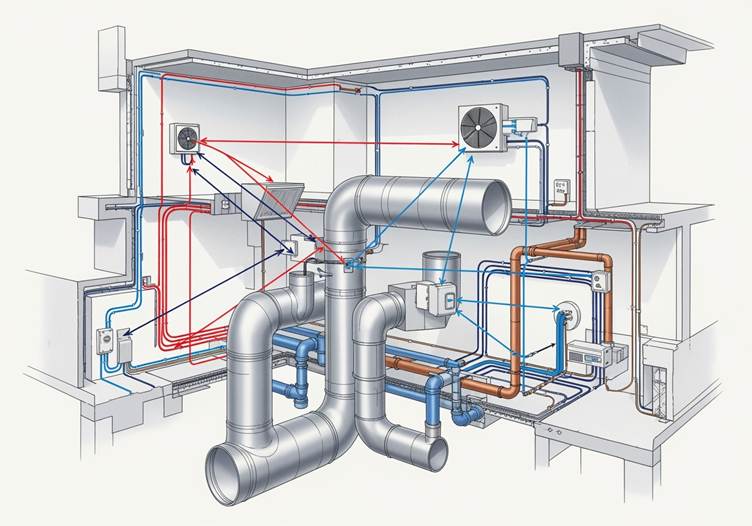
Proactive maintenance across all systems – electrical, HVAC, plumbing, security, and more – is key to preventing downtime, avoiding costly emergencies, and preserving the long-term value of your property. A holistic approach ensures that all components work together seamlessly, contributing to operational efficiency and safety.
Key Features of High-Quality Outdoor Light Fixtures
When selecting new or replacement fixtures for your parking lot, understanding the key features of high-quality outdoor lights is paramount to ensuring optimal performance, longevity, and value.
- Luminous Output (Lumens): This refers to the total amount of visible light emitted by a fixture. While higher lumens generally mean brighter light, it’s also crucial to consider light distribution and uniformity to avoid dark spots and excessive glare. A professional lighting design ensures the right luminous output for your specific area.
- Weather Resistance (IP Rating): Outdoor fixtures must withstand harsh environmental conditions. The Ingress Protection (IP) rating indicates a fixture’s resistance to dust and water. An IP65 rating or higher for parking lots is generally recommended, signifying protection against dust ingress and low-pressure water jets from any direction.
- Longevity (Rated Hours): This specifies the expected operational lifespan of the light source. High-quality LED lights typically have a rated life of 50,000 hours or more, meaning they will last for many years, significantly reducing the frequency and cost of replacements.
- Warranty: A robust warranty from the manufacturer and the installer provides peace of mind. A 5-year or even 10-year warranty on LED fixtures is common and indicates the manufacturer’s confidence in their product’s durability.
- Color Temperature (CCT): Measured in Kelvin (K), CCT describes the “warmth” or “coolness” of the light. Lower Kelvin values (e.g., 3000K) produce a warmer, more yellowish light, while higher values (e.g., 5000K) produce a cooler, bluer light. For parking lots, cooler temperatures (4000K-5700K) are often preferred for their crisp, bright appearance and improved visibility.
- Color Rendering Index (CRI): CRI measures how accurately a light source renders colors compared to natural light. A higher CRI (80+) means colors will appear more vibrant and true-to-life, essential for security camera effectiveness and overall visual clarity.
Some property managers prefer contractors offering various St. Louis Electrical and home services to handle multiple maintenance needs, simplify vendor management, and ensure consistent quality across different systems.
The Importance of Maintaining Essential Property Systems for Long-Term Value
Just as regular oil changes are vital for a car’s engine, scheduled inspections and preventative repairs are critical for all property systems. This proactive approach ensures system longevity, optimizes performance, and, most importantly, helps avoid costly and disruptive emergencies. For instance, a well-maintained electrical panel is less likely to experience a catastrophic failure, just as a regularly serviced HVAC system will operate more efficiently and last longer. This principle extends to all critical infrastructure, and for properties with unique needs, relying on a provider with 70 years well pump expertise is just as crucial as finding a good electrician. It’s about securing the operational integrity and value of your entire investment.
Frequently Asked Questions about Parking Lot Lighting
Here are answers to some common questions about parking lot lighting services:
What types of properties do parking lot lighting companies serve?
Parking lot lighting companies serve various commercial, industrial, and municipal properties. This includes, but is not limited to:
- Commercial Properties: Shopping centers, retail complexes, office parks, restaurants, hotels, and car dealerships.
- Industrial Facilities: Warehouses, manufacturing plants, distribution centers, and logistics hubs.
- Municipalities: Public parking lots, parks, community centers, and street lighting.
- Educational Institutions: School and university parking lots and campuses.
- Healthcare Facilities: Hospital and clinic parking areas.
- Recreational Venues: Sports complexes, stadiums, and entertainment venues.
- Residential Subdivisions: Common area lighting for multi-family dwellings and planned communities.
Essentially, any property with an outdoor parking area or ample exterior space that requires illumination for safety, security, and accessibility can benefit from their services.
Do lighting companies handle repairs for existing systems?
Absolutely. One of the core services provided by parking lot lighting companies is the repair and maintenance of existing systems. This often includes:
- Troubleshooting: Diagnosing the root cause of lighting issues, whether a faulty fixture, wiring problem, or control system malfunction.
- Lamp and Ballast Replacement: Replacing burnt-out bulbs and their associated ballasts in traditional lighting systems.
- Fixture Replacement: Swapping out old or damaged light fixtures with new ones, often upgrading to more efficient LED models.
- Wiring Repair: Addressing damaged or faulty electrical wiring that affects light operation.
- Pole Repair/Replacement: Fixing or replacing light poles damaged due to weather, accidents, or corrosion.
- Component Cleaning/Repair: Cleaning lenses, repairing photocells, and ensuring all components function optimally.
Many companies also offer proactive maintenance contracts, which include regular inspections and preventative repairs to minimize unexpected outages and extend the lifespan of the lighting system. Roberts Onsite, for example, highlights their ability to maintain thousands of light standards, showcasing the comprehensive nature of these repair and maintenance services.
Are there energy efficiency incentives or rebates available for upgrading parking lot lighting?
Yes, definitely! Energy efficiency incentives and rebates are widely available for upgrading parking lot lighting. These programs encourage businesses and property owners to switch to more energy-efficient lighting solutions, primarily LEDs, significantly reducing electricity consumption.
These incentives can come from several sources:
- Federal Programs: Government initiatives that promote energy-efficient technologies.
- State Programs: Many states offer energy efficiency programs and tax credits.
- Local Utility Rebates: Electric utility companies often provide direct rebates for commercial customers who upgrade to energy-efficient lighting. These can be substantial, sometimes covering a significant portion of the upfront cost (e.g., up to 50% of the project cost, as seen with some programs).
Professional parking lot lighting companies typically know about these incentives in their service areas. They can often assist property owners by:
- Conducting energy audits to determine potential savings.
- Identifying eligible rebate programs.
- Helping with the application process and necessary paperwork.
- Ensuring that the installation meets all requirements for rebate eligibility.
Upgrading to LED lighting with smart controls yields substantial long-term energy savings and often qualifies properties for these valuable financial incentives, making the transition even more cost-effective.
Conclusion: Illuminating the Path to a Safer, More Efficient Property
Adequate parking lot lighting is a cornerstone of a safe, secure, and appealing commercial property. The benefits are clear and compelling, from deterring crime and preventing accidents to enhancing business visibility and significantly cutting energy costs.
Investing in professional parking lot lighting services is more than just a maintenance expense; it’s a strategic long-term investment that yields substantial returns in safety, security, operational efficiency, and financial savings. Choosing a reputable, experienced, and licensed company ensures that your property’s illumination system is functional and optimized for performance and longevity. Prioritizing proactive maintenance across all your property’s essential systems, including lighting, will safeguard your investment and illuminate a brighter future for your business.