Trestle scaffolding is a lightweight, portable scaffolding system designed for low-height work, typically within indoor or confined spaces. It consists of trestles, tripod or ladder-like supports, that hold horizontal ledgers or bearers on which planks or boards are placed to form the working platform. It is self-supporting, easy to assemble and dismantle, and can be moved quickly from one location to another.
Components of Trestle Scaffolding
Trestle scaffolding is simple in design and construction. Its main components include:
- Trestles: These are the primary supports, often made of timber, steel, or aluminum. They are built in tripod, folding, or ladder-like forms, depending on the application.
- Ledgers or Bearers: Horizontal members fixed on the trestles to support the platform.
- Working Platforms: Planks or boards placed on the ledgers to provide a stable working surface. Timber planks, plywood boards, or metal decking are commonly used.
- Braces: Diagonal or cross members used to provide stability, particularly when trestles are taller.
- Fasteners: Nails, bolts, or clamps to secure planks and braces in place.
- Guard Rails and Toe Boards: Added when the working height exceeds prescribed safety limits, to prevent falls and material slips.
Structural Features
- Height: Trestle scaffolding generally reaches up to 5 meters. Heights beyond this are rare due to stability concerns.
- Base: Each trestle has a wide foot spread to distribute loads and prevent tipping. For added safety, bases may have rubber pads in indoor environments.
- Adjustability: Some trestles are adjustable in height, using telescopic arrangements or folding joints.
- Mobility: Lightweight materials allow trestles to be easily shifted from one location to another. In some modern systems, wheels with locks are provided for quicker repositioning.
- Assembly: Erection and dismantling are straightforward, often requiring minimal tools or labor.
Working Mechanism
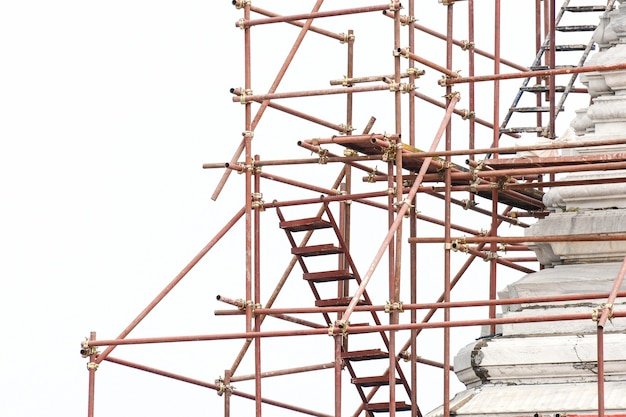
Trestle scaffolding functions as a temporary elevated platform. The trestles are spaced apart depending on the load capacity of the planks and the span required. Horizontal ledgers are fixed across the trestles, and the working planks are placed above. Workers can then stand on the planks to carry out tasks at a safe, elevated level.
The arrangement is self-supporting, meaning it does not require attachment to a wall or building surface, unlike single or double scaffolding. However, stability depends on proper spacing, secure fastening, and load management.
Applications of Trestle Scaffolding
Trestle scaffolding is predominantly used for tasks at moderate heights where quick access is needed. Some major application areas include:
- Interior Finishing: Painting, whitewashing, or applying wall finishes.
- Ceiling Work: Installation of false ceilings, light fixtures, or electrical wiring.
- Plastering and Repair: Providing working access for patch repairs, plastering walls, or applying coatings.
- Carpentry and Joinery: Fixing window frames, doors, and interior wooden finishes.
- Maintenance and Minor Construction: Cleaning, routine repair, and small-scale interior construction activities.
- Educational and Institutional Projects: Frequently used in classrooms, auditoriums, and laboratories where ceiling or wall work is needed.
Advantages of Trestle Scaffolding
- Quick Setup and Removal: Requires minimal time and effort to assemble and dismantle.
- Portability: Lightweight and easily movable to different working locations.
- Cost-Effective: Materials are inexpensive, and minimal labor is needed.
- Space Efficiency: Suitable for confined indoor areas where large scaffolding systems cannot fit.
- Flexibility: Adjustable trestles provide variable working heights.
- Low Skill Requirement: Does not require highly skilled labor for assembly.
Types of Trestle Scaffolding
Fixed Trestle Scaffolding
Fixed trestle scaffolding is the traditional form of this system, using rigid, non-adjustable trestles to support working platforms. It is designed for uniform, repetitive tasks at a consistent height, making it suitable for activities such as painting, plastering, or ceiling work in low-rise structures. The stability of the fixed trestles ensures reliable support for workers and materials, though it lacks flexibility for varying heights or changing work requirements.
Adjustable Trestle Scaffolding
Adjustable trestle scaffolding features trestles with telescopic or screw mechanisms that allow the working height to be modified as needed. This type is ideal for tasks that require access to different levels, such as interior finishing or repair work across varying ceiling heights. The ability to adjust the platform height adds versatility and reduces the need for multiple scaffolding setups for the same project.
Folding Trestle Scaffolding
Folding trestle scaffolding is designed for portability and ease of storage. The trestles can be collapsed or folded when not in use, allowing efficient transport and minimal space requirements on site. This type is commonly used in maintenance, interior finishing, and temporary works where quick setup and dismantling are required, making it convenient for projects with frequent location changes.
Mobile Trestle Scaffolding
Mobile trestle scaffolding is equipped with castor wheels that allow the entire structure to be moved across a worksite without disassembly. The wheels include locking mechanisms to secure the scaffold during use, ensuring stability and safety. This type is especially useful in large indoor areas or workshops where work needs to progress along different sections without repeated assembly of new scaffolding.

Factors to Consider When Selecting Trestle Scaffolding
- Nature of Work: Whether painting, plastering, or ceiling installation.
- Height Requirements: Suitability depends on the maximum working level needed.
- Load Capacity: Must match the weight of workers, tools, and materials.
- Material of Trestles: Steel and aluminum offer longer service life, while timber is more economical but less durable.
- Work Environment: Indoor vs. outdoor conditions, space availability, and surface type.
- Safety Standards: Need for guard rails, toe boards, and compliance with occupational safety norms.
- Frequency of Use: For repeated use, durable steel or aluminum trestles are more cost-effective.
Conclusion
Trestle scaffolding remains an essential solution for construction and maintenance work that requires low-height access. Its straightforward design, portability, and efficiency make it highly effective for executing a variety of tasks. With the development of mobile and adjustable designs, trestle scaffolding has evolved to provide versatile and reliable support, enabling workers to perform their work efficiently across different workspaces while maintaining safety and ease of use.