
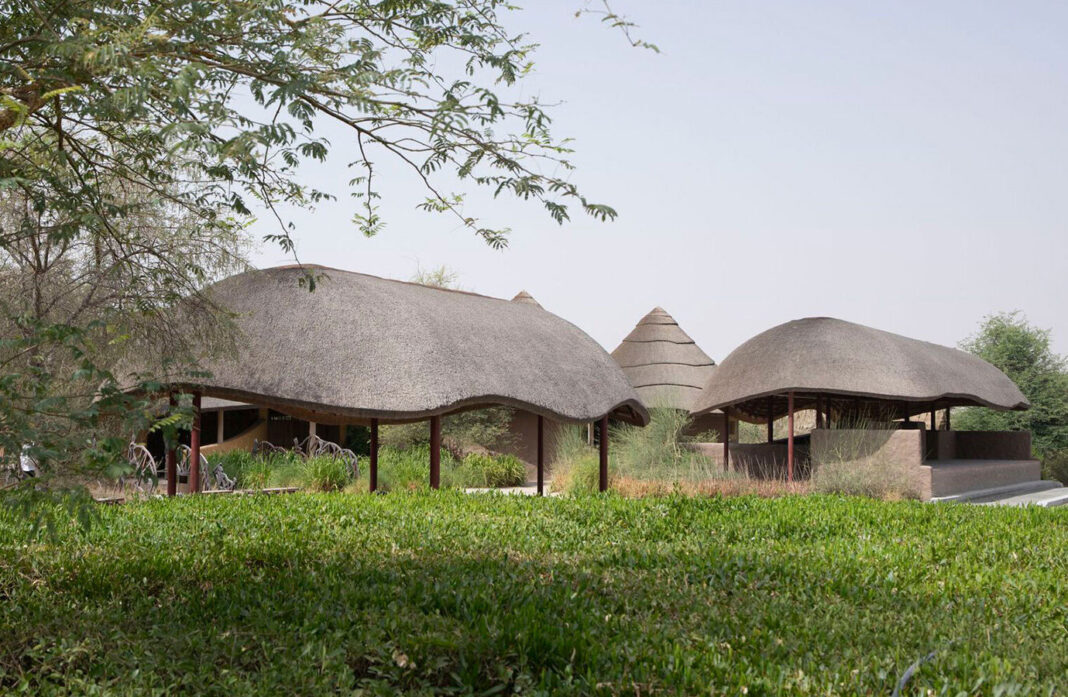
Sharjah Bridi Park, designed by Urko Sánchez Architects, is a striking example of how vernacular design can be reinterpreted in a contemporary, climate-responsive context. Located within the Al Bridi Reserve in Sharjah, UAE, the project introduces a series of low, thatched-roof pavilions that serve as spaces for research, education, and environmental learning. Rather than imposing on the landscape, the development integrates seamlessly with its surroundings, allowing visitors to experience African-inspired architectural forms while engaging closely with the desert ecosystem.
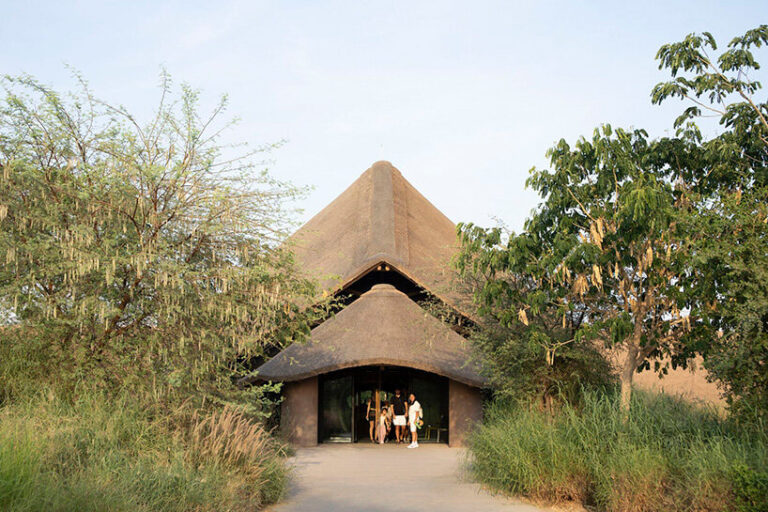
The park organizes its functional spaces through a clear sequence: entrance buildings, ticketing areas, retail facilities, and educational camps for workshops and field programs. Circulation follows gentle paths through planting and shaded courts, creating an intuitive flow that links each pavilion to the natural environment.
Reinterpreting African Vernacular Forms
Urko Sánchez Architects draw inspiration from traditional African building typologies, reimagining them with contemporary construction methods and spatial planning. The architecture combines sculptural forms with functional design:
- Rounded and conical volumes echo African hut forms.
- Elongated pavilions with sweeping rooflines hover above terraces and gathering areas.
- A consistent architectural language unifies the site while allowing each building to respond to its specific program.
The design avoids rigid geometries, favoring shapes that rise organically from the ground. This abstraction of vernacular forms results in structures that feel both familiar and contemporary, bridging cultural heritage with modern needs.
Timber and Thatch: A Structural Dialogue
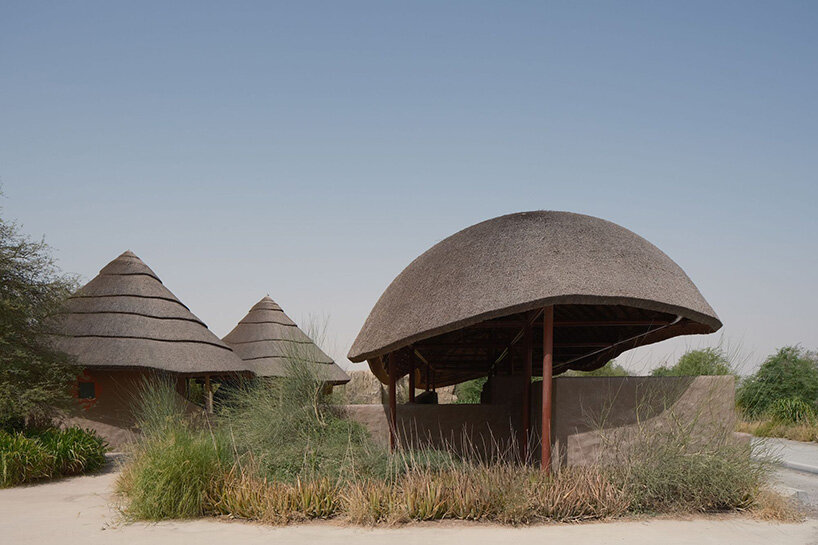
The park’s aesthetic is defined by the interplay of timber frameworks and thatched roofing:
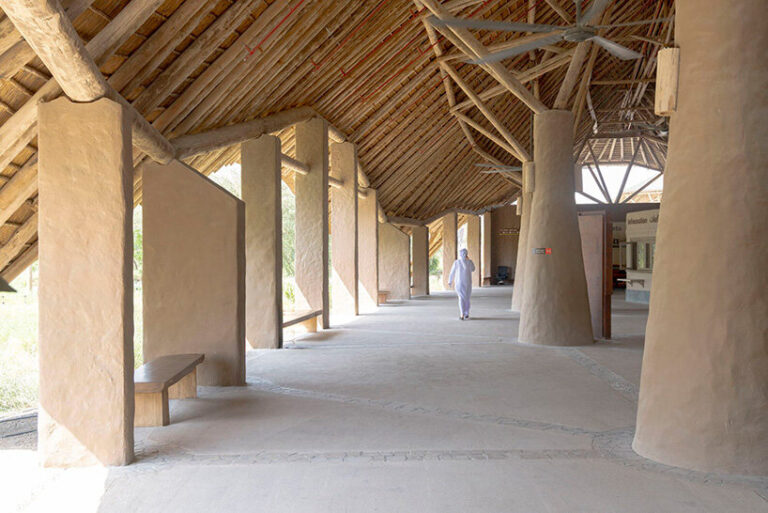
- Exposed timber columns and beams create open interiors with natural ventilation and light.
- Thatch is integrated directly into the timber structure, forming protective canopies rather than applied surfaces.
- The roof texture introduces warmth, depth, and essential shading from the desert sun.
This approach celebrates structure as design, creating pavilions that are both functional and visually engaging.
Climate-Responsive Design
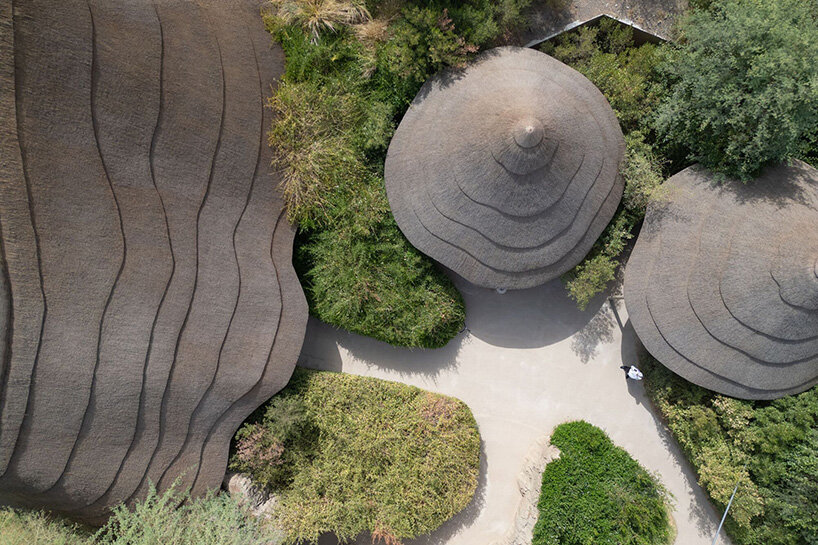
Sharjah Bridi Park demonstrates careful adaptation to the UAE’s arid climate. Key strategies include:
- Deep overhangs provide extensive shade over walkways and outdoor seating.
- Layered thatch allows soft, filtered light into interiors, creating dynamic conditions throughout the day.
- Thick earthen walls and sculpted columns moderate indoor temperatures, offering passive cooling.
- Integrated benches and low partitions along circulation paths encourage pause and observation, enhancing the visitor experience.
Visitors move seamlessly between shaded interiors and open terraces, experiencing a continuous dialogue between architecture, nature, and learning.
Educational and Experiential Goals
Beyond its architectural innovation, Sharjah Bridi Park is designed to promote research and education on African ecosystems:
- Field program and workshop facilities support hands-on learning.
- Gathering spaces and observation points encourage group interaction and study.
- The combination of landscape, circulation, and architectural forms allows visitors to experience the environment holistically.
A Harmonious Integration with Nature
Sharjah Bridi Park embodies a holistic approach to design, where architecture, landscape, and culture converge. The project highlights how traditional forms can be reinterpreted using modern materials and construction techniques without losing their cultural resonance. Visitors experience architecture as an extension of the environment, reinforcing a sense of place and fostering a deeper appreciation for ecological and cultural contexts.
- Sculptural roofs and earth walls respond to climate while creating visually striking forms.
- Timber and thatch integration demonstrates a sensitive approach to materials and structure.
- Circulation, seating, and gathering spaces are designed for comfort, engagement, and reflection.
Through this thoughtful blend of African vernacular inspiration, climate-responsive design, and educational purpose, Urko Sánchez Architects have created a park that is both aesthetically compelling and functionally enriching. Sharjah Bridi Park is not just a collection of pavilions—it is a spatial narrative where visitors connect with architecture, environment, and culture in a continuous, immersive experience.
Image- designboom.com



