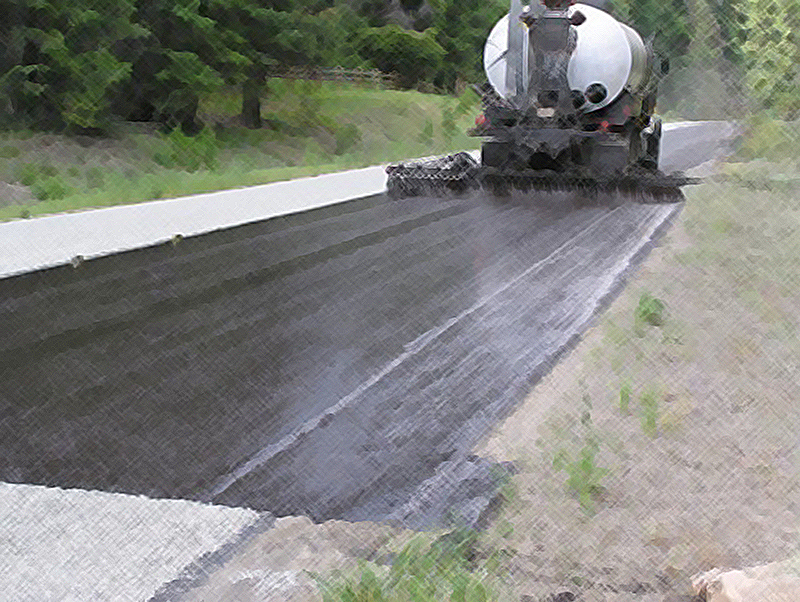
Bituminous surface dressing and overlay methods maintain and strengthen paved roads. Surface dressing seals cracks and restores texture, while overlays add structural capacity, improve ride quality, and enhance skid resistance. Both methods support long-term pavement performance and rehabilitation.
Applications of Surface Dressing and Overlay Methods
- Sealing Minor Cracks and Preventing Water Infiltration: Surface dressing provides a barrier against moisture, protecting underlying layers from weakening and reducing pothole formation.
- Restoring Surface Texture and Skid Resistance: Aggregates applied over bitumen improve friction, reducing skidding on wet or smooth roads.
- Pavement Strengthening: Overlay methods enhance structural capacity, allowing pavements to accommodate increased traffic loads.
- Ride Quality Improvement: Overlays correct rutting, depressions, and surface irregularities, improving longitudinal smoothness.
- Maintenance of Low-Volume Roads: Surface dressing is cost-effective for secondary and tertiary roads with moderate traffic.
- Pre-Overlay Preparation: Ensures existing pavement is clean, leveled, and free from defects before placing an overlay, optimizing bonding and longevity.
Advantages of Surface Dressing and Overlay
- Cost Efficiency: Preventive surface dressing reduces the need for full reconstruction.
- Extended Pavement Life: Both methods restore surface integrity, delay structural deterioration, and protect underlying layers.
- Improved Skid Resistance: Aggregate application enhances friction and safety.
- Load-Bearing Improvement: Overlays increase pavement structural capacity to accommodate higher traffic.
- Adaptability: Methods can be applied to low-volume rural roads or high-traffic highways.
- Rapid Implementation: Surface dressing and thin overlays can be applied quickly, minimizing traffic disruption.

Surface Dressing Methods
- Single Surface Dressing
In single surface dressing, one layer of bitumen is sprayed over the existing pavement, followed by the spreading of aggregates. Rollers are used to embed aggregates into the bitumen. This method is suitable for sealing small cracks, restoring texture, and providing light surface protection. - Double Surface Dressing
Double surface dressing involves applying two successive layers of bitumen and aggregates. The first layer addresses minor structural issues, while the second layer improves texture, skid resistance, and sealing. Double dressing is recommended for roads with moderate surface distress or rutting. - Scrub Seal Dressing
This method uses a light application of bitumen sprayed and scrubbed into the surface using brooms or brushes, followed by covering with fine aggregates. Scrub seal is typically applied on new pavements to improve adhesion or as a maintenance treatment on minor roads. - Chipseal Treatment
Chipseal is a variant of surface dressing where a thin binder coat is applied, followed by a layer of single-sized aggregates. Rolling ensures embedding of chips. This method is widely used on rural roads and low-traffic highways to prevent water penetration and surface wear. - Spray Seal with Emulsion
Bitumen emulsion spray followed by aggregate application allows for lower temperature operation and faster curing. This method is environmentally controlled and suitable for areas with temperature limitations or where standard hot bitumen is not practical.
Overlay Methods
- Hot Mix Asphalt Overlay (HMA)
HMA overlays involve applying a new asphalt layer over the existing pavement. The process starts with cleaning and repairing defects, followed by tack coat application to improve bonding. Hot asphalt is laid using pavers and compacted with rollers. HMA overlays increase structural capacity, correct rutting, and improve smoothness. - Mastic Asphalt Overlay
Mastic asphalt is a viscous mixture of bitumen, filler, and aggregate. It is heated and applied over pavements to provide a dense, impermeable layer. Mastic asphalt is used in high-stress areas such as intersections, airport aprons, and bridge decks. - Bituminous Concrete Overlay
Bituminous concrete overlays involve dense-graded asphalt mixtures applied over pavements to enhance load distribution and surface durability. This method provides better resistance to fatigue and thermal cracking. - Cold Mix Asphalt Overlay
Cold mix overlays use pre-mixed asphalt at ambient temperatures. They are suitable for patching, temporary resurfacing, or low-volume roads where hot mix plants are not accessible. Cold mix overlays offer moderate improvement in surface smoothness and sealing properties. - Thin Overlay Techniques
Thin overlays, typically 25–50 mm thick, are applied to correct minor surface distresses, restore cross slopes, and improve ride quality. They are cost-effective for preventive maintenance and extend pavement life without full-depth reconstruction.

Equipment Used for Surface Dressing and Overlay
1. Bitumen Sprayers
Bitumen sprayers are essential for applying a uniform layer of bitumen over the existing pavement surface. Typically mounted on trucks, these sprayers are equipped with calibrated spray bars that control the application rate according to project specifications. Accurate spraying is crucial to achieve proper bonding between the binder and the aggregate. Inadequate or uneven application can result in slippage of aggregates, weak adhesion, or premature pavement failure. Advanced sprayers may feature heated tanks, pressure control systems, and adjustable nozzles to maintain consistent bitumen temperature and flow, ensuring efficient surface dressing or overlay application.
2. Aggregate Spreaders
Aggregate spreaders are mechanical devices designed to distribute stone chips or aggregates evenly over the freshly sprayed bitumen. The controlled spreading action ensures full coverage of the binder, minimizes segregation of coarse and fine particles, and helps achieve a consistent surface texture. Properly calibrated spreaders contribute to better interlocking of aggregates, which enhances the durability and skid resistance of the pavement. Depending on the project scale, these spreaders can be tractor-mounted, trailer-mounted, or part of a continuous feed system that works in coordination with the bitumen sprayer to maintain a uniform application rate.
3. Rollers
Rollers are used to compact the aggregate layer into the bitumen binder and to densify overlays for smooth, uniform pavement surfaces. Several types of rollers are employed depending on the material and layer thickness, including pneumatic rollers, tandem steel rollers, and vibratory rollers. Pneumatic rollers use multiple rubber tires to knead and compact the surface, promoting binder-aggregate interlock, while tandem rollers apply static or vibratory pressure to achieve uniform compaction. Proper rolling sequence and speed are critical to prevent surface irregularities, avoid crushing aggregates, and ensure the long-term performance of the pavement.
4. Pavers
Pavers are specialized machines used to lay hot mix asphalt or mastic asphalt evenly over prepared road surfaces. Modern pavers are equipped with screeds that control the thickness, slope, and surface texture of the laid material, ensuring a uniform pavement layer. Automated controls in contemporary pavers allow operators to adjust grade and slope in real time, improving accuracy and reducing material waste. Pavers work in combination with rollers to provide a well-compacted, smooth surface suitable for traffic, making them indispensable for both overlay projects and full-depth asphalt pavement construction.
Maintenance Planning
Surface dressing is often scheduled as a preventive measure at intervals of 5–7 years, depending on traffic and climate. Overlay methods are applied when structural deficiencies or roughness exceed threshold limits. Profiling and condition surveys guide the selection of treatment type and thickness. Integrating profiling, skid testing, and material testing ensures that applied methods meet performance and safety standards.
Conclusion
Bituminous surface dressing and overlay methods are pivotal for maintaining road performance and safety. Surface dressing protects pavements, restores texture, and prevents moisture ingress. Overlay methods enhance structural capacity, smoothness, and durability. Proper application, equipment selection, and surface preparation are essential for long-term effectiveness. By combining surface dressing, overlay treatments, and systematic pavement assessment, road authorities can optimize maintenance programs, extend pavement service life, and provide safer, more reliable transportation infrastructure.