Flat slabs are widely used in buildings of the 21st century as they provide open spaces, fast constructions, and easy layout planning. The system is characterized by the slab being directly supported on the columns without the use of beams. Although this simplifies the structure, it also poses one big problem – punching shear.
What Is Punching Shear?
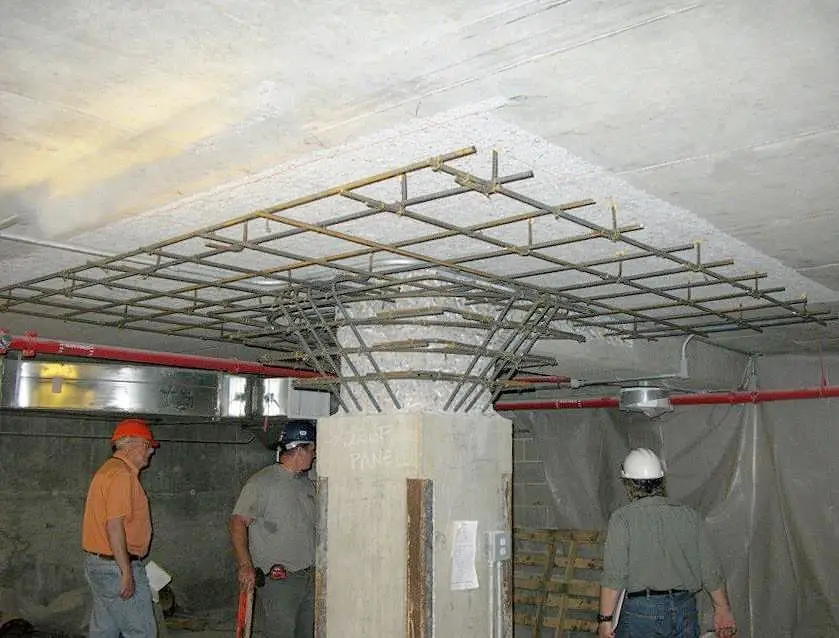
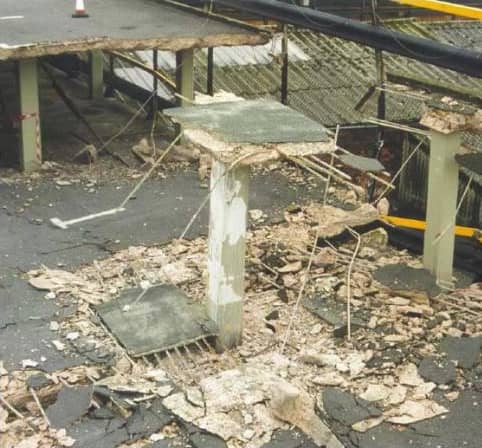
Punching shear is a failure mode of a flat slab which occurs when a heavy load is forced down on the slab through a column. When the slab fails to withstand the load, the column is likely to “punch” through the slab, thus, a hole-like failure is formed around the column.
It is similar to the act of your finger pressing a piece of thin cardboard: if the cardboard is not strong enough, your finger will go through it.
This matter is significant, particularly in flat slabs, because there are no beams around the slab that can share the load. The slab has to be strong enough to carry the load coming from each column directly.
Why Punching Shear Matters
Punching shear matters because:
- The failure is sudden and does not give early warning.
- It can lead to collapse of the slab portion around a column.
- In multi-storey buildings, it may trigger progressive collapse.
- The repair is complex and costly if the problem is ignored.
Since flat slabs appear in offices, malls, hospitals, hotels, residences, parking structures, and industrial buildings, punching shear is a major safety concern.
Where Punching Shear Issues Commonly Occur
Punching shear risks are higher in:
- Offices with flexible layouts
- Storage floors with heavy loads
- Parking structures with dynamic vehicle loading
- Malls and public buildings
- Hospitals with equipment loads
- Industrial buildings
- Buildings with large spans and limited column numbers
Common Causes of Punching Shear in Buildings
In most cases, punching shear is not a result of one single reason. It is usually a combination of factors that interact with each other. The main causes are:
1. Slabs Too Thin for the Required Load
If the thickness of a slab is determined only to control deflection and not for load-transfer, the slab may lack the necessary shear strength.
2. High Column Loads
Commercial buildings, hotels, and malls are the most typical examples of high load concentration situations which in turn increases punching shear risk.
3. Improper Rebar Detailing
Top reinforcement insufficiency around columns, lack of anchorage, or badly placed reinforcement are those that lead to a decrease in the slab strength.
4. Openings Too Close to Columns
Service ducts, HVAC openings, or plumbing cutouts are the most common punching zone weakening methods.
5. Construction Defects
Among the causes of poor compaction, weak concrete, insufficient curing, or segregation mentioned, all are factors leading to a decrease in the punching area’s strength.
6. Structural Modifications After Construction
Changing the layout of rooms, adding partitions, installing heavy mezzanines, or altering loading patterns can lead to overloading of slabs.
7. Long-Term Effects
Creep, shrinkage, and repeated service loads are factors that slowly but surely lower the capacity of the slab.
8. Uneven Support Settlements
The differential settlement between columns causes changes in load distribution and introduces unbalanced forces.
9. Seismic or Wind Loads
Warning Signs of Punching Shear Problems
Punching shear failures may not always show early symptoms, but certain signs indicate that the slab is under stress:
- Circular or radial cracks forming around columns
- Sudden appearance of diagonal cracks near column faces
- Slab sagging or excessive deflection around support points
- Cracks extending upward through the slab thickness
- Minor spalling or crushing of concrete near column edges
- Visible reinforcement near the column junction
- Doors and windows in nearby walls jamming due to settlement
Types of Punching Shear Problems in Flat Slabs
Punching shear dilemmas could reveal themselves visually in different manners. Their general kinds might be classified as such:
1. Interior Column Punching Shear
This is, probably, the one which the most cases are mostly referred to. It generally happens at the internal columns where single direction loads from several branches meet. Even though interior columns normally are supposed to be the ones carrying the greatest loads, they may hardly be the first to indicate their condition until significant cracking is seen around the column.
2. Edge Column Punching Shear
At a building’s edges, slabs are supported one-sidedly only. Due to this unequal support, the stress at the slab-column junction is heightened causing punching shear development at edge columns to be more likely.
3. Corner Column Punching Shear
Firstly, a corner column can derive its support from two slab directions only. This creates higher stress concentration and makes them more sensitive to a sudden impact, heavy point loads, or loads during the construction stage.
4. Punching Shear Due to Unbalanced Moments
If a slab or a column is subjected to side forces (like wind, earthquakes, or uneven settlement), the load will not be acting centrally. As a result, pressure around the column becomes non-uniform thus increasing punching shear chances on a particular side.
5. Punching Shear from Overloading
For instance, placing heavy storage units, industrial machines, water tanks, or hosting a large number of people in a room floor that is structurally unsupported for such loads can lead to over-stressing. Overloading around columns slowly but surely becomes an area of weakness in the slab and hence punching shear can be triggered.
6. Punching Shear Due to Poor Construction Quality
In case the concrete is of low strength, honeycombed, unadequately compacted, and not cured well, the slab will be susceptible to local shear failures. At the same time, playing offensive means by poor reinforcement placing will further worsen the chances of failure.
7. Punching Shear Around Slab Openings
Locating columns near duct, plumbing, or electrical lines may require opening the slab, which in turn, reduces the effective slab area. When such openings are not properly planned, they can go deep into the load-transfer zone thus making the slab vulnerable to punching shear.
8. Punching Shear Due to Post-Tensioning Forces
Besides the additional forces introduced by cables in a post-tensioned flat slab, if a lack of good design in the anchorage zones prevails, local overstressing could happen near the areas of the columns.
9. Punching Shear in Transfer Floors
Transfer floors work as heavy load carriers and the ones that redistribute the forces coming from the upper levels. These floors are more loaded than others and thus the issue of punching shear is highly probable.
10. Punching Shear Triggered by Earthquake Movement
During an earthquake, slabs move differently than columns. That movement results in repeated loading cycles at the slab-column junctions, thus gradually weakening the spot and causing a punching risk increase.
Inspection and Assessment Methods
To understand the seriousness of the problem, engineers typically perform:
- Visual inspection to note cracking patterns
- Rebound hammer test for surface strength
- Ultrasonic pulse velocity to detect internal flaws
- Concrete core sampling for accurate strength
- Slab load testing if needed
- Detailed structural analysis to study load flow
- Monitoring of cracks and slab behavior over time
How to Prevent Punching Shear Problems
Prevention is better than repair. Some general methods used during design and construction include:
1. Adequate Slab Thickness
Ensuring the slab thickness matches the building’s load requirements is the most important factor.
2. Extra Reinforcement Around Columns
Providing proper reinforcement ensures better load distribution.
3. Avoiding Openings Near Columns
Service cutouts should be placed away from important areas.
4. Quality Construction Practices
Proper mixing, compaction, curing, and inspection help avoid weak zones.
5. Using Shear Studs or Drop Panels
These features increase the slab’s ability to carry concentrated loads.
6. Regular Structural Checks
Periodic inspection of slabs in heavily loaded buildings helps detect early issues.
7. Careful Planning of Modifications
Any addition of heavy equipment or layout changes should be reviewed by an engineer.
Strengthening and Repair Methods
If punching shear problems are detected, various strengthening techniques may be adopted:
1. Adding Reinforcement or Shear Studs
Shear studs or additional rebar enhance the slab’s resistance.
2. Thickening the Slab
Overlay concrete, drop panels, or column capitals increase slab capacity.
3. FRP Wrapping
Fiber-reinforced polymer sheets or strips improve the area around columns.
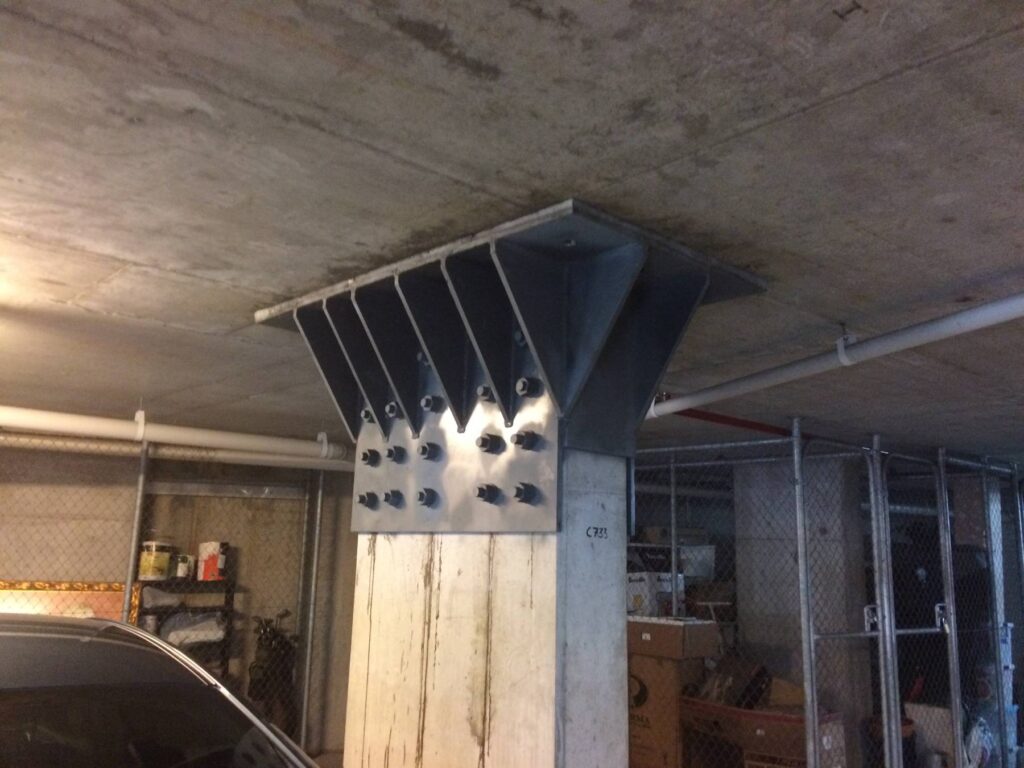
4. Steel Jacketing
Steel plates or collars provide confinement and strength.
5. Reducing the Load
Relocating heavy loads or redistributing machinery may solve the issue.
6. External Post-Tensioning
External tendons can help support the slab by reducing internal stresses.
Conclusion
Punching shear is one of the major issues in buildings with flat slabs. As the failure usually is abrupt and severe, it is therefore vital to know the problem for safety and durability of the structures. Builders and engineers can thus prevent the occurrences of collapses and guarantee the safety of the building by recognizing the different kinds of punching shear problems, looking out for the signs, making sure good construction practices are followed, and applying suitable strengthening methods if necessary.
Image Credit: ancon.com.au, structville.com, swconsult.com.au