Sunday, December 21, 2025
spot_img
Home Blog Page 270

Reasons Why You Should Consider Outsourcing QA

0

One of the common problems when companies or contractors develop a new online product is that they don’t have their own app testers. This is understandable, because it is impractical to maintain a whole staff of professional QA specialists for the sake of one product. However, you cannot neglect the stage of thorough product testing. This can lead to the loss of all invested funds, the refusal of potential clients and, as a result, reputational losses.

The solution can be outsourcing a professional QA team. Often this is the most optimal solution, which allows you to attract the best specialists with their vast experience and get all their knowledge.

Definition and Features of Outsourcing QA

Outsourcing is a widely used concept in software testing. It is the involvement of a third-party company to examine the programs or applications that you release. It means that the testing will be carried out by an outside vendor and not by your staff. Follow here to get more comprehended information about outsourcing testing software and all benefits it can provide.

If you cannot test your products yourself due to lack of resources or want to get an objective assessment of their quality, you can resort to outsourcing. It is a popular approach that allows you to verify software quickly, efficiently, and cost-effectively.

Situations to Select Outsourcing QA

The concept can be a solution in many cases. You may not have enough engineers or they may not have time to test the software. Each of these situations is suitable for hiring outside help. Below are some of the main situations when you should take into account cooperating with an outsourcing company.

Time Limit

If you are not meeting the deadline and this may lead to a delay in the release, you need additional help. Releasing untested software and missing the deadline is risky. Outsourcing will help fix the situation.

No Testers on Staff

Some companies do not have a testing department and therefore cannot test the product themselves. Hiring QA engineers can require time and additional investment. Outsourcing the stage can be more efficient and economical.

Insufficient Level of the Tester Team Training

Young companies do not always have experienced QA engineers on staff. Their knowledge may not be enough to test a large or complex product. Outsourcing completely solves this problem.

Lack of Tools

Sometimes manual testing is not enough and you may need to implement an automated approach. Its setup and tools are expensive, so the best solution would be to outsource the testing process to a third-party company. In addition, you may not have enough physical devices if you need to test a mobile application.

Limited Budget

Implementing new approaches, adding new tools, and training staff can become a financial burden on the company. Engaging an outsourcing company is easier and cheaper and requires much less investment.

Key Advantages of the Concept

Entrusting testing projects outsourcing is in great demand. It has many benefits that you can take advantage of. Their list includes:

  1. Cost savings. By involving an outsourcing company, you will not need to spend money on hiring a QA staff, organizing their workplace, or purchasing test tools.
  2. Release acceleration. Third-party vendors can start testing products quickly. This will reduce time losses and speed up the release.
  3. High objectivity and efficiency. Third-party testers will evaluate the software objectively. This will positively affect the range and veracity of the results.
  4. Risk reduction. If you do not have the resources to test the product, there is a risk that the software will be imperfect and unsuccessful. On the other hand, if you entrust testing to outsourcing, you will be sure that it is tested well and will work correctly.
  5. Product quality improvement. Outsourcing QA will thoroughly test the product so you can fix bugs on time and achieve the highest quality software.

In addition, you will not need to look for highly specialized engineers yourself or waste time on tasks that can be assigned to a third-party vendor. You will be able to prioritize the tasks correctly.

Some Tips When Choosing Outsourcing QA

If you decide to engage a third-party company, remember some tricks that can help. Here are the main ones:

  • Choose only proven vendors. They should have a good reputation and sufficient experience.
  • Monitor the process. Try to constantly receive feedback on the testing processes and their results.
  • Organize high-quality and effective communication. Outsourcing testers should share information with developers to achieve high software quality.

TestFort is one of the leading companies on the market that offers outsourcing QA services. It has numerous physical devices for testing, a large staff, and a variety of modern tools. With its help, you can test the product quickly and affordably.


Why Rigid Pavements are Ideal for High-Traffic Roads?

Rigid pavement uses concrete as the primary material for its surface, offering exceptional strength and durability. It is designed to distribute the traffic load efficiently, reducing stress on the underlying layers. Known for its high strength, long lifespan, and minimal maintenance requirements, rigid pavements are ideal for areas with heavy traffic or challenging environmental conditions. 

Advantages of Rigid Pavement:

  • High durability and long lifespan.
  • Requires minimal maintenance over time.
  • Less prone to cracking and deformation.
  • Provides a smooth and stable driving surface.
  • Can handle heavy traffic loads efficiently.
  • Offers resistance to weathering and extreme conditions.
  • Reduces the need for frequent repairs.
  • Strong load distribution capabilities.
  • Less susceptible to rutting compared to flexible pavements.
  • Supports heavy construction and industrial vehicles.
  • Improves safety by offering better skid resistance.
  • Allows better water runoff, reducing water damage.

Rigid Pavement Layers

Rigid pavements are typically composed of several layers, each playing an important role in ensuring the overall strength and durability.

  • Surface Course: This is the top layer of the rigid pavement, typically made from high-strength concrete. It is designed to bear the weight of traffic, withstand wear from vehicles, and provide a smooth driving surface. The surface course is subjected to the greatest amount of stress and is designed to resist cracking, rutting, and deformation caused by traffic loads and environmental factors.
  • Base Course: Positioned directly beneath the surface course, the base course serves to distribute traffic loads more evenly across the subbase and subgrade. This layer is typically composed of high-strength materials like crushed stone, gravel, or crushed rock. Its role is to provide additional structural support and help prevent the surface course from cracking or shifting due to pressure or heavy loads.
  • Sub-base Course: The subbase lies beneath the base course and provides further load distribution. It also helps improve drainage by allowing water to flow through it, preventing water accumulation under the pavement. Made from lower-strength materials compared to the base course, the sub-base provides a cushion between the stronger layers and the natural subgrade, reducing the risk of deformation and maintaining the integrity of the pavement structure.
  • Subgrade: This is the bottom layer of the rigid pavement structure, consisting of natural soil or rock beneath the pavement. The subgrade provides the foundation for all the upper layers and plays an important role in the overall strength and stability of the pavement. Its condition, including its load-bearing capacity, can significantly impact the performance of the entire pavement system. 

Types of Rigid Pavement 

  • Plain Concrete Pavement (PCC): Plain Concrete Pavement (PCC) is the most basic form of rigid pavement, made from a simple mix of cement, water, and aggregates without any reinforcement. This type of pavement is primarily used in low-traffic areas such as local streets and parking lots, where the structural demands are minimal. Although cost-effective and easy to install, PCC is prone to cracking under heavy traffic loads or extreme temperature changes, making it less suitable for high-traffic areas. The absence of reinforcement means that its longevity is dependent on the quality of the concrete mix and the pavement design.
  • Reinforced Concrete Pavement (RCC): Reinforced Concrete Pavement (RCC) incorporates steel reinforcements (such as steel bars or mesh) within the concrete to improve its strength and crack resistance. The addition of reinforcement helps the pavement withstand higher traffic loads and resist cracking due to tensile stress. RCC is commonly used in medium to high-traffic applications, such as urban roads and highways. It is more durable and resilient than PCC but requires more time and labor for installation due to the placement of steel reinforcement.
  • Prestressed Concrete Pavement (PCP): Prestressed Concrete Pavement (PCP) involves pre-stressing the concrete with tendons or cables before it is placed, which increases the pavement’s ability to resist tensile forces and cracking. This type of rigid pavement is designed to handle heavy loads, making it ideal for use in high-traffic highways and industrial areas where pavement strength is needed. PCP offers enhanced durability and longer service life due to its resistance to stress and cracking, but it requires specialized equipment and expertise for installation, making it a more expensive option than other types of pavements.
  • Jointed Plain Concrete Pavement (JPCP): Jointed Plain Concrete Pavement (JPCP) features concrete slabs that are separated by joints, typically spaced at regular intervals to accommodate the expansion and contraction of the pavement due to temperature changes. These joints allow the pavement to expand and contract without causing cracks, enhancing its durability. JPCP is often used in highways and roads with moderate to high traffic volumes, as the joints help to control the formation of cracks while maintaining a smooth and stable surface.
  • Jointed Reinforced Concrete Pavement (JRCP): Jointed Reinforced Concrete Pavement (JRCP) is similar to JPCP but includes steel reinforcement to provide additional strength and reduce the likelihood of cracking. The reinforcement helps control the distribution of stresses across the pavement, especially in areas with higher traffic loads. JRCP is ideal for roads and highways where heavy traffic and temperature fluctuations could cause significant damage to plain concrete. The inclusion of reinforcement allows for larger slab sizes, reducing the number of joints and resulting in a smoother ride. Like JPCP, proper joint design and sealing are important to ensure its effectiveness.

Applications of Rigid Pavement

  • Highways and Expressways
  • Airports and Runways
  • Industrial Roads
  • Urban Streets
  • Ports and Marine Infrastructure
  • Parking Lots
  • Bridge Decks
  • Cement Plants and Mining Roads
  • Military and Defense Roads etc.

Conclusion

Rigid pavements offer durability, strength, and low maintenance, making them a dependable choice for high-traffic areas.. As construction technology advances, rigid pavements continue to play an important role in road infrastructure.

PU Concrete Flooring Products for Manufacturing and Industrial Facilities

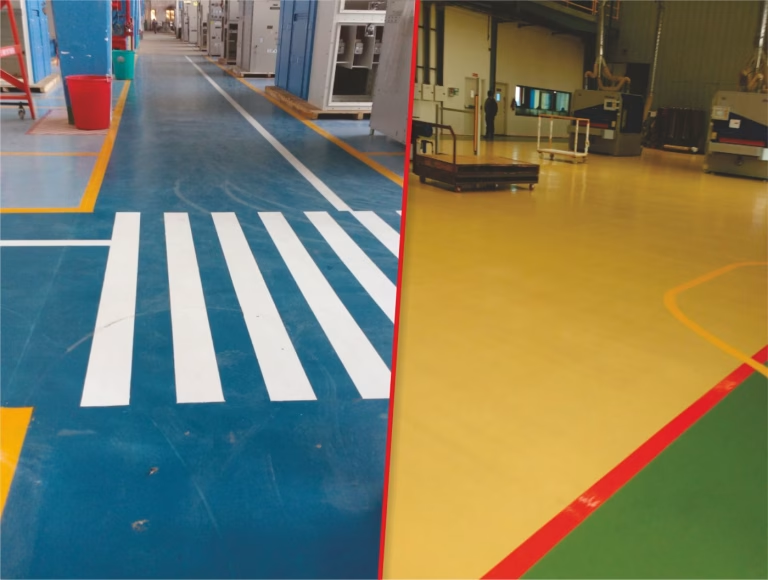
Polyurethane concrete flooring system consists of  polyurethane resin with concrete, aggregates, and various additives. This innovative composition enhances its resistance to chemicals, moisture, and temperature changes, making it suitable for demanding applications such as industrial facilities, warehouses, and parking decks. Choosing the right PU concrete product is essential, as it greatly affects flooring performance. The right PU concrete solution not only enhances structural integrity but also provides long-term durability, reduces maintenance costs, and improves overall project efficiency. Addressing these requirements, Avcon’s Resine Division offers a comprehensive range of tailored PU concrete solutions to meet diverse customer needs.

Avcon’s Resin Division offers turnkey design and engineered concrete flooring services across commercial and industrial sectors. Their services encompass everything from floor assessment, design to floor installation. They are also renowned for manufacturing a wide range of PU concrete products.

The company’s PU concrete products are engineered for exceptional durability and performance in demanding environments. With rapid curing times, they enable quicker installations, minimising downtime and disruption. Highly resistant to chemicals, abrasion, and impact, these products offer a seamless finish that is easy to maintain, ensuring long-lasting protection and improved usability across a range of applications.

PU Concrete Products for Manufacturing & Industrial Facilities
  • Polyurethane Concrete Self-Leveling System: Ideal for concrete floors in industrial and commercial settings.
  • Cast-in-situ and Precast PU Terrazzo Systems: Designed for decorative and functional use in commercial spaces.
  • Anti-Skid PU Deck Protection System: Perfect for car parks and driveway ramps, offering enhanced safety.
  • Tough and resilient with excellent abrasion and impact resistance.
  • Exceptional flexibility and elasticity, allowing for movement without cracking. 
  • Matte finish that gains sheen under traffic for easy cleaning.
  • Resistant to water and a wide range of chemicals.
  • Available in smooth finishes and anti-skid profiles.
  • Heavy-duty screeds for varying temperatures, available in decorative terrazzo forms
  • Manufacturing Facility
  • Pharmaceutical Facility
  • Food and Beverage Facility
  • Commercial spaces
  • Chemical Storage 
  • Car parking decks 
  • Exhibition Centres
  • Aircraft Hangers  etc.

Each sector has unique requirements that necessitate customised floor designs and products to accommodate load resistance and material handling equipment (MHE). The Resine Division effectively addresses these requirements by analysing specific demands and delivering optimal resin flooring services and solutions. Their comprehensive range of PU concrete products adheres to stringent quality standards. With extensive experience, they provide reliable solutions of all sizes, ensuring both durability and performance.

For more details;
Avcon Technics Private Limited
103-105, SHEETAL PLAZA, 499 MODEL COLONY, PUNE- 411016
Phone: +91 9325019411/ 9175935787
Email: sales@avcontechnics.co.in, marketing@avcontechnics.com
Website: www.avcontechnics.com

How to Plan for a Commercial Roof Replacement Without Disrupting Business

0

A commercial roof replacement can feel like a massive undertaking, especially when your business operations are on the line. But with the right planning and approach, you can minimize disruptions and keep things running smoothly. Here’s a step-by-step guide to ensure your roof replacement project is as seamless as possible.

Step 1: Choose the Right Roofing Partner

The foundation of a successful roof replacement lies in selecting the right contractor. Look for these key factors:

  • Experience in Commercial Roofing: Ensure they specialize in large-scale projects.
  • Transparent Communication: A good contractor will keep you in the loop at every stage.
  • Local Knowledge: Searching for a “commercial roofing contractor near me” can help you find professionals who understand local weather conditions and building regulations.

Consider working with Chase Commercial Roofing Flat Roof Specialist LLC, known for their expertise and customer-first approach, to handle your project efficiently and professionally.

Step 2: Assess Your Business Operations

Before the project begins, take a close look at your daily operations to identify potential challenges. Ask yourself:

  • What areas of the building will be affected?
  • Are there high-traffic zones that need to remain accessible?
  • Can certain tasks be rescheduled to reduce disruptions?

By understanding your operational flow, you can work with your contractor to create a plan that minimizes interference.

Step 3: Communicate with Stakeholders

Clear communication is crucial to keeping everyone on the same page.

  • Inform Employees: Let your team know the timeline and any changes to their workspace.
  • Notify Customers: Use signage, email updates, or social media to keep customers in the loop about parking or entrance changes.
  • Coordinate with Vendors: Ensure deliveries and services are scheduled around the project.

Step 4: Schedule Strategically

Timing is everything. Consider these scheduling tips:

  • Choose Off-Peak Hours: If possible, schedule work during times when your business is less busy.
  • Plan Around Weather: A professional contractor like Chase Commercial Roofing Flat Roof Specialist LLC will help you pick the best season for the job.
  • Avoid Busy Seasons: For retail businesses, avoid projects during peak shopping periods.

Step 5: Ensure Safety and Accessibility

Safety should always be a top priority during a roof replacement. Steps to take include:

  • Create Safe Zones: Restrict access to construction areas to keep employees and customers safe.
  • Provide Clear Signage: Direct people to alternative entrances or parking lots.
  • Work with Your Contractor: A good roofing team will have safety measures in place to protect everyone on-site.

Step 6: Monitor Progress

Stay involved throughout the project:

  • Schedule Regular Updates: Set up check-ins with your contractor to discuss progress.
  • Adjust Plans if Needed: Be flexible and ready to make minor changes to accommodate unforeseen challenges.
  • Inspect the Work: Ensure everything meets your expectations before signing off.

Benefits of Planning Ahead

Taking the time to plan properly will pay off in several ways:

  • Minimal Downtime: Keep your business running smoothly.
  • Increased Safety: Protect everyone involved with clear protocols.
  • Better Results: A well-coordinated project ensures a durable, high-quality roof.

Ready to Replace Your Commercial Roof?

Replacing a commercial roof doesn’t have to disrupt your business. With the help of an experienced contractor like Chase Commercial Roofing Flat Roof Specialist LLC, you can ensure the process is efficient, safe, and hassle-free. Start planning today with a “commercial roofing contractor near me” to keep your business on track and under a brand-new, reliable roof.

View Your Trusted Commercial Roofing Contractor Near Me in a full screen map

Media Contact:

Company Name: Chase Commercial Roofing Flat Roof Specialist LLC

Spokesperson: Patrick Ely

Phone: (973) 822-3600

Address: 256 Bergen Blvd Suite 301a  

City: Woodland Park  

State: NJ

Postal Code: 07424

Country: United States

Website: https://chaseroof.com/

Social media:

https://www.facebook.com/people/Chase-Roofing-NJ/61557513041532

https://www.youtube.com/@ChaseCommercialRoofing

The Ultimate Guide to Security Fences: Choosing the Best Type for Your Property

0

Security fences play a vital role in protecting your property, ensuring privacy, and enhancing the overall aesthetic of your home or business.

Whether you want to keep intruders out, safeguard valuable assets, or create a boundary for pets and children, choosing the right fence is key. With so many types of fences available, it can be challenging to know which one best suits your needs.

This guide will help you understand the various options and factors to consider when selecting the perfect security fence for your property.

Types of Security Fences

When it comes to security fences, different materials and designs offer varying levels of protection. Here are some of the most common types:

Chain-Link Fences

Chain-link fences are popular for both residential and commercial properties due to their affordability and durability. They provide a basic level of security but are not ideal for privacy unless fitted with slats or privacy screens. These fences are cost-effective, low maintenance, and easy to install. 

Wooden Fences

Wooden fences are known for their classic appearance and ability to offer both security and privacy. Depending on the height and design, they can be a strong deterrent to trespassers. They provide high privacy, and customizable designs, and enhance the property’s overall look. 

Wrought Iron Fences

Wrought iron fences are durable, elegant, and provide excellent security. They are often seen around high-end homes and historic properties. These fences are strong, long-lasting, and offer a high level of security with an attractive appearance. 

Vinyl Fences

Vinyl fences are a low-maintenance alternative to wood. They are available in a variety of styles and colors, making them a versatile choice. These fences require minimal maintenance, are weather-resistant, and have a long lifespan. 

Aluminum Fences

Aluminum fences are lightweight, resistant to rust, and offer a clean, modern look. While they may not be as secure as wrought iron, they are still a solid option for many properties. They offer the advantages of low maintenance, corrosion resistance, and easy installation. 

Key Factors to Consider

Before choosing a security fence, it’s essential to consider several factors that will impact your decision:

Purpose

Determine the primary purpose of your fence. Is it for security, privacy, or aesthetic appeal? Understanding your goals will help narrow down your options.

Budget

Security fences vary widely in cost depending on the material, height, and installation requirements. Set a budget and explore options within your price range.

Maintenance

Some materials, like wood, require regular upkeep, while others, like vinyl and aluminum, are low maintenance. Choose a fence that matches your desired level of effort.

Local Regulations

Before installing a fence, review your local building codes and the guidelines set by your homeowners’ association. Certain regions may impose limits on the height and type of materials used for fences.

Professional Installation

While DIY fence installation is possible for some materials, hiring a professional ensures the job is done correctly and efficiently. If you’re looking for expert guidance and high-quality fencing solutions, consider contacting https://cityfencefl.com for reliable service and professional installation.

Finding the Right Security Fences

Selecting the right security fences for your property involves considering various factors, including material, design, budget, and maintenance. Whether you prefer the classic look of a wooden fence, the durability of wrought iron, or the low-maintenance appeal of vinyl, there is an option to fit your needs.

How to Evaluate Energy Providers Before Moving to a New City

0

Moving to a new city brings excitement and new opportunities, but it also comes with some challenges. One of the primary tasks is evaluating energy providers to select a reliable option for your new home. If you are moving to Melbourne, this entire process can feel overwhelming due to the variety of choices and a lot of options to choose from.

In this article, we will guide you through the steps to evaluate energy providers. We also explore how Connect Market can simplify your decision-making by comparing energy providers and connecting you with affordable moving services.

Why Selecting the Right Electricity Provider is Important

Picking the right electricity provider is important because it impacts your monthly electricity bills. In Melbourne, you can choose your energy provider. This means you have options to find one that works for you. With so many choices out there, it helps to think about things like prices, customer service, and being green.

Steps to Evaluate Energy Providers

1. Understand Your Energy Needs

Before comparing providers, assess your household’s energy usage. Consider the following:

  • Number of people in your home.
  • Typical electricity and gas usage.
  • Energy-efficient appliances or smart devices.

This will help you identify whether you need a basic plan or one designed for higher consumption.

2. Research Local Providers

Melbourne’s deregulated market includes various energy providers offering competitive pricing and unique benefits. Research popular providers to find the right electricity providers in Melbourne and focus on:

  • Plan options: Check your plan to see whether it has fixed or variable rates.
  • Fees and charges: Look in detail; sometimes the advertised rates come with different hidden costs.
  • Discounts: Many electricity providers offer discounts for on-time payments or bundling multiple utility services.

3. Compare Rates

Energy providers often advertise different rates. Comparing these rates side-by-side will help you identify the most cost-effective option. Pay attention to:

  • Supply charges: Fixed daily charges for connecting your home to the grid.
  • Usage charges: Costs are based on the energy you consume.
  • Time of use rates: variable pricing depending on the time of day.

4. Evaluate Customer Reviews

Customer reviews provide insights into the quality of service offered by energy providers. Look for reviews on:

  • Reliability of service.
  • Responsiveness to queries.
  • Transparency in billing.

5. Check Sustainability Options

If reducing your carbon footprint is important, research via the Vic Energy Compare tool and check which providers offer better renewable energy plans. Many Melbourne providers allow you to add green energy options, such as solar or wind energy, to your plan.

6. Verify Contract Terms

Read the terms and conditions of each energy plan. Check for:

  • Contract length of the plan.
  • Early termination fees or exit fees.
  • Price increases after introductory periods.

How Connect Market Can Help

Connect Market is a platform designed to make moving and setting up utilities in Melbourne easier. It simplifies the process of finding the best energy provider and connects you with trusted moving services. Here’s how it works:

1. Compare Energy Providers

Connect Market lets you compare energy providers in Melbourne based on your specific needs. You can filter options by:

  • Price and type of plans.
  • Green energy availability.
  • Customer satisfaction ratings.

This ensures you get a clear picture of your options without having to visit multiple websites.

2. Expert Guidance

The platform offers expert advice to help you understand the details of energy plans. If you’re unsure about pricing structures or additional fees, Connect Market’s team can explain these aspects in simple terms, helping you make an informed decision.

3. Affordable Moving Services

In addition to energy comparisons, Connect Market connects you with reliable moving companies in Melbourne. They make your move easy and affordable. Whether you’re changing apartments or moving into a house, they have a great network of movers. You’ll get a good price and quality service.

4. Customised Plans for Every Budget

Whether you’re looking for a budget-friendly plan or one with advanced features like green energy options, Connect Market helps you find something that aligns with your financial and environmental goals. This flexibility ensures you never feel stuck with a provider that doesn’t meet your needs.

Why Connect Market Stands Out

1. Time Saving Convenience

Instead of spending hours researching energy providers and movers, Connect Market consolidates everything in one place. The platform saves you time and effort by providing detailed comparisons and recommendations.

2. User Friendly Interface

The website is professionally designed for simplicity and efficiency, allowing every user to find out various options effortlessly. You don’t need to know much about tech or have special skills to get the details or help you want.

3. Budget-friendly options

Connect Market helps you choose eco-friendly options. They give you info on renewable energy, green practices, and energy-saving solutions. It makes it easy to make smart choices for the planet in your new home in Melbourne.

4. Commitment to Sustainability

Connect Market makes you one step ahead if you want to live in an eco-friendly way. They provide clear information on renewable energy providers, eco-friendly plans, and energy-saving tips with solutions. It supports your efforts to make environmentally conscious choices in your new Melbourne home.

5. Transparent Insights

Connect Market provides clear and honest comparisons, ensuring that you know exactly what to expect from each provider or service. This transparency helps you avoid unexpected fees or hidden conditions.

Final Thoughts

Moving to a new city like Melbourne requires proper planning, especially when picking a good and reliable energy provider. Start by analysing your needs, then do some research on different providers. Comparing platforms can help you compare multiple options and find the best deals. 

Connect Market also helps with more than just finding energy providers. They can also find budget-friendly moving companies and guide you to move stress-free. Connect Market makes the process simple and efficient.

If you want a reliable electricity provider or professional moving services, Connect Market has you covered. Lean on their help to kick off your new life in Melbourne smoothly. With their support, you can save money and make your new place comfortable.

Ensuring Structural Integrity: The Importance of Remedial Building Services

0

Maintaining the structural integrity of buildings is not only essential for the safety of its occupants but also for the longevity of the structure itself. Over time, buildings can deteriorate due to a variety of factors, including environmental conditions, wear and tear, and construction deficiencies. When such issues arise, it becomes paramount to seek professional remedial building services to address them promptly and efficiently. In this article, we will explore the critical role of these services in preserving buildings and ensuring their safe use for years to come.

What are Remedial Building Services?

Remedial building services are comprehensive interventions aimed at rectifying defects within a building’s structure. These services can range from minor repairs to extensive restorations, all with the goal of restoring the building to a safe, functional, and aesthetically pleasing state. Professionals in this field employ a variety of techniques and materials to correct problems and prevent future damage.

Identifying the Need for Remedial Work

The first step in preserving a building’s integrity involves identifying the signs that indicate a need for remedial work. Cracks in walls, water infiltration, corroded reinforcement, spalling concrete, and subsidence are just a few of the symptoms that building owners should watch for. When these signs are detected, it’s crucial to act without delay, as procrastination can exacerbate the issues, increasing risk and repair costs.

The Role of Expert Diagnosis

A professional assessment by experts in remedial building services is the cornerstone of any effective restoration process. Skilled engineers and technicians evaluate the extent of the damage and determine the underlying causes. They provide a comprehensive diagnosis that will guide the subsequent remedial plan, ensuring a targeted response to the building’s specific needs.

Choosing the Right Remedial Building Services Provider

When selecting a provider for remedial building work, building owners should seek out certified and experienced professionals. A reputable firm will offer a suite of services, including structural repairs, waterproofing, facade restorations, and crack injections, all tailored to address the unique challenges of the building in question.

Designing a Custom Remedial Plan

Each building is unique, and so are its restoration needs. A custom remedial plan takes into account the building’s design, the materials used in its construction, its age, and the specific defects that need to be addressed. With a well-crafted plan, remedial work can be carried out effectively, with minimal disruption to the building’s function.

Implementing the Remedial Works

The actual implementation of remedial building services is a structured process that may involve various stages, from initial preparatory work to the final touches. Trained professionals work in a methodical manner, ensuring that each phase is completed to high standards. The use of quality materials and current best practices in building restoration is an integral part of this process.

Structural Repairs

Structures that show signs of weakness or damage require specialised attention. From reinforcing corroded steelwork to replacing deteriorated sections of a building, structural repairs are vital for restoring integrity. These works not only support the load-bearing elements of the building but also prevent further damage from occurring.

Facade Restoration

The facade is not only the most visible part of a building but also the first line of defence against environmental factors. Over time, facades can be compromised due to weathering or neglect. A comprehensive facade restoration not only revives the aesthetic appeal of the building but also protects it against future wear and tear.

Waterproofing

Water infiltration can lead to significant damage within a building’s structure, including mould growth and material decay. Effective waterproofing services are therefore a crucial aspect of remedial work, ensuring that buildings remain dry and protected from the elements.

Ensuring Compliance

Adherence to building codes and regulations is an essential element of remedial building services. Professionals in this field are equipped to navigate the complex regulatory landscape, ensuring that all repair work is compliant with local laws and safety standards.

Post-Remedial Care

Once remedial work is completed, the ongoing maintenance of the building becomes vital. Regular inspections and maintenance can prevent the recurrence of issues and ensure that the building’s structure remains secure and functional.

Why Investing in Remedial Building Services is Crucial

The integrity of a building has far-reaching implications for safety, property value, and aesthetic appeal. Investing in remedial building services is not an expense but a necessary investment in the future of the property. Timely remediation can prevent catastrophic failures, save money in the long term, and provide peace of mind for building owners and occupants alike.

Conclusion

The importance of ensuring structural integrity through professional remedial building services cannot be overstated. The safety, functionality, and longevity of buildings depend on it. By addressing structural issues head-on, with the help of experienced professionals, building owners can preserve their assets and ensure their proper function for generations to come.

A-khata only for plots with planning authority approval: BBMP

Ā TheĀ Bruhat Bengaluru Mahanagara PalikeĀ (BBMP) said even individual plots should have approvals from the competent planning authority to be eligible for being issued A-khatas.

This follows an amendment to Section 17 of theĀ KarnatakaĀ Town and Country Planning (KTCP) Act-1961, BBMP said in a circular issued on Tuesday.

Hitherto, the civic body was issuing A-khatas under Section 95 of the Karnataka Land Revenue Act-1964 to individual plots if they had land use conversion approvals.

However, following the KTCP Act amendment, division and subdivision of existing A-khatas will not be allowed for individual plots which have land use conversion but lack approval from the competent planning authority.BBMP said the division and sub-division of A or B khatas will be allowed only after the competent planning authority permits it.

It also said that in case of individual/multiple units standing on properties which have A-khatas, individual A-khatas for units will be issued if they have all required approvals including approval letter from the planning authority.

BBMP cracks down on property tax defaulters as OTS scheme ends

TheĀ Bruhat Bengaluru Mahanagara PalikeĀ (BBMP) is gearing up to take stringent action against major commercialĀ property taxĀ defaulters. BBMP Chief CommissionerĀ Tushar Giri NathĀ announced that following the expiry of the One-Time Settlement (OTS) scheme on November 30, 2024, the civic body has started preparing a comprehensive list of defaulters.

The comprehensive plan includes targeting 240 properties across various zones, with zonal commissioners, joint commissioners, and officials tasked with recovering outstanding dues from at least 10 major defaulters each.

ā€œThe focus will primarily be on commercial properties, ensuring compliance through the sealing of buildings. Residential properties will not be seized; however, unoccupied residential buildings may face action,ā€ Nath said, further adding that a staggering ₹300 crore remains outstanding from nearly 2 lakh properties, despite the fact that the BBMP oversees a total of 23 lakh khatas, of which only 21 lakh are currently under the tax ambit.ā€œSealing of properties is important as it sends a strong message to defaulters that tax evasion will not be tolerated. While BBMP is empowered to auction seized properties, due legal procedures, including sufficient notice periods, will be followed before any auction. Our focus is on recovering dues from commercial properties and ensuring that defaulters are held accountable.

We aim to deter such practices and create awareness that BBMP will not take these matters lightly,ā€ he said, adding that the civic body may also consider auctioning high-value properties of major tax defaulters if necessary.

On the other hand, Bengaluru Coalition, expressed dissatisfaction with BBMP’s current strategy, labelling it as both inadequate and superficial. In a statement, the coalition argued that sealing properties under theĀ Karnataka Town and Country Planning ActĀ (KTCPA) Section 15(4) has proven ineffective and is more of a token gesture lacking real impact.

ā€œThe recent actions seem like a farce to show activity, especially in light of recent judicial and appellate orders from the Supreme Court, High Court, and Lokayukta. After dismissing appeals or completing inquiries, the logical next step, as per law, is the demolition of deviations without leniency. The Supreme Court’s Civil Appeal 14604 of 2024 clearly directs this. Sealing properties, particularly when Confirmation Orders under Section 248(3) have been pending for over a year, is a regressive move and fails to address the issue meaningfully,ā€ the statement read.

PM Modi flags off Pravasi Bharatiya Express in Odisha

0

Prime Minister Narendra Modi on Thursday inaugurated the 18thĀ Pravasi Bharatiya DivasĀ (PBD) convention inĀ Bhubaneswar. As part of the celebrations, PM Modi also flagged off theĀ Pravasi Bharatiya Express, a special tourist train dedicated to theĀ Indian diaspora, according to an official press release.

The train will depart from Nizamuddin Railway Station in Delhi and will travel to multiple destinations of tourism and religious significance across India over a period of three weeks. The Pravasi Bharatiya Express is part of theĀ Pravasi Teertha Darshan Yojana.

ā€œEvery sector in India is advancing to new heights, breaking records in renewable energy, aviation, electric mobility, metro networks, and bullet train projects. India is now manufacturing ā€˜Made in India’ fighter jets and transport aircraft,ā€ PM Modi said during the event.

Importance of Pravasi Bharatiya Divas

Pravasi Bharatiya Divas is theĀ Government of India’s flagship event that provides a significant platform for engaging with the Indian diaspora. The 18th PBD convention is being held in collaboration with the State Government of Odisha from January 8–10, 2025, in Bhubaneswar. The theme of this year’s convention is “The Diaspora’s Contribution to aĀ Viksit Bharat.” Members of the Indian diaspora from more than 50 countries have registered to participate in the event.

What are you looking in our Website.*

What are you looking in our Website.*

Clear selection

Name*

Name*

Clear selection

Email*

Email*

Clear selection

Mobile No*

Mobile No*

Clear selection

Industry*

Industry*

Clear selection

This will close in 0 seconds