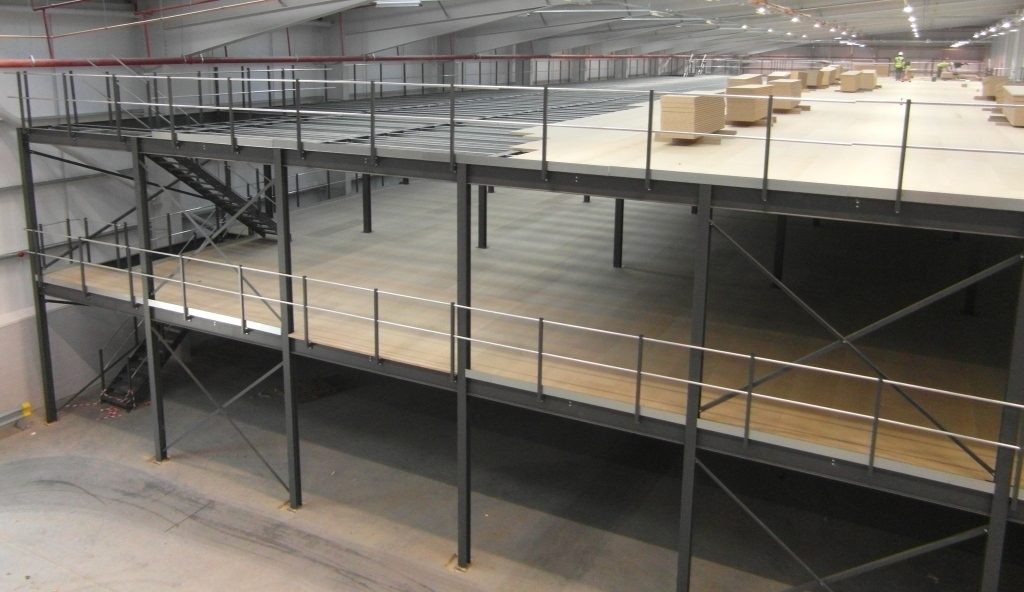
If you’re comparing mezzanine floor suppliers, you’ve likely already decided that installing a mezzanine is the right solution for your space. The difference between a smooth project and a costly setback now comes down to who you appoint. In industrial, warehouse and fast-growing eCommerce environments, space is directly linked to output, efficiency and profitability. Choosing the right partner is therefore not simply a construction decision; it is a commercial one.
For business owners and managing directors, mezzanine flooring represents a practical alternative to relocation. For operations managers and facilities teams, it must integrate safely into live working environments without disrupting workflow. The supplier you choose determines whether that balance is achieved.
Choosing Mezzanine Floor Suppliers That Take Full Project Responsibility
Not all mezzanine floor suppliers operate in the same way. Some act purely as steel fabricators, supplying the structure and leaving design coordination, compliance submissions and fit-out elements to third parties. Others operate as full-service mezzanine floor companies, taking responsibility from concept through to final handover.
A turnkey mezzanine floor installation significantly reduces risk. When structural design, fabrication, installation and regulatory compliance are managed under one contract, accountability is clear. There is no ambiguity over who is responsible for calculations, fire protection or building control approval. For growing businesses, this clarity protects both budget and timeline.
If you are assessing suppliers offering complete design and installation services, it is worth reviewing their full-service approach in detail. For example, many established providers outline their integrated design, compliance and fit-out capabilities within their mezzanine flooring solutions, giving you a clearer understanding of scope and responsibility.
Why SEMA-Approved Mezzanine Installers Provide Added Assurance
One of the most important credentials to look for when comparing mezzanine floor companies is accreditation from Storage Equipment Manufacturers’ Association, commonly known as SEMA. While some suppliers reference standards generally, SEMA approval involves formal auditing and compliance with recognised industry codes of practice.
SEMA accreditation includes:
- Independent assessment of design processes
- Audited installation standards
- Review of safety procedures
- Adherence to a defined Code of Practice
- Verification of structural integrity and correct load specification
- Safe, compliant installation methods
For businesses investing in industrial mezzanine floor systems, this level of external validation provides reassurance that goes beyond marketing claims.
From a risk management perspective, SEMA-approved mezzanine installers can also help reduce liability. Insurance providers and building control officers are increasingly attentive to documented compliance. Working with accredited mezzanine floor suppliers demonstrates due diligence and strengthens your position should future inspections, audits or claims arise.
UK Building Regulations Every Mezzanine Floor Contractor Must Meet
All mezzanine floors in the UK must comply with Building Regulations overseen by the UK Government. While many business owners assume compliance is straightforward, the regulatory framework can be complex depending on use, size and occupancy.
Fire Safety (Part B)
Part B focuses on fire safety. Mezzanine floors may require fire resistance measures, protected staircases, sprinkler systems or upgraded detection depending on floor area and intended use. Means of escape must be clearly defined, and travel distances assessed to ensure occupant safety.
Additional Structural and Access Considerations
Additional considerations include load capacity calculations for storage areas, edge protection, handrails and pallet gates. In some cases, planning permission may also apply, particularly if external alterations or significant structural changes are proposed.
Supplier Responsibility for Compliance
Experienced mezzanine floor suppliers manage these requirements on behalf of the client. This includes preparing structural calculations, submitting drawings to building control, liaising with inspectors and providing compliance documentation upon completion. The responsibility should not sit with the business owner or operations team; it should be embedded within the supplier’s service.

Red Flags When Comparing Mezzanine Floor Contractors
When reviewing proposals from mezzanine floor contractors, certain warning signs should immediately raise concern. A professional supplier will be transparent, specific and structured in their approach. If details are vague or responsibilities unclear, the risk often transfers back to you.
Key red flags to watch for include:
- Vague load specifications or references to “standard capacity” without structural calculations. Mezzanine floors should always be engineered around your specific operational loads and intended use.
- No clear mention of compliance documentation or building control coordination. If regulatory submissions are not explicitly included, you may find yourself responsible for approvals.
- Unclear installation timescales, which can cause unnecessary disruption, particularly in busy warehouse or logistics environments.
- Heavy subcontracting without defined project management, leading to blurred accountability and communication gaps.
- No accreditation or evidence of independent auditing, especially concerning for larger or higher-load industrial mezzanine flooring projects.
Identifying these red flags early helps protect both capital investment and operational continuity.
Choosing a Mezzanine Floor Supplier That Protects Your Investment
A mezzanine floor is not simply an internal alteration; it is a strategic asset that increases usable space, supports growth and enhances operational efficiency. Choosing the right mezzanine floor supplier ensures that this investment delivers long-term value rather than short-term complications.
Full design-to-installation responsibility, embedded compliance expertise and SEMA-accredited mezzanine installers provide clear reassurance from both a commercial and operational perspective. Experience across warehouse, office and retail environments ensures adaptability, while turnkey fit-out capability helps bring new space into use quickly and efficiently.
For SME leaders seeking growth without the cost of relocation, and for operations managers focused on safety and minimal disruption, the right supplier makes the difference between a straightforward upgrade and an avoidable risk.