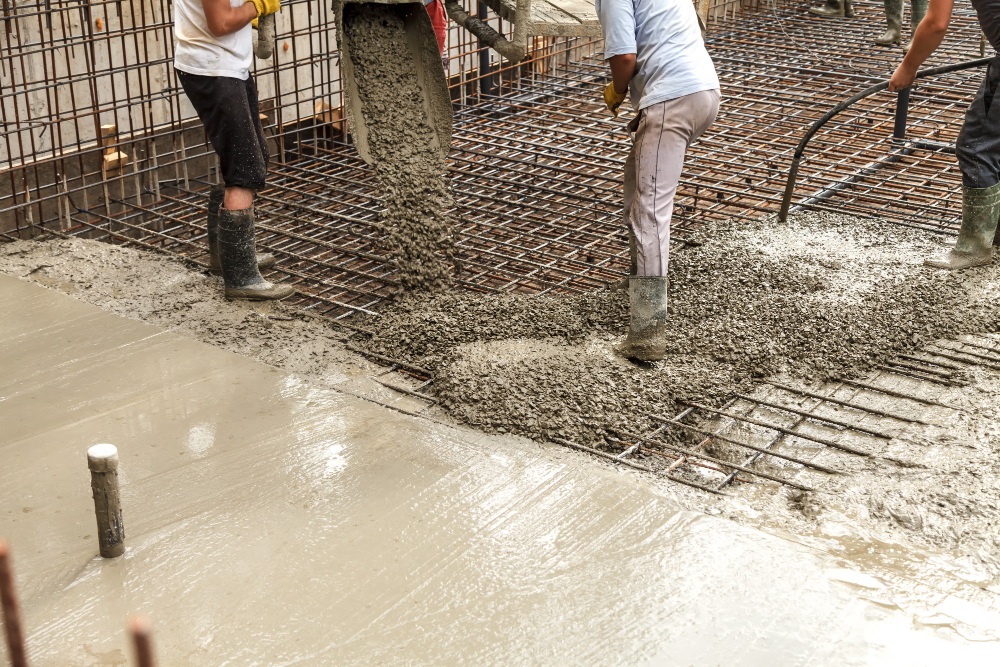
Mass concrete pouring is used for large structural elements such as raft foundations, dams, bridge piers, mat foundations, and thick retaining walls. Unlike regular concrete work, it focuses on controlling heat of hydration and temperature variation rather than strength alone. Improper control of mix design, pouring stages, and curing can lead to temperature-related cracking and service life concerns. This article explains essential mass concrete techniques and challenges, keeping site realities and performance requirements in focus.
Understanding Mass Concrete Pouring
Mass concrete involves large concrete pours where heat generated during hydration affects performance. Cement produces heat when mixed with water. In large placements, this heat remains within the concrete mass, causing temperature variation between the inner core and exposed surfaces. Without control, this can result in cracking.
The objective of mass concrete work is to control temperature rise and cooling rate. Mix design, pour sequencing, curing methods, and temperature monitoring all contribute to reducing thermal stress and ensuring long-term structural performance.
Key Techniques Used in Mass Concrete Construction
Mass concrete construction relies on controlled techniques to manage heat development and temperature variation. Engineers select these methods based on pour volume, exposure conditions, and design requirements. Effective control reduces thermal stress and cracking risk.
- Optimized concrete mix design to reduce heat of hydration using mineral admixtures
- Controlled pour sequence to limit temperature buildup within the concrete mass
- Pre-cooling methods to reduce initial concrete temperature before placement
- Post-cooling systems for internal temperature regulation during hydration
- Temperature monitoring systems for continuous tracking of temperature differentials
- Extended curing practices to control surface cooling and moisture loss
Common Challenges in Mass Concrete Pouring
Mass concrete pouring involves site-level challenges that can affect temperature control and overall concrete performance. These issues often arise during placement and curing and need careful coordination to prevent defects and delays.
- Thermal cracking risk due to temperature differences between the core and surface
- Weather-related issues where heat speeds hydration and cold slows setting and strength gain
- Logistics and placement time affected by supply delays or equipment breakdowns
- Quality control complexity from continuous checks on temperature, slump, and placement rate
- Higher material and planning costs linked to special cement, cooling systems, and sensors
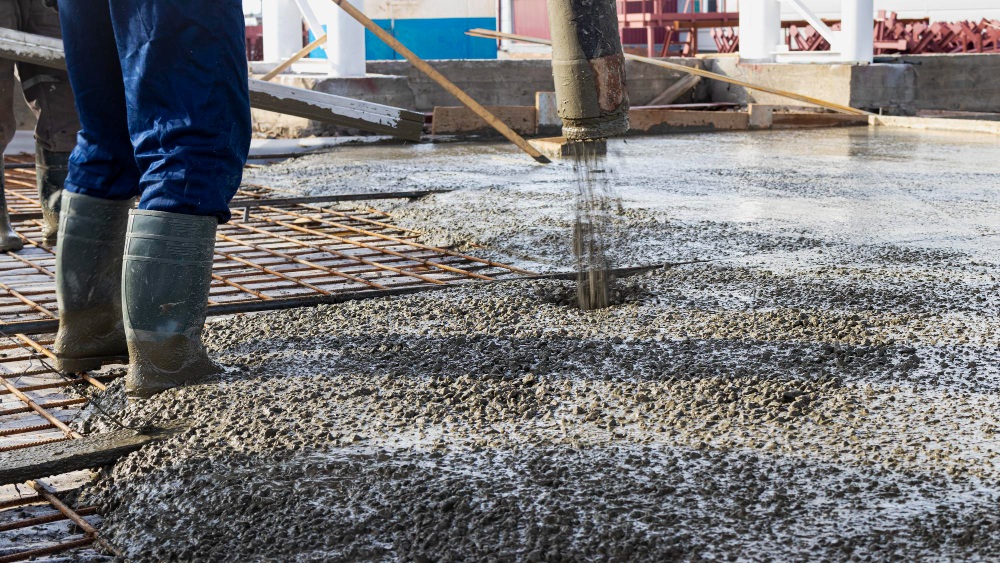
Best Practices for Effective Mass Concrete Pouring
Good results in mass concrete pouring come from planning the work before concrete reaches the site. Decisions made during design and preparation have a direct impact on temperature control, cracking risk, and overall durability.
- Conduct detailed thermal analysis during the design stage
- Finalize concrete mix design through laboratory trials
- Plan pour size, duration, and sequence before execution
- Assign trained personnel for continuous temperature monitoring
- Maintain proper documentation for quality control and compliance
Why Mass Concrete Planning Matters
In infrastructure projects, poor mass concrete planning can result in cracking, repairs, and reduced structural performance. Public and government works require long service life with limited maintenance, which makes early planning essential. Proper selection of techniques, materials, and control measures helps meet design standards and project requirements. Mass concrete pouring depends on control at every stage, not fast execution. Teams need to manage temperature, placement, and curing while accounting for how concrete behaves over time. With proper handling, mass concrete supports stable foundations and consistent long-term performance.