
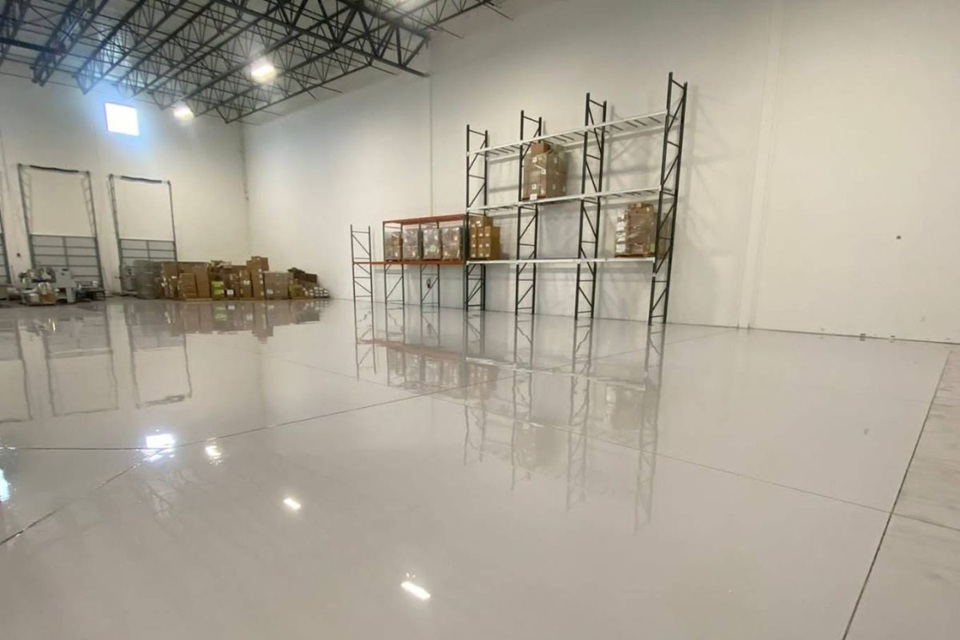
You’re staring at the freshly rolled-on epoxy, wondering when it’s safe to tread, move the couch, or invite friends over to admire the shine.
Understanding cure times means fewer surprises and no accidental footprints.
Factors like temperature, humidity, and product formulation all play roles—sometimes bigger than you’d think.
For a deeper dive into region-specific considerations, especially in Central California’s climate, explore epoxyfloorsfresno.com while you wait for even more insights.
What Is Epoxy Curing?
Epoxy curing is the chemical reaction that turns mixed resin and hardener from a pourable liquid into a solid plastic network able to lock onto concrete’s microscopic pores.
Liquid, Gel, Solid—Three Familiar Stages
During the liquid stage working time remains; the mixture self-levels and wets the slab. Gel follows, a rubbery phase where prints stay yet recoats still chemically bond.
Set Time Versus Cure Time
Set time is when the coating stops flowing and resists light fingerprints. Full cure, achieved days later, yields ninety-plus percent of ultimate hardness and chemical resistance.
Post-Cure Heat
Warm air or radiant heaters after day two speed crosslinking, reduce fabric print-through, and boost temperature limits—popular on commercial kitchens and shop floors.
Why Does Cure Matter?
A floor only performs if curing completes; incomplete networks blister, chalk, or delaminate under forklifts, road salt, or dropped tools, reversing the investment you just made.
Strength and Adhesion
The polymer lattice knits tightly to concrete capillaries when cure finishes, delivering tensile pull-off values surpassing the slab’s own cohesive limits.
Chemical Resistance
Fuel, brake fluid, and household bleach remain harmless once the crosslinks mature; early exposure during green stages etches the surface and leaves permanent cloudy spots.
Appearance Longevity
Properly cured coatings keep gloss and color because pigments stay encapsulated. Under-cured films yellow quickly and telegraph roller marks you thought were invisible.
Which Factors Slow Curing?
Several predictable conditions drag the clock, so schedule wisely when the calendar or jobsite presents any of the following obstacles to a timely turnaround.
- Low slab temperature: Every 10 °F drop roughly doubles cure time; below 50 °F most epoxies stall completely without special cold-weather hardeners.
- High relative humidity: Moisture condensing on the surface forms amine blush that must be sanded off, effectively adding an unplanned workday.
- Thick pours or puddles: Excess material traps heat then insulates itself; outer film hardens while inner resin stays soft for hours.
- Wrong mix ratio: Starved or over-hardened batches leave unreacted components that migrate and soften the coating weeks later.
Manage these variables with heaters, dehumidifiers, proper squeegee techniques, and a calibrated mixing paddle to keep the project on track.
How Long Is the Initial Set?
The initial set—sometimes called “walk-away time”—arrives when footprints no longer appear, yet fingernails still dent. Expect three to eight hours for most garage formulations.
- Fast-cure kits: Accelerated chemistries aimed at cold climates reach initial set in two hours, allowing same-day color flakes and clear coats.
- Standard 100% solids: Mid-range blends running at 70 °F typically need six hours before accepting broadcast media or spike-shoes for top-coat work.
- Waterborne primers: These breathe moisture out of green concrete but may require eight hours before overlaying due to evaporative drying in addition to curing.
- High-build novolacs: Chemical-resistant products stay tacky longer—plan an overnight wait to avoid trapping solvents beneath secondary layers.
Always confirm by pressing a gloved finger; a slight tack with no transfer signals the sweet spot for recoating.
When Is Full Strength?
Full mechanical and chemical performance arrives after the polymerization reaction plateaus; manufacturers label this moment “return to service” in their technical data sheets.
Light Foot Traffic
At seventy degrees most systems hit functional hardness in twenty-four hours, so you can replace tools, reopen a storefront, or move storage boxes carefully.
Vehicle Traffic
Wait seventy-two hours before pulling cars inside; hot tires and steering friction demand higher compressive strength than footsteps or dollies.
Ultimate Cure
The last traces of reactive groups connect during the first seven days, granting peak stain resistance and allowing you to set jack stands or heavy machinery.
Does Temperature Affect Time?
Temperature rules the reaction rate; for every degree drop molecules collide less often, expanding your timeline and potentially compromising adhesion on chilly, damp slabs.
Warm-Weather Best-Case
Working around 75 °F gives a balanced pot life and overnight cure; coatings feel glass-hard by morning without risking premature gelling in the bucket.
Cold-Weather Strategies
Choose winter-grade hardeners, tent the workspace, and pre-warm materials to avoid milky finishes and blisters.
Hot-Weather Precautions
Above 90 °F epoxy can exotherm aggressively. Mix smaller batches, roll immediately, and stage kits in shade to prevent roller lines and reinforced roller covers bonding to floors.
Can Humidity Delay Hardening?
Absolutely—high ambient or in-slab moisture reacts with amine hardeners, causing carbonation, blush, and surface tack that refuse to sand smooth without extra elbow grease.
Measuring Concrete RH
Insert in-situ probes to 40% slab depth; a reading below 75% relative humidity generally signals safe conditions for vapor-tight coatings according to ASTM F2170.
Moisture-Mitigation Primers
High-build epoxy-cement hybrids handle slabs reaching 99% RH, bridging pores and providing a dry substrate for decorative layers.
Environmental Controls
Run dehumidifiers overnight before mixing, and keep garage doors closed until the top coat turns matte to lock in predictable curing conditions.
How To Speed Curing?
When project schedules squeeze tight, contractors deploy several proven tactics to shave hours without jeopardizing long-term durability or warranty coverage.
- Raise temperature: Space heaters or heated air movers lift ambient and slab temperatures into the sweet spot between 70 °F and 80 °F.
- Use fast hardener: Accelerated catalysts cut cure windows in half; always verify compatibility with pigments and clear coats before switching.
- Add ventilation: Gentle airflow strips amine vapors and moisture, helping surface films flash quicker and reducing blush risk.
- Infrared lamps: Targeted radiant energy speeds post-cure on high-build metallic designs without overheating the entire workspace.
Combine two or more of these methods and you can often reopen a commercial bay the next morning, impressing clients and boosting crew productivity.
Is New Concrete Different?
Yes—fresh slabs hide liters of water that slowly migrate upward; coat too soon and vapor bubbles erupt like geysers under your newly installed epoxy artwork.
The 28-Day Rule
Industry tradition allows concrete a month to hydrate and expel excess moisture before sealing, though modern RH testing gives a more precise green-light.
Why Moisture Matters
Trapped vapor accumulates pressure, which can lift even high-build novolac systems, causing catastrophic delamination you will pay twice to repair.
Testing Options
Calcium-chloride kits read surface emission, but in-situ RH probes measure deep-slab conditions and guide moisture-mitigation decisions.
When Can Foot Traffic?
Timelines vary by product, but a practical rule of thumb says carefully tiptoe after one full revolution of the clock and invite guests after day three.
- Residential garages: Family members can retrieve bicycles after twenty-four hours; keep SUVs outside until the seventy-two-hour mark.
- Retail spaces: Stock shelves two days post-coat, yet delay pallet-jack runs until the third sunrise to prevent wheel-rut impressions.
- Industrial plants: Light shift work resumes in twenty-four hours when warm, but schedule forklift routes starting day four for safety.
- Maintenance tips: Place felt pads under furniture temporarily; slide nothing heavy until seven days pass to guarantee scratch-free finishes.
Following manufacturer charts and site-specific testing ensures the impressive shine you see on reveal day lasts for decades of daily abuse.
Set-Time Sense
You now know epoxy’s cure phases, the variables that stretch them, and practical checks to confirm readiness before loading the slab. When project timing feels tight, you can compare your conditions with the field notes at maderaconcretepros.com, then adjust temperature, airflow, and scheduling accordingly to avoid premature traffic and wear.

