
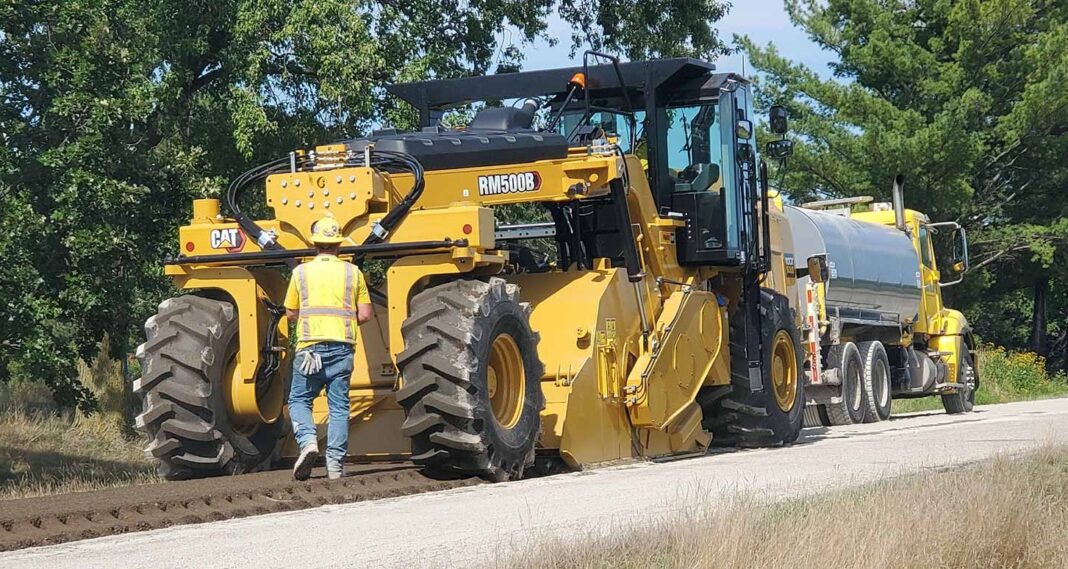
Full-Depth Reconstruction (FDR) is one of the most effective and durable methods for rehabilitating severely distressed pavement. Unlike superficial maintenance techniques like patching or overlaying, FDR involves complete removal and replacement of the pavement structure to restore its original strength and serviceability. This technique is widely used in road infrastructure projects worldwide, including highways, arterial roads, and heavily trafficked urban streets, where long-term performance is critical.
Understanding Full-Depth Reconstruction
Full-Depth Reconstruction is a pavement rehabilitation technique where all layers of the pavement, from the surface to the subgrade, are removed and replaced. The goal is to restore the structural integrity of the road, providing a long-lasting solution for areas where conventional overlay or resurfacing cannot effectively address extensive damage.
Key Features of FDR:
- Complete Removal: Both the surface layer (asphalt or concrete) and underlying base layers are removed.
- Subgrade Stabilization: The underlying soil is treated or improved to provide a solid foundation.
- Layer Replacement: New base, binder, and surface layers are constructed according to the designed pavement thickness.
- Traffic Accommodation: FDR projects often involve phased construction to maintain traffic flow during rehabilitation.
When is Full-Depth Reconstruction Needed?
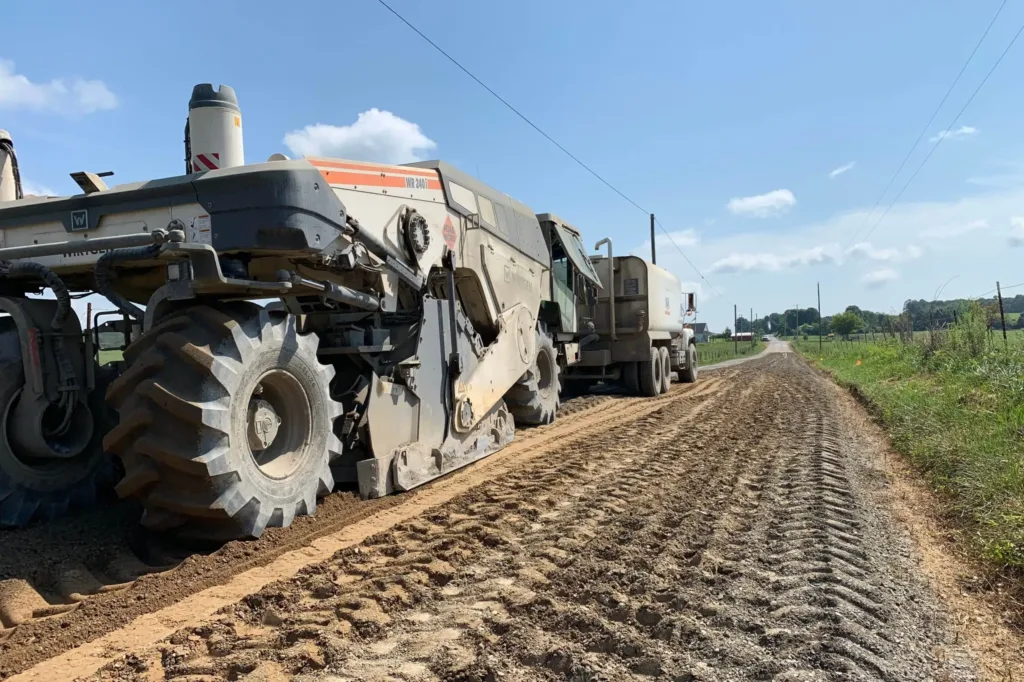
FDR is typically chosen for roads that exhibit severe structural failure. Signs indicating the need for full-depth reconstruction include:
- Extensive Alligator Cracking: Network of interconnected cracks due to fatigue failure of the pavement structure.
- Rutting and Deformation: Permanent depressions in the wheel paths caused by repeated traffic loading.
- Potholes and Failures: Severe localized pavement failures that compromise safety.
- Loss of Load-Bearing Capacity: When the pavement cannot safely support vehicle loads, even after routine maintenance.
In contrast to mill-and-overlay methods, FDR addresses the root structural problems rather than temporarily covering the defects.
Materials Used in Full-Depth Reconstruction
The selection of materials is critical for the success and longevity of an FDR project. Common materials include:
1. Asphalt Layers
- Surface Course: High-quality hot mix asphalt (HMA) or polymer-modified asphalt is used for the wearing surface to withstand traffic abrasion and provide skid resistance.
- Binder Course: Provides structural support and transfers loads to the base layer.
2. Base and Subbase Materials
- Crushed Stone or Aggregate Base: Provides load distribution and stability.
- Stabilized Base: Sometimes cement or lime is mixed with aggregates to improve strength.
3. Subgrade Treatment
- Soil Stabilization: Weak or soft subgrades are stabilized using cement, lime, or geosynthetics to prevent settlement and enhance load-bearing capacity.
4. Reinforcements (Optional)
- Geotextiles or Geogrids: Used to reinforce base layers and prevent reflective cracking.
FDR Construction Process
The FDR process involves multiple steps, each critical to ensuring a durable pavement structure:
1. Pre-Construction Survey
Before reconstruction begins, a detailed survey is conducted to evaluate the pavement condition, identify utilities, and determine the pavement thickness required. Geotechnical investigations assess subgrade strength and drainage conditions.
2. Pavement Removal
All deteriorated pavement and base layers are removed using heavy equipment like milling machines, excavators, or graders. The depth of removal depends on the extent of damage and design requirements.
3. Subgrade Preparation
- Compaction: Subgrade soil is compacted to achieve required density.
- Stabilization: Weak subgrades may be treated with cement, lime, or other stabilizing agents.
- Drainage Provision: Proper drainage layers are constructed to prevent water accumulation under the pavement, which can weaken the structure over time.
4. Base Layer Construction
A new base layer is laid using crushed stone or stabilized aggregate. Proper grading, compaction, and moisture content are maintained to achieve maximum strength. In some cases, a cement-treated base (CTB) is used to enhance durability.
5. Binder and Surface Layer Laying
- Binder Course: A strong intermediate asphalt layer that distributes traffic loads evenly.
- Surface Course: The final wearing layer, designed for skid resistance and weather protection.
6. Quality Control and Testing
Throughout construction, quality checks are performed to ensure compliance with design specifications. Common tests include:
- Compaction Tests: To verify proper density of base and asphalt layers.
- Thickness Measurement: Ensures uniform pavement depth.
- Asphalt Mix Testing: Checks properties like stability, flow, and binder content.
7. Opening to Traffic
Once the pavement layers are constructed and tested, the road is allowed to open to traffic. Proper curing time for cement-treated layers and temperature considerations for asphalt layers are followed to ensure optimal performance.
Advantages of Full-Depth Reconstruction
FDR offers several benefits over traditional overlay or patching methods:
- Long-Term Performance: Completely restores structural integrity, resulting in a longer service life.
- Improved Load-Bearing Capacity: Can accommodate heavy traffic loads without premature failure.
- Reduced Maintenance: Less frequent repairs are needed compared to partial rehabilitation methods.
- Safety Improvements: Eliminates hazardous surface defects like potholes, rutting, and alligator cracking.
- Adaptability: Can be combined with soil stabilization techniques for roads with weak subgrades.
Applications of Full-Depth Reconstruction
FDR is suitable for various types of roads and situations:
- Highways and Expressways: For roads with heavy commercial traffic and significant structural distress.
- Urban Roads: Major arterial roads that need a long-lasting solution for safety and durability.
- Airport Runways and Taxiways: Where pavement strength and smoothness are critical.
- Industrial Access Roads: Roads carrying heavy trucks and equipment, where frequent overlays are impractical.
Full-Depth Reconstruction vs. Mill-and-Overlay
It is important to understand why FDR is chosen over conventional rehabilitation methods:
| Feature | Full-Depth Reconstruction | Mill-and-Overlay |
| Pavement Layers Removed | Full pavement depth | Only surface layers |
| Structural Strength | Restored completely | May not improve underlying weak layers |
| Service Life | 15–25 years or more | 5–10 years depending on condition |
| Cost | Higher initial cost | Lower initial cost, higher maintenance over time |
| Suitable For | Severely deteriorated roads | Moderate distress, minor cracking or rutting |
Equipments Used in Full-Depth Reconstruction
Full-Depth Reconstruction relies on specialized machinery to efficiently remove damaged pavement, prepare subgrades, and construct new layers. The correct selection and use of equipment are critical for quality, speed, and safety.
- Pavement Milling Machines are used to remove existing asphalt or concrete layers quickly and uniformly. These machines feature adjustable milling depths and conveyor systems to collect the removed material, making them essential for both full pavement removal and recycling old materials for reuse.
- Excavators and Backhoes assist in excavating damaged pavement and preparing the subgrade. With hydraulic arms and versatile bucket attachments, these machines can dig, grade, and load materials efficiently, especially in irregular or severely distressed pavement areas where milling alone may not suffice.
- Graders are employed to level and shape the subgrade and base layers before new pavement construction. Equipped with long adjustable blades and sometimes GPS-assisted controls, graders ensure proper slope, drainage, and uniform surface preparation.
- Compactors and Rollers are critical for achieving proper density in subgrade, base, and asphalt layers. Vibratory rollers, pneumatic rollers, and plate compactors apply pressure and vibration to eliminate voids and increase strength, preventing future pavement settlement and structural failures.
- Asphalt Pavers lay new asphalt binder and surface layers consistently and smoothly. They use screed systems and automated controls to ensure uniform thickness, proper slope, and crossfall, producing a high-quality riding surface that meets design specifications.
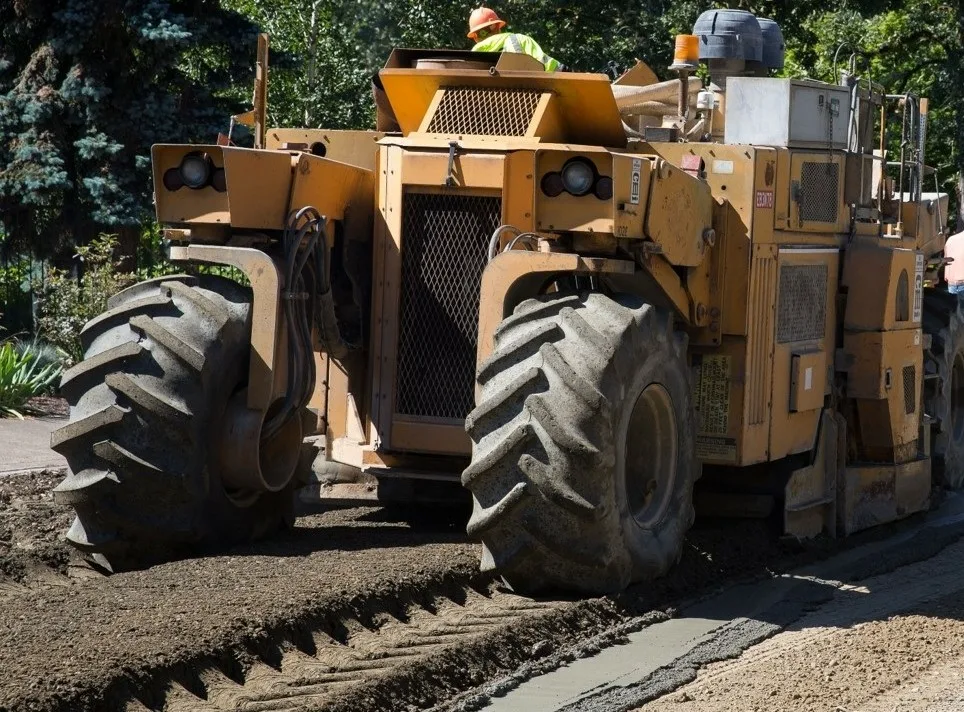
- Cement and Lime Stabilization Equipment mix stabilizing agents into weak subgrade soils or base materials. Rotating drums, augers, or in-place mixers ensure even blending of cement or lime with soil, improving load-bearing capacity and preventing pavement deformation in soft or unstable areas.
- Loaders and Dump Trucks handle material transportation on-site. Loaders scoop and transfer aggregates, recycled materials, or excavated debris, while dump trucks transport these materials efficiently across the construction site, maintaining a smooth workflow and timely project completion.
- Cold Recycling Machines are used in modern sustainable FDR projects to recycle existing asphalt on-site. They pulverize the old pavement, mix it with stabilizing agents, and lay it back as a base layer, reducing material costs, minimizing waste, and lowering environmental impact.
Recent Innovations in FDR
Modern FDR techniques incorporate advanced materials and machinery:
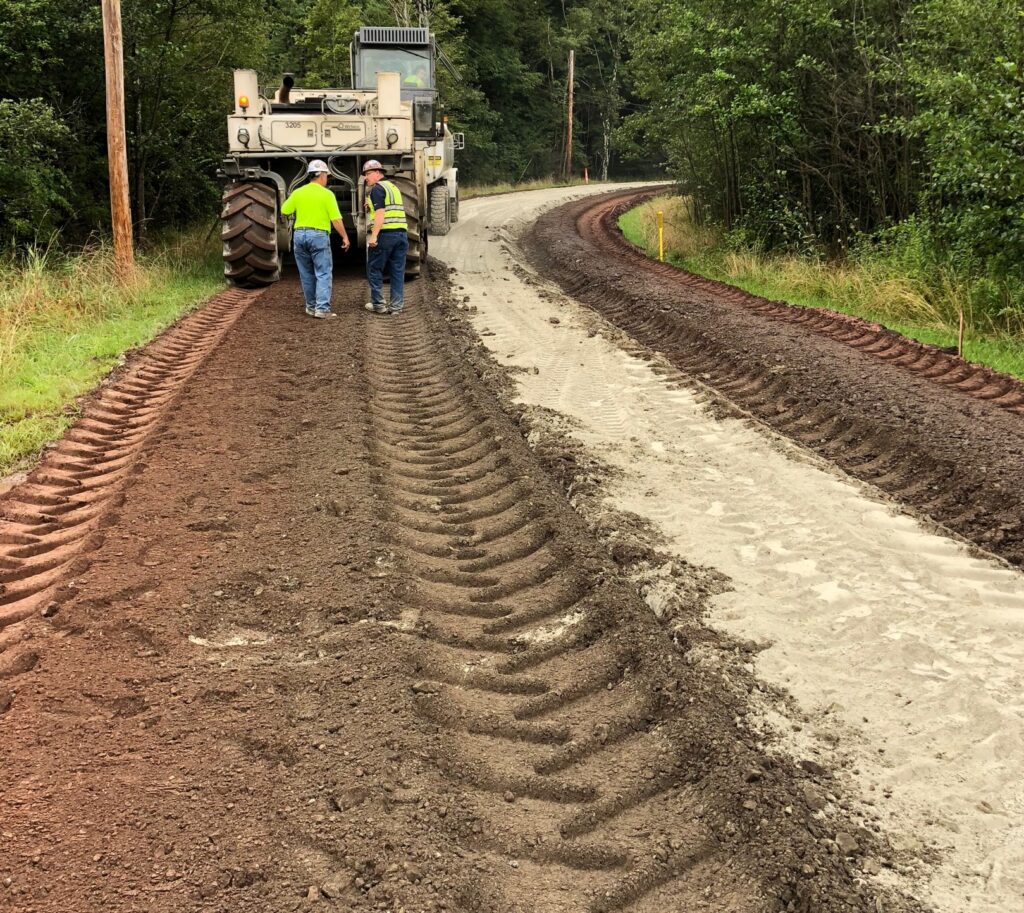
- Cold-In-Place Recycling (CIR): Recycles existing asphalt on site, reducing material costs and environmental impact.
- Foamed Asphalt Stabilization: Improves subgrade and base layers using foamed asphalt, enhancing strength and durability.
- Geosynthetic Reinforcement: Geogrids and geotextiles are used to improve load distribution and prevent reflective cracking.
- High-Performance Asphalt Mixes: Polymer-modified asphalts for surface layers improve skid resistance, fatigue life, and rutting resistance.
Conclusion
Full-Depth Reconstruction is the most comprehensive solution for severely distressed pavements. By removing and replacing all layers, addressing subgrade weaknesses, and constructing a durable new pavement structure, FDR ensures long-term performance, safety, and reduced maintenance costs. While it requires careful planning, skilled execution, and higher initial investment, the benefits make it an ideal choice for highways, urban arterials, and industrial roads where structural integrity and long service life are priorities.
Image Credit: mintekresources.com, cembase.com



