
Selecting the appropriate industrial soundproofing materials is a critical decision that directly impacts worker safety, regulatory compliance, operational efficiency, and environmental stewardship. In environments ranging from manufacturing plants and power generation facilities to logistics hubs and data centers, excessive noise is a pervasive occupational hazard and a potential source of community conflict.
The process of material selection extends far beyond simply choosing the product with the highest noise reduction rating. It requires a systematic evaluation of multiple interdependent factors, ensuring the chosen solution is both practical and durable within the specific operational context.
Below are the key factors when selecting industrial soundproofing materials:
Acoustic Performance and Frequency Targeting
The foremost consideration is the acoustic performance of the material, which isn’t a single metric but a spectrum of capabilities. Key measurements include the Noise Reduction Coefficient (NRC), which rates sound absorption, and Sound Transmission Class (STC), which evaluates a material’s ability to block sound. Crucially, industrial noise encompasses a range of frequencies. Low-frequency rumbles from heavy machinery demand different treatment than the high-frequency whine of motors or the mid-range clatter of impacts.
Effective material selection begins with a detailed noise assessment to identify the dominant problematic frequencies. Mass-loaded vinyl (MLV), for instance, excels at damping low-frequency transmission, while specialized acoustic foams and fiberglass are more effective at absorbing higher frequencies. A layered soundproofing system combining materials is often necessary for broad-spectrum noise transformation and control.
Lastly, a comprehensive approach to this challenge also involves checking out services from specialists such as those reliable soundproofing solutions by Quash or similar providers, to navigate the complex landscape of acoustic products.
Environmental and Operational Durability
Industrial settings are inherently harsh. Materials must withstand conditions that would rapidly degrade standard consumer-grade products. Factors such as temperature extremes, humidity, exposure to oils, chemicals, solvents, and UV radiation must be carefully evaluated.
In a factory washdown area, materials must be impervious to moisture and microbial growth, necessitating the use of closed-cell acoustic and polyurethane foams or waterproof membranes. In automotive workshops, resistance to petroleum-based products is essential.
Furthermore, physical durability against abrasion, impact, and vibration can ensure the longevity of the installation. The material’s fire rating is another non-negotiable aspect as it must comply with stringent industry standards for flame spread and smoke development to ensure overall facility safety.
Installation Logistics and Structural Considerations
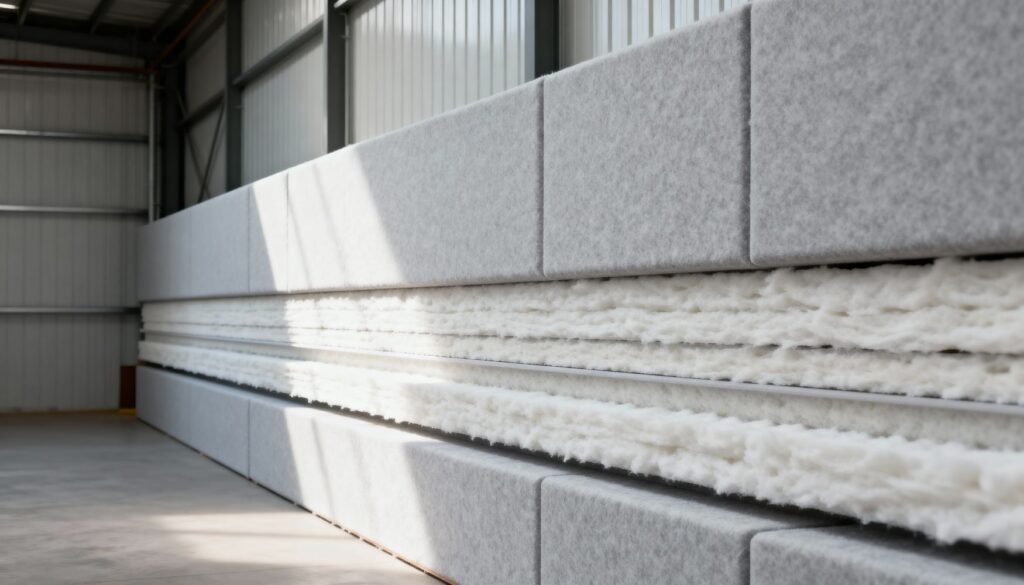
The practicalities of installation can significantly influence material choice and final cost-effectiveness. Considerations include the weight of the material and the load-bearing capacity of existing structures, the complexity of the installation process, such as whether it requires specialized labor or tools, and the need for flexibility in spaces with moving parts or frequent reconfiguration. Modular panels offer easier installation and future modifications compared to wet-applied sprays or rigid masonry.
The form factor is also essential. For instance, materials are available in various forms, including rolls, sheets, acoustic wall panels, baffles, and sprays, each suited to different applications, such as enclosing a compressor, lining a ventilation duct, or constructing a complete acoustic enclosure.
Regulatory Compliance and Health Standards
Compliance with occupational health and safety regulations, such as those enforced by OSHA in the United States, can be a primary driver for industrial soundproofing. Materials must contribute to reducing employee noise pollution and exposure to within permissible exposure limits. Beyond mere decibel reduction, the sound-absorbing materials themselves must be safe. This includes verifying that soundproof insulation fibers are properly sealed to prevent the release of airborne particulates, ensuring composites don’t off-gas volatile organic compounds (VOCs) into the workspace, and confirming that all products meet relevant building and fire codes. Documentation from manufacturers providing test data for acoustic treatment and performance, fire ratings, and environmental impact is also essential for demonstrating due diligence.
Lifecycle Cost and Return on Investment
The true economic impact of an industrial soundproofing material extends far beyond its invoice price. A rigorous lifecycle cost analysis must evaluate the material’s functional longevity in a harsh environment, its resistance to degradation, and any associated maintenance costs. Premium materials, although initially more expensive, typically deliver a lower total cost of ownership by outperforming cheaper alternatives over time, thereby avoiding frequent replacements and associated labor and downtime expenses.
Furthermore, the investment yields significant indirect returns. By fostering a safer, more comfortable auditory environment, it can enhance worker concentration and productivity while reducing health-related absenteeism. It also serves as a critical risk mitigation tool, preventing violations of occupational noise regulations that can result in substantial fines. An added benefit in many applications is concurrent thermal insulation, which can reduce energy consumption for climate control, providing ongoing operational savings that further justify the initial capital expenditure.
Final Thoughts
Selecting industrial soundproofing materials is a multidisciplinary exercise in balancing acoustic science with practical engineering, environmental protection and resilience, and fiscal responsibility. A successful outcome depends on a thorough initial assessment of the specific noise profile and operational conditions, followed by a meticulous evaluation of materials against these key factors.
By keeping the information mentioned above in mind, facility managers and engineers can implement noise control solutions that protect human health, ensure regulatory adherence, and contribute to a more sustainable and productive industrial operation.
Image Sources
https://stock.adobe.com/