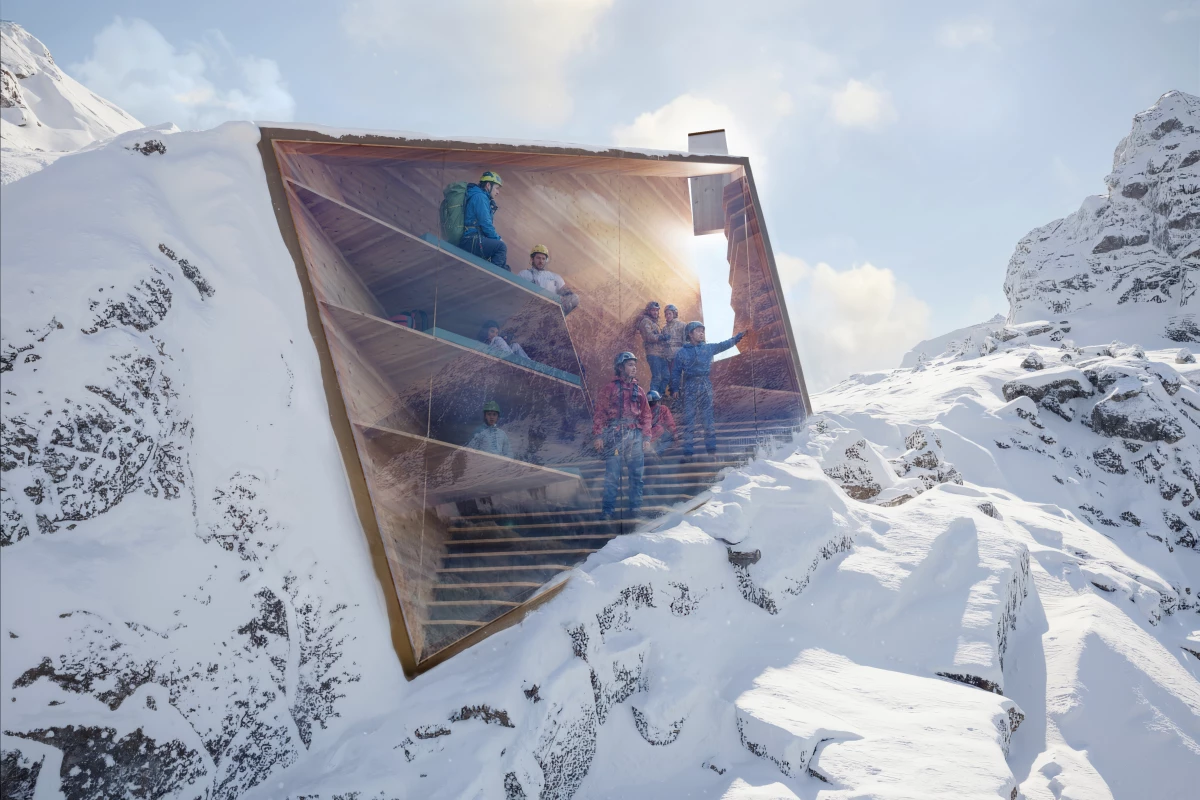
In the extreme heights of the Italian Alps is a newly designed mountain shelter which is not only innovative but highly eco-friendly as well. Carlo Ratti Associati (CRA) designed the transparent-fronted refuge that includes the best of engineering, technology, and quite literally the most important of elements, nature.
Reimagining the Mountain Hut
For 20 years or so, the alpine bivouac has minimally followed the same blueprint: compact, strong, and colored brightly in order to be visible to others. Generally, their only function is to offer climbers protection in bad weather.
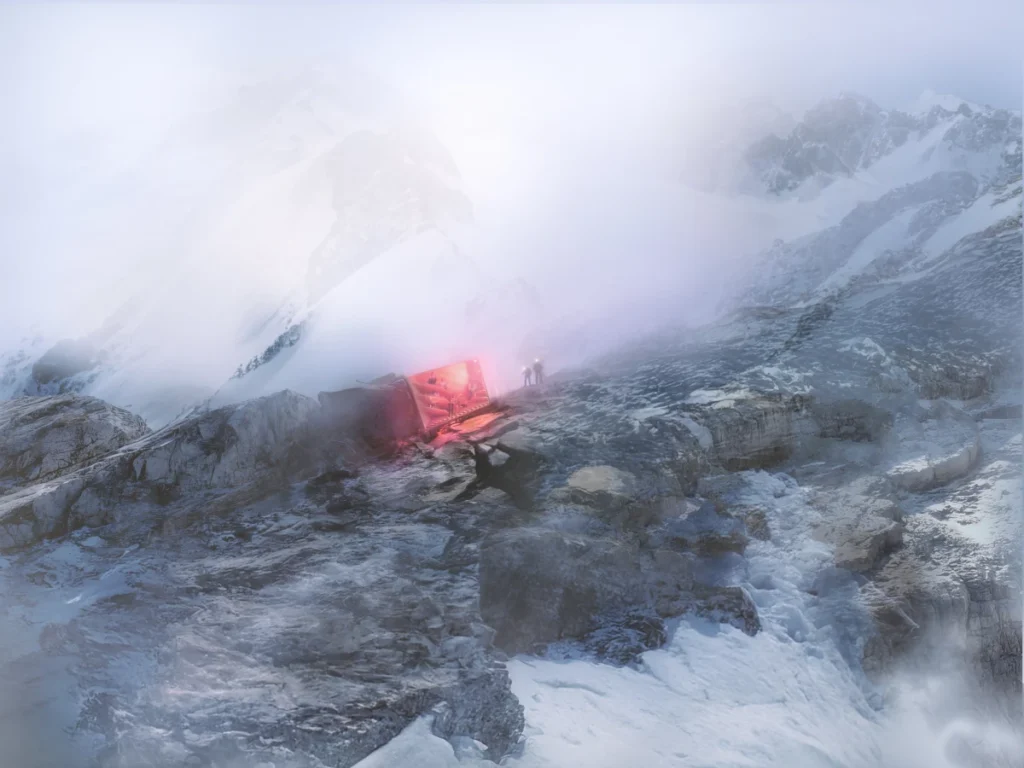
CRA challenged this concept by posing the question, what if the shelter could not only be safe and operational but also visually silent from the viewpoint of nature?
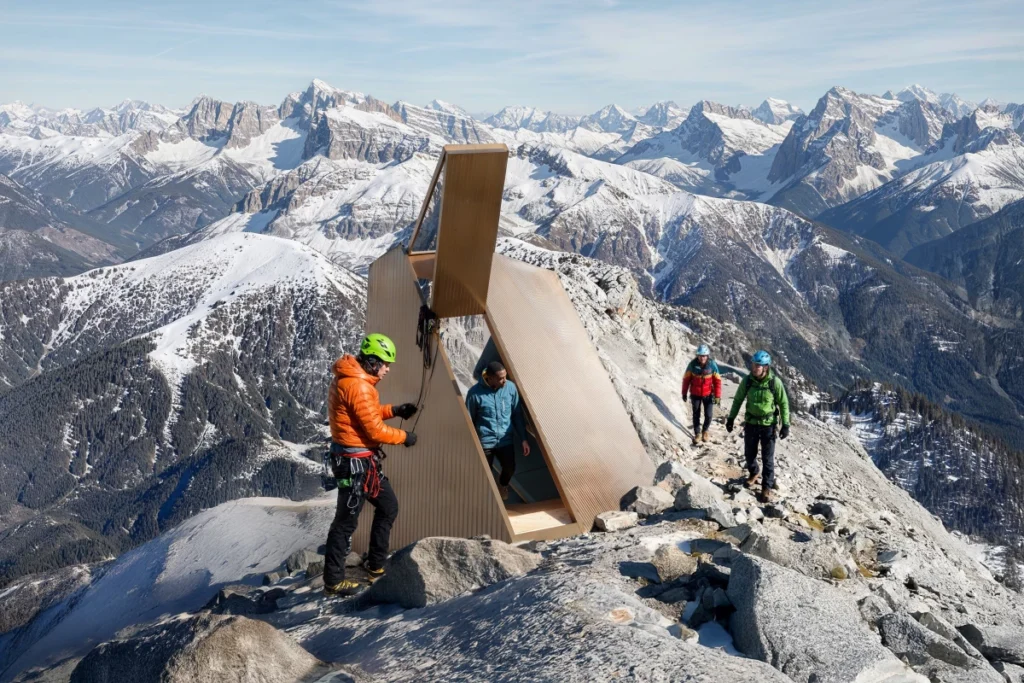
“Most of the time bivouacs remind us of alien ships that suddenly appeared in the Alps,” said Carlo Ratti, co-founder of CRA, “We wished to have the completely opposite result – a building which hides among the stones rather than being highlighted”.
The group came up with a small, sturdy unit manufactured from cross-laminated timber, metal, and aerogel insulating material, with the top covered by a glass facade that faces the Alps. The purpose was not only to create a dwelling but also to make “the visitors feel like they are part of the place they have arrived at,” said the architect.
Made Below, Lifted Above
Normally the construction of shelters located in higher altitudes is done directly at the site. It is a tough and drawn-out work that allows the use of only a few tools and materials. CRA decided to do the opposite. They are going to produce the whole building at a different place, verify it for steadiness and insulation, and then take it to its final destination by helicopter.
Working in this way gave the team the possibility to go beyond the standard mountain constructions’ limitations.
Some key features of the project are:
- A digitally made design that is adaptable to the irregular rocky ground
- Cross-laminated timber structure that provides both stability and lightness
- Aerogel used for insulation purposes so that the inner chamber can be heated with very low energy consumption
- A glass wall of full height that opens the inside space to the surrounding nature
Built to Work Off-Grid
The bivouac is free of any external utility connection. A solar system having a capacity of 5 kilowatts is the source of energy for light, heat, and communication. An air condensation unit is responsible for the daily production of a few liters of clean water.
During times when fog or snow cause low visibility, the cabin can send out a red light, therefore climbers will be able to find it safely.
Even a small Wi-Fi network is enough to provide a basic connection which is a great help in checking the weather or calling for assistance in case of an emergency and not a luxury.
Inside: Small, Simple, and Thoughtful
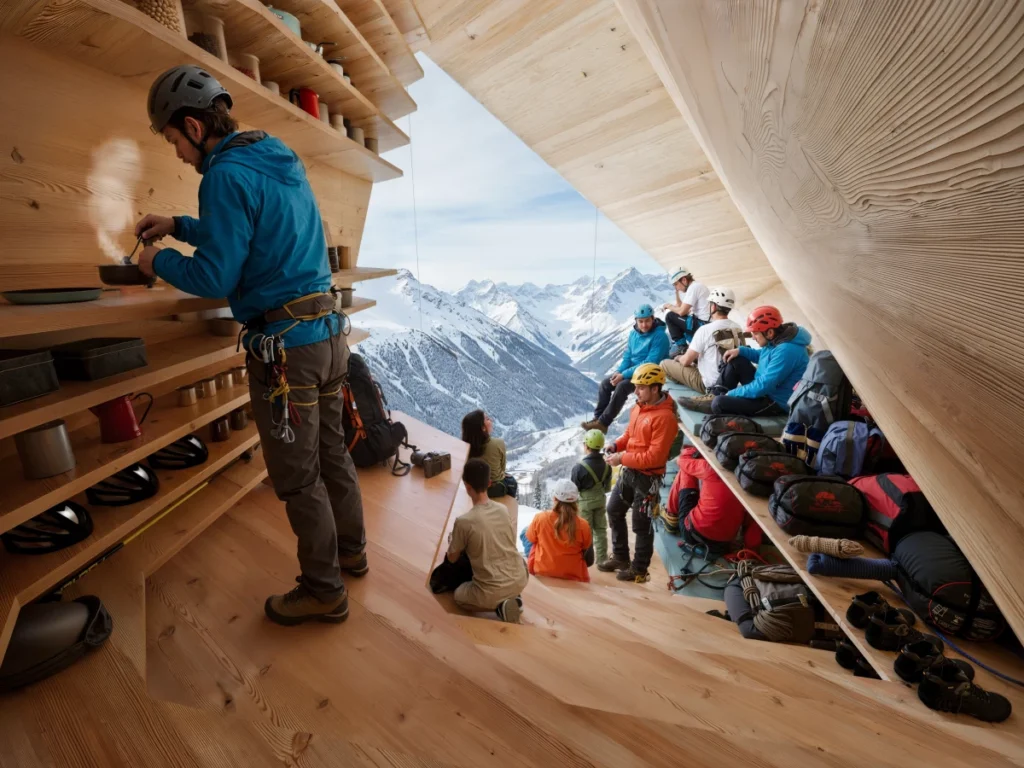
The hut has been planned in such a way that it can accommodate nine persons and has a minimal area that is ingeniously utilized.
“One wall serves as the sleeping area while the other is meant for cooking and support systems such as the water generator and heater,” says CRA editorial officer Davis Evans Woodburne. “The stairs and levels between them not only act as linking elements but also create places to sit, rest, or even look out through the glass façade”.
It is a small, efficient and silent space that allows one to relax and contemplate. The whole place is tightly packed with things of necessity and not even one is wasted.
Choosing the Right Spot
CRA staff from Turin are still working on the site of the hut. By means of LiDAR scanning, they have been analyzing potential locations throughout the Alps in order to find one that offers a good balance between accessibility, safety, and low environmental impact.
“Safety comes first,” says Woodburne. “Moreover, we would like it to be on a path where people are really going to need it – not as a design statement, but as a genuine refuge”.
Before the journey to the mountains, the project will be available for viewing at the 2026 Winter Olympics Urban Pavilion, thus, the visitors can have a closer look at the way it operates.
Although the building is different from any other one, CRA is still of the opinion that the idea may be duplicated. The mountain shelters of the future may be easily constructed or maintained because of its modular building, energy logic, and the way of assembly.
“The project can only work for one particular site, however, the method used is transferable,” says Woodburne. “Moreover, it can be adjusted to different terrains and weather conditions”.
A Quiet Step Forward
The alpine shelter made by Carlo Ratti Associati is not about the biggest or the most daring design. It is rather about finding the right equilibrium – protection and openness, human presence and natural form. Most importantly, it is a kind of reminder that architecture in the farthest and most inaccessible places does not necessarily have to be the most dominant one in the landscape. Sometimes, the finest design is the one that merely blends in.
Source- https://newatlas.com/