

Geosynthetic wrap-around walls are reinforced soil structures where geosynthetics are used to provide tensile resistance, with the reinforcement extending beyond the face and wrapped around to confine the soil mass. These systems are widely adopted in both temporary and permanent construction due to their flexibility, ease of installation, and ability to adapt to varying site conditions. Unlike conventional reinforced concrete retaining walls, wrap-around walls rely on soil–geosynthetic interaction, making them cost-effective and suitable for a range of applications.The adoption of geosynthetic wrap-around walls has grown with advances in polymer technology, improved understanding of soil–reinforcement interaction, and the increasing need for sustainable, rapid, and adaptable construction methods.
Roles of Geosynthetics in Wrap-Around Wall Construction
Geosynthetics perform multiple roles in wrap-around walls, making them integral to structural and functional stability:
Reinforcement
Geogrids and high-strength woven geotextiles provide tensile resistance to the soil mass, reducing lateral displacement and enhancing the overall factor of safety. Reinforced layers allow taller walls with steeper face angles compared to unreinforced embankments.
Confinement
By wrapping the reinforcement at the face, the soil particles are confined, preventing erosion, raveling, or local slope instability. This confinement also improves load transfer and maintains wall geometry during staged construction.
Separation
Geotextiles act as separators between soil layers of different gradations, preventing mixing and maintaining drainage pathways. This is especially important when backfill material contains variable particle sizes.
Filtration and Drainage
Non-woven geotextiles within the wrap or behind the face allow controlled drainage while retaining fine soil particles. This reduces pore water pressure and prevents internal erosion of the reinforced mass.
Facing Support
The wrap-around configuration provides a temporary or permanent facing solution without immediate need for rigid facia. Vegetation or modular panels can later be added for aesthetics or durability.
Advantages of Geosynthetic Wrap-Around Walls
- Enables rapid construction with reduced reliance on concrete and masonry facing.
- Provides a flexible system that accommodates differential settlement without structural distress.
- Allows staged construction, particularly useful in highway widening or embankment raising.
- Reduces overall construction cost compared to reinforced concrete walls.
- Offers sustainable solutions by allowing vegetated facings that improve erosion resistance and aesthetics.
- Suitable for both temporary works (detours, site access, shoring) and permanent structures (bridge approaches, retaining walls).
- Adaptable to varying backfill materials, provided proper geosynthetic selection is made.
- Minimizes the need for heavy formwork, scaffolding, or complex shuttering.
- Provides inherent drainage through geotextile facings, reducing hydrostatic pressures.
- Lightweight system suitable for difficult ground conditions where conventional walls may be uneconomical.
Types of Geosynthetics Used in Wrap-Around Walls
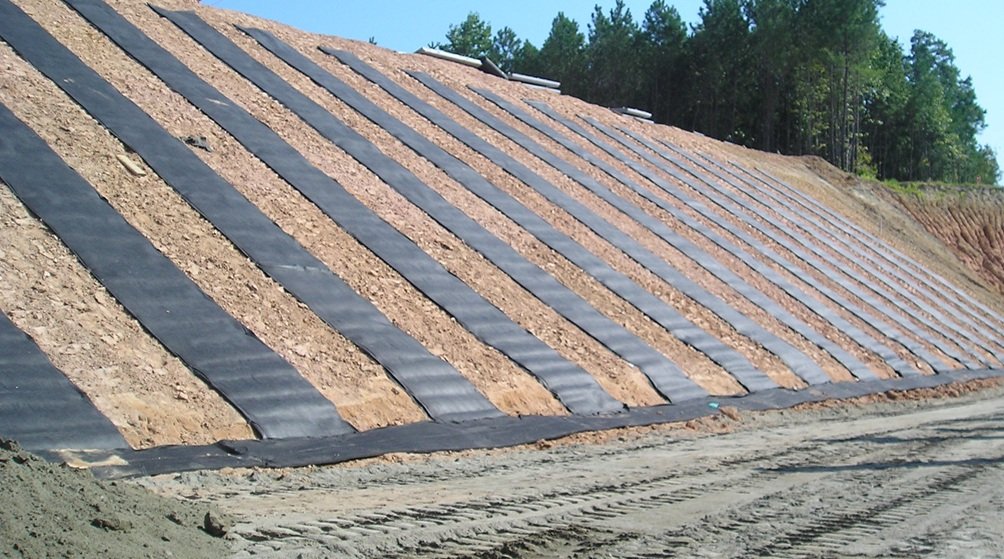
Geotextiles
High-strength woven geotextiles are often used as primary reinforcement due to their tensile properties and ease of wrapping. Non-woven geotextiles serve as filtration layers, preventing erosion at the face.
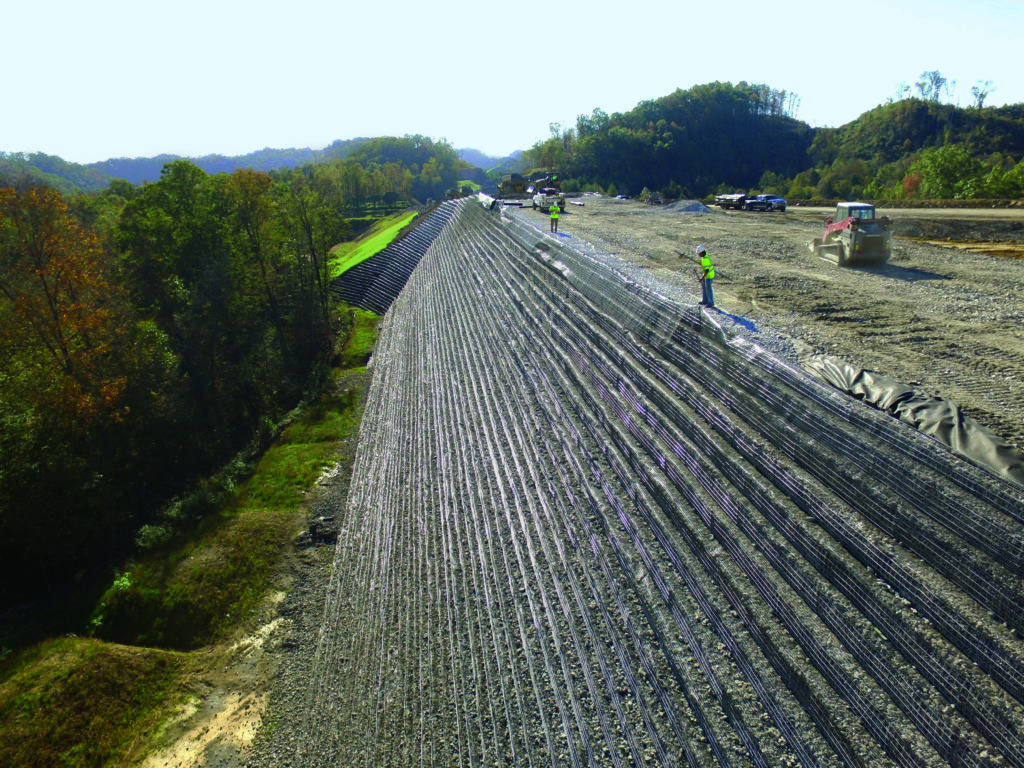
Geogrids
Polymeric geogrids with high tensile stiffness are effective reinforcements, particularly for permanent walls with higher loads. They interlock with soil, improving pullout resistance and long-term performance.
Geocomposites
Geocomposites combining geogrid reinforcement with geotextile filters are used in wrap-around walls where both tensile strength and drainage are required simultaneously.
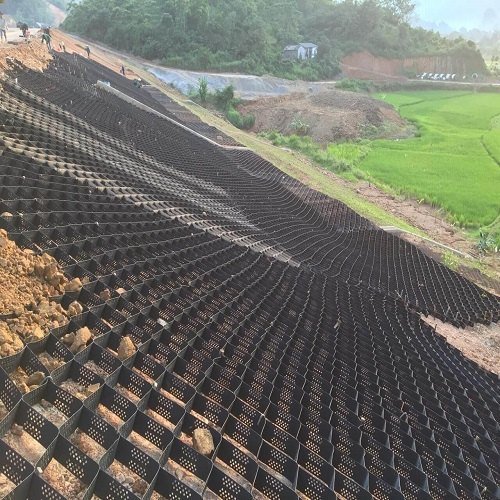
Geocells
Three-dimensional confinement systems are sometimes combined with wrap-around geotextiles to stabilize the facing zone and improve resistance against surficial erosion.
Factors Influencing Geosynthetic Performance in Wrap-Around Walls
- Soil Properties: Cohesion less, well-graded backfill with adequate frictional resistance ensures optimal geosynthetic interaction. Poor soils require higher reinforcement strength.
- Wall Height and Face Angle: Taller walls and steeper faces demand stronger geosynthetics and closer reinforcement spacing.
- Hydraulic Conditions: In areas with high rainfall or groundwater, drainage layers and filter geotextiles are importantl to prevent hydrostatic pressure buildup.
- Exposure Conditions: Permanent exposed wraps require UV-stabilized geosynthetics, while temporary wraps may not. Chemical resistance is essential for contaminated soil applications.
- Construction Practices: Proper tensioning of reinforcement layers, compaction of backfill, and wrap anchorage are pivotall to avoid face bulging or premature failure.
- Creep and Long-Term Loads: For permanent walls, geosynthetic selection must account for long-term creep, durability, and reduction factors specified in design standards.
Application Areas of Geosynthetic Wrap-Around Walls
Highway and Railway Embankments
Wrap-around walls are used for the rapid construction of embankments on soft soils. Reinforcement allows steep slope angles, reducing land take and earthwork quantities.
Bridge Abutments
Temporary or permanent bridge approaches can be constructed using geosynthetic wrap-around walls. The flexibility accommodates settlement without structural distress, and facing units can be added later for durability.
Erosion Control Structures
Riverbanks, canal slopes, and coastal embankments benefit from geotextile wrap facings that resist erosion while allowing drainage. Vegetation can be integrated into the wrap for long-term stabilization.
Temporary Works
Construction detours, site access roads, and excavation support often use wrap-around walls as a cost-effective temporary shoring solution. Once work is completed, these can be dismantled or integrated into permanent works.
Urban Infrastructure
In constrained urban environments, wrap-around walls provide space-efficient retaining systems for metro stations, underpasses, and cut-and-fill projects where conventional retaining walls are impractical.
Mining and Industrial Sites
Mine tailing dams and industrial waste containment structures often adopt geosynthetic wrap facings to reinforce slopes and provide filtration against seepage.
Design Considerations for Wrap-Around Wall Applications
Site-Specific Geotechnical Analysis
Comprehensive soil characterization, shear strength parameters, and slope stability analysis are required to determine reinforcement type, spacing, and wall geometry.
Reinforcement Layout and Spacing
Geosynthetics must be laid in horizontal layers with adequate anchorage length extending beyond the potential failure plane. Closer spacing is required near the face where stresses are higher.
Facing Design
The wrap-around facing must resist local surficial sloughing while permitting drainage. Vegetated wraps or modular panels can be used for permanent applications, while exposed wraps may suffice for temporary works.
Drainage Provision
Proper design of internal drainage is essential to avoid pore pressure buildup. Filter geotextiles must be selected to prevent clogging and maintain flow capacity.
Anchorage and Overlap
Wraps must extend sufficiently into the soil mass to prevent pullout. Overlap between geosynthetic rolls should be designed to transfer tensile forces without slippage.
Durability and Reduction Factors
Design should account for creep, installation damage, chemical attack, and UV exposure. Reduction factors are applied to ensure long-term strength meets design requirements.
Monitoring and Maintenance
For permanent wrap-around walls, periodic inspection of facing integrity, drainage performance, and vegetation growth (where applicable) is required to ensure long-term stability.
Conclusion
Geosynthetic wrap-around walls provide a versatile, efficient, and sustainable solution for both temporary and permanent construction applications. By combining soil reinforcement, confinement, filtration, and drainage functions, these systems achieve structural stability without immediate reliance on rigid facings. As infrastructure demands continue to rise and land availability decreases, geosynthetic wrap-around walls represent a practical and adaptable solution for modern construction challenges.
