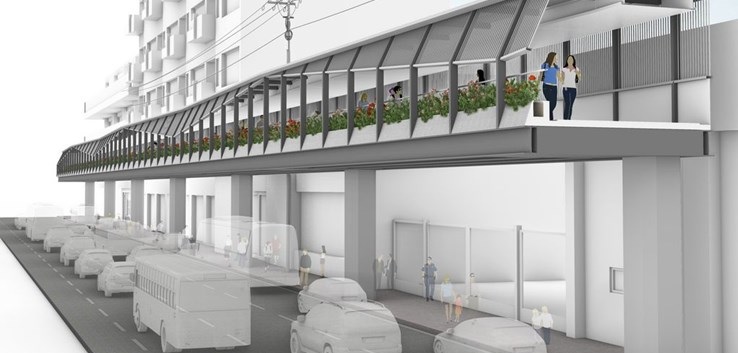
Bengaluru, which has faced extensive criticism for its congested traffic and persistent gridlock, is set to initiate a transformative infrastructure project — a 114-kilometre elevated corridor that will span crucial urban routes. This ambitious transportation enhancement, put forth by the Karnataka government, represents one of the city’s most extensive efforts to revamp surface-level commuting and facilitate smooth intra-city travel. The corridor is designed to be built above the current arterial roads, with expectations to alleviate significant bottlenecks and significantly decrease travel times for daily commuters.
The multi-lane flyover will function as a signal-free expressway, allowing vehicles to circumvent heavily congested intersections known for delays, particularly during peak traffic hours. Project officials have confirmed that the corridor will feature strategically placed on-ramps and off-ramps, ensuring accessibility without overwhelming any single junction. The city’s traffic and road planning authorities intend to connect the corridor’s access points with existing roadways to enhance last-mile connectivity and mitigate localized traffic congestion.
Notably, to maintain decorum and facilitate movement around administrative areas, no entry or exit ramps will be constructed within a one-kilometre radius of the Vidhana Soudha. This zoning regulation aims to prevent civic disorder and ensure security around the state’s legislative buildings while the remainder of the city benefits from an expansion of vehicular infrastructure.
This initiative is being positioned as a fundamental element of the state’s “Brand Bengaluru” urban transformation campaign, which aims to establish the city as a benchmark for next-generation infrastructure. As part of this effort, numerous other large-scale projects are in progress, including a proposed 16.7-kilometre underground tunnel corridor that will connect Hebbal Junction (Esteem Mall) to Central Silk Board Junction. When considered alongside the elevated road plan, the tunnel proposal indicates a comprehensive strategy for vertical urban transport planning — providing underground, ground-level, and elevated traffic routes. Officials involved in the project have indicated that Bengaluru’s urban landscape will experience significant changes through this multi-modal approach, offering relief to over 1.2 crore city residents who face increasingly prolonged and unpredictable travel times.
The tunnel corridor and the elevated road are being designed as complementary pathways — intended to accommodate different traffic volumes without interference, thus ensuring seamless mobility throughout the city. Simultaneously, other components of the Brand Bengaluru initiative encompass the creation of new metro lines, the construction of double-decker flyovers in heavily congested areas, the expansion of the road network by more than 700 kilometres, and a ₹4,000 crore investment aimed at overhauling the city’s waste management system.
Urban planning specialists have reacted with cautious optimism, observing that while elevated corridors can provide short- to mid-term alleviation of vehicular congestion, sustainable city design must be the focus for long-term solutions. They contend that the emphasis should also be on promoting public transport, prioritizing non-motorized transit options, and implementing disincentives for excessive use of private vehicles.
“Elevated roads should not be regarded as a panacea,” stated an expert associated with a national urban mobility think tank. “Without accompanying systemic reforms — including transit-oriented development, improved pedestrian infrastructure, and equitable access for all residents — such initiatives may inadvertently reinforce car-centric urban sprawl.”
Environmental advocates have also expressed their concerns, highlighting the carbon footprint associated with large-scale construction and the potential loss of tree cover. In response, officials engaged in the planning process assert that the design of the elevated corridor is being finalized with minimal ecological impact, and compensatory green measures will be incorporated into the construction tender.
This infrastructural advancement comes at a pivotal moment for Bengaluru, where vehicle ownership continues to rise and the current road network is severely lacking. With nearly 10,000 new vehicles being added to the city’s roads each week, the strain on its transport infrastructure is unsustainable in its present state.
The expectation is that this project, in conjunction with metro and tunnel investments, will redirect the trajectory towards a more efficient, interconnected, and breathable Bengaluru. Urban economists emphasize that cities like Bengaluru, often referred to as India’s Silicon Valley, necessitate infrastructure that aligns with the aspirations of their innovation-driven economies. They contend that efficient mobility is not merely a civic issue but a critical factor for productivity. Time wasted in traffic congestion results in diminished economic output, lost man-hours, and increased fuel consumption.
Although the official release of construction timelines and funding allocations is still pending, the state has indicated its desire to expedite the project through public-private partnership frameworks, while also investigating green infrastructure financing options via urban resilience funds. As is the case with all transformative initiatives, successful implementation is crucial. If carried out with foresight, transparency, and an inclusive strategy, Bengaluru’s elevated corridor could potentially set a national standard for large-scale urban mobility design. Nevertheless, the project’s success will depend on its ability to align with broader urban renewal objectives, such as enhancing air quality, ensuring equitable access, and promoting climate resilience. In a city where the average daily commute can surpass two hours, and where public dissatisfaction with infrastructure continues to grow, this elevated corridor offers a significant opportunity — not merely to increase speed, but to enhance the quality of movement.