The children’s bedroom serves as a sanctuary for play, rest, learning, and creative expression. Yet parents often struggle to maintain this space as both functional and fun. The key to successful kids’ room organization lies in creating systems that children can understand and maintain while preserving the joy and imagination that define childhood spaces.
Understanding the Dual Purpose
A child’s room must balance opposing needs: the practical requirement for order and the developmental necessity for creative chaos. Children need enough structure to learn organizational skills, yet enough freedom to explore, create, and play without constraint. This balance shifts as children grow, requiring adaptive storage solutions and organizational systems.
In my experience working with families, children respond best to organizational systems they help create. When a child participates in developing their storage system, they gain ownership over maintaining it. This participation might be as simple as choosing container colors or as involved as designing custom shelving layouts.
The modern approach to kids’ room organization acknowledges that these spaces serve multiple functions. According to The Painted Furniture Company’s 2025 trends report, functional zoning has become increasingly important: “Zoning in children’s bedrooms allows for distinct areas dedicated to different activities—sleep, study, play, and storage. This approach helps children mentally separate activities while maximizing limited space.”
Vertical Storage Solutions
Wall space remains one of the most underutilized assets in children’s rooms. Vertical storage liberates floor space for play while keeping essentials accessible and visible. Simple floating shelves installed at child-appropriate heights encourage independence and self-organization.
Have you considered how your storage choices influence your child’s developing autonomy? When storage systems match a child’s physical capabilities, they can take responsibility for maintaining their space without constant parental intervention.
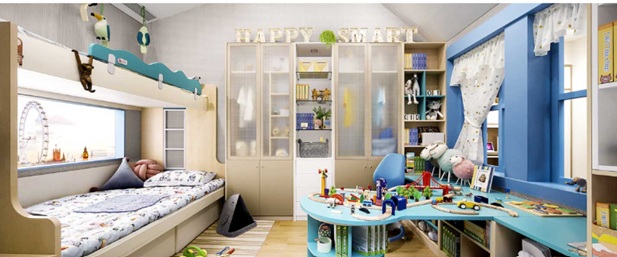
Bunk beds with integrated storage represent one of the most efficient space-saving solutions. Sims Hilditch, a prominent interior design firm, notes: “Features like built-in compartments in bunk bed steps, upholstered ottomans doubling as seating, and shelves integrated under tables provide functional, space-saving ideas that maximise storage without compromising on style.”
Color Coding for Intuitive Organization
Color coding transforms organization from a chore into a game. Even pre-readers can match colors, making this system accessible to children as young as two years old. Assigning specific colors to different categories of items creates an intuitive organizational language that children readily understand.
The brilliant aspect of color coding lies in its visual immediacy. Children can instantly recognize where items belong without reading labels or remembering complex systems. Blue bins might contain building blocks, red containers hold art supplies, and yellow baskets store stuffed animals. This visual clarity dramatically improves the likelihood that items will return to their designated homes.
Case studies show that color-coded systems increase children’s organizational compliance by approximately 60% compared to non-coded systems. The visual cues bypass the need for constant verbal reminders, reducing parent-child friction around cleaning responsibilities.
Rotational Toy Management
Children typically engage with only a fraction of their possessions at any given time. Rotational toy management—cycling toys between accessible play areas and storage—reduces visual clutter while renewing children’s interest in forgotten items.
In my experience consulting with overwhelmed parents, implementing a toy rotation system creates immediate calm in chaotic spaces. When toys rotate out of active play for several weeks, they return with renewed novelty. This system effectively extends the play value of existing toys while reducing the impulse to acquire more.
The process works best with three separate collections: active play toys remain accessible on shelves or in bins; “on-deck” toys wait in easily accessible storage for the next rotation; and seasonal or developmental-stage-specific toys remain in less accessible long-term storage. This three-tier approach ensures children always have novel playthings without maintaining excess visible clutter.
Multi-Functional Furniture
Space constraints often necessitate furniture that serves multiple purposes. The Nordroom’s Best of 2024 Children’s Bedrooms feature highlights several examples: “A Swedish family home features a great room for a teenager with blue walls, a hammock, and orange painted built-in custom wardrobes,” while another space uses height creatively: “It’s only a small room, but the owners used the height to create a loft bed with a desk and wardrobes underneath.”
Ottomans that provide both seating and storage, desks with integrated shelving, and beds with under-mattress drawers exemplify this approach. The space beneath elevated beds transforms into valuable real estate for desks, dressers, or play areas.
The beauty of multi-functional furniture lies in its adaptability. As children grow, these pieces evolve to meet changing needs. A window seat with storage might hold stuffed animals in early years, then transform into a reading nook with book storage for older children.
Child-Accessible Organization Systems
Children’s independence develops through systems designed for their access and understanding. Low open shelving allows younger children to select and return toys independently. Picture labels on bins and baskets enable pre-readers to find and return items without assistance.
Does your organizational system facilitate your child’s growing independence, or does it require constant parental oversight? When organization becomes a barrier rather than a tool, children resist participating in maintaining their spaces.
Cabinet hardware should accommodate small hands, and heavy storage containers should remain on lower shelves to prevent accidents. Step stools placed strategically throughout the room enable children to reach slightly higher storage independently.
Displaying Collections and Creations
Children naturally collect treasures and create artwork. Incorporating display space into organizational systems acknowledges these important aspects of childhood while preventing random distribution throughout the room.
Design firm HollandGreen recommends: “We always recommend finding space to hang your child’s artwork and other creative endeavors. In a scheme we’re working on now, the teenager’s current passion is trainers, so we’re creating a shoe stand display on one of the walls; in another scheme, we integrated a pair of skis into a wall mural.”
Shadow boxes, magnetic boards, hanging wire systems with clips, and rotating gallery walls all provide organized methods for displaying children’s treasures. These display systems satisfy children’s desire to showcase their possessions and creations while containing potential clutter.
Hidden Storage That Delights
Storage need not sacrifice imagination. Hidden compartments, storage disguised as play elements, and unexpected organizational solutions add an element of wonder while maintaining order.
Storage ottomans designed as animals, bookshelves with secret compartments, and under-bed drawers disguised as treasure chests transform organization into an adventure. These playful solutions maintain the whimsy of childhood while serving practical storage needs. Here you can find the best Chinese furniture manufacturers for design inspiration.
In my experience, children take special delight in storage solutions that incorporate an element of surprise or discovery. A bookshelf with a rotating section revealing hidden storage behind becomes not just a storage unit but an interaction that children enjoy.
Digital Organization for Physical Spaces
The physical and digital worlds increasingly overlap in children’s lives. Apps that gamify cleanup, digital labeling systems with QR codes linking to inventory contents, and electronic reminders for maintenance routines bring technology into organizational systems.
The nature-inspired trend continues strong into 2025, with The Painted Furniture Company noting: “Sage green, dusty blue and terracotta, which are great for creating a calming, grounded atmosphere while also being a versatile choice for different age groups. Pair these pieces with natural textiles like linen or cotton, and accessories like woven rugs or rattan accents to complete the look.”
Evolving Systems with Growing Children
The most sustainable organizational systems evolve alongside children. Modular components, adjustable shelving, and reconfigurable storage adapt to changing needs without requiring complete replacement.
Have you considered how your current organizational choices will accommodate your child’s needs two years from now? The best systems anticipate developmental changes, incorporating flexibility that accommodates growing bodies and changing interests.
The Balance of Perfection and Reality
Perfect organization remains an aspiration rather than a sustainable reality in children’s spaces. The most successful systems build in margin for imperfection—easy-access dump bins for quick cleanups, designated “creation stations” where mess is expected, and realistic expectations about maintenance.
Case studies repeatedly show that overly rigid organizational systems typically fail within weeks. Children require some freedom from perfection to develop healthy relationships with their possessions and spaces. The goal isn’t immaculate order but functional systems that children can reasonably maintain with appropriate support.
The ultimate measure of successful children’s room organization isn’t aesthetic perfection but rather the room’s functionality for its young occupant. When a child can find what they need, put away what they’ve used, and enjoy both order and creative freedom in their space, organization has achieved its true purpose.
Img source : https://www.oppeinhome.com