It has always been the case that the construction industry has needed to adapt and evolve to keep up with the latest technology, demands, and building trends. 2025 is shaping up to be another point in time when the industry evolves at pace.
Builders, contractors, architects, and developers are all constantly navigating a rapidly changing landscape that is driven by new technologies, shifting labor dynamics, and a noticeably rising demand for sustainability.
What once might have seemed unimaginable futuristic developments, such as robotic construction crews, AI-powered planning tools, and carbon-neutral materials, is quickly becoming reality.
When you are searching for construction companies in Austin Texas, for instance, what sort of methods and ideas will they be embracing, alongside all of the traditional building skills?
Let’s take a look at some of the trends that aren’t just changing how structures are built, they’re having a transformational impact on the very foundations of how the industry operates.
AI and machine learning drives smarter project management
Artificial intelligence is headline news everywhere you look, and the construction industry is being shaped by the incredible promise of this technology.
AI-powered platforms are helping construction firms manage timelines, analyze costs, better plan logistics, and even evaluate safety hazards in real time. Machine learning models have the ability to analyze past project data in order to predict future risks and recommend adjustments before issues arise.
This is improving project accuracy and profitability as it helps with scheduling and labor forecasting, as well as identifying potential design flaws,
Construction companies who embrace AI are finding they can achieve faster turnaround times, enjoy reduced waste, and benefit from better communication across teams.
Modular and prefab construction becomes a mainstream solution
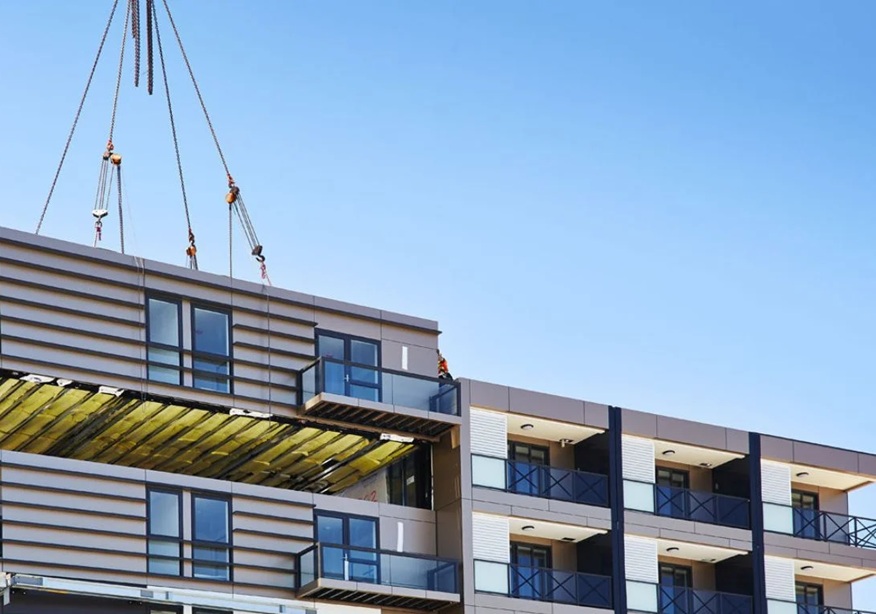
Modular and prefabricated construction methods are enjoying an unstoppable surge in popularity. These techniques allow components of a building to be manufactured offsite and then assembled quickly on location. The result is faster builds, fewer weather-related delays, and improved quality control.
2025 heralds a new era in modular construction. It is no longer limited to temporary structures or budget projects. High-rise buildings, hospitals, and schools are now being constructed with precision-manufactured modules. This is helping to save both time and money while reducing the environmental footprint.
Green building is now the default option
Sustainability has moved on from being a talking point, it’s now a requirement. Clients, governments, and communities are all demanding greener buildings, and construction firms are being held more accountable for emissions, waste, and materials.
To meet these demands, builders are turning to carbon-neutral concrete alternatives, low-emission machinery, and recycled materials. Firms that can offer green solutions from design to execution are finding that it gives them a competitive edge.
Labor shortages are fueling a drive for innovation and upskilling
Without a doubt, labor shortages continue to challenge the industry throughout 2025, and beyond. This is pushing constructors to rethink how they hire, train, and retain workers.
Many are investing in apprenticeship programs and trade school partnerships, while also embracing automation for repetitive or physically demanding tasks.
The shortages are also fueling a rise in construction robotics. Bricklaying machines and automated drywall installers can now be seen assisting human crews on some larger projects. Meanwhile, virtual reality training tools are helping workers learn complex tasks in safe, simulated environments before stepping onto the jobsite.
Digital twins are a game changer
Digital twins is a concept that is dramatically changing the way buildings are planned and maintained. It involves creating virtual replicas of physical structures.
These dynamic models are used to simulate how a building will perform under real-world conditions before it’s built. This helps identify inefficiencies in design. It also helps optimize energy usage, and reduce costly changes during construction. Even when the building is complete, digital twins continue to provide value by monitoring systems, predicting maintenance needs, and improving long-term operations.
3D printing Is becoming a legitimate building method
3D printing in construction is now a regular feature. A growing number of companies are using large-scale printers to create walls, panels, and even entire homes. These systems can dramatically reduce construction time and waste, making them ideal for low-income housing and emergency shelters.
Without question, there are still limitations, especially when it comes to multi-story buildings and infrastructure, but innovation is accelerating. In areas with severe housing shortages, 3D printing is becoming a scalable, cost-effective solution.
Smart construction sites have become the new norm
Even the jobsite itself is getting a digital makeover. Sensors are now being routinely used to monitor everything from air quality and noise levels to equipment usage and worker location.
Wearable devices can track worker movement, detect falls, or issue real-time alerts, helping improve site safety. Drones are also being used to handle site surveys, progress tracking, and safety inspections. This reduces manual labor and improves precision.
With all this data flowing in, construction managers can make better decisions, respond to issues faster, and help keep sites safer and more efficient.
Demand for mixed-use and flexible spaces continues to grow
Our work habits and lifestyles are changing in a fundamental way. This is creating a seismic shift in what we all expect from buildings.
Developers are witnessing a surge in demand for mixed-use spaces that combine residential, commercial, and recreational uses in one single footprint.
This demand is influencing how architects design and how builders construct, requiring more adaptable layouts and modular infrastructure that can evolve with changing work and lifestyle demands.
Regulatory pressure and supply chain challenges prove challenging
Construction firms are having to navigate increasingly complex regulations, from local building codes to environmental standards and labor laws.
At the same time, global supply chain disruptions continue to affect material availability and project timelines. This pressure is driving companies to build more resilient operations. That means sourcing materials locally, being more diverse in seeking suppliers, and investing in better logistics planning.
Construction firms that are nimble enough to adapt quickly are likely to gain a competitive edge.
As these changes highlight, the construction industry is in the midst of a major transformation. The battle is fought on several fronts, from technology, to sustainability, and labor dynamics.
These construction industry trends tell you that the future of building is actually here, and happening right now.