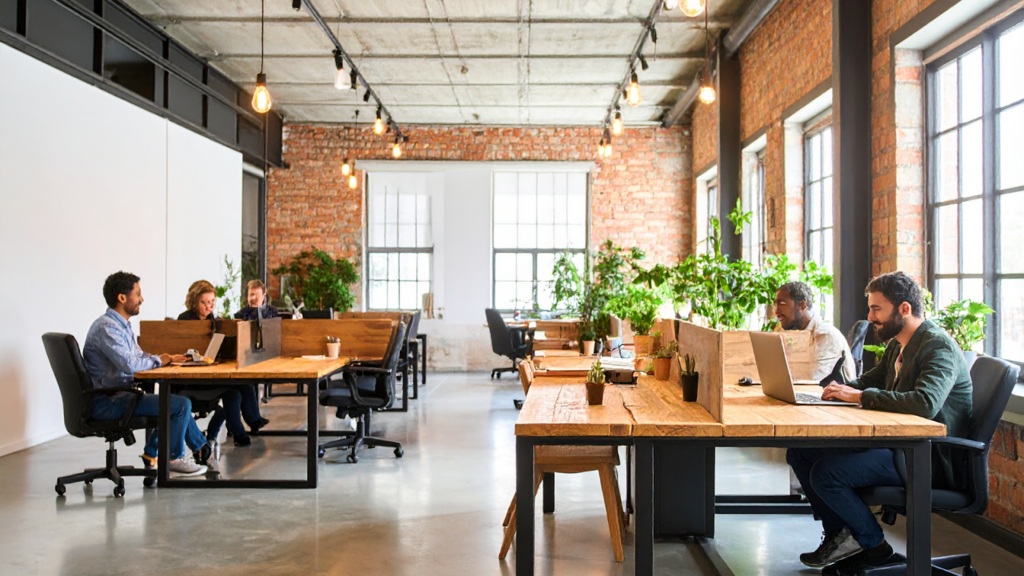
Your workspace communicates your brand before a single word is spoken. Generic offices disappear into the background, while intentionally designed environments attract ideal clients and build long-term loyalty. The pressure is real; global coworking occupancy reached 68% at the start of 2025, signaling intense competition. Strong coworking space design transforms ordinary rooms into powerful brand statements.
North Dallas exemplifies this demand, blending metropolitan polish with practical accessibility. Along the Central Expressway corridor, professionals seek workspaces that match their ambition, offering impressive city views and a community-driven atmosphere that reflects modern workplace expectations.
Strategic Color Psychology and Visual Identity Integration
Color selection carries profound psychological weight, these aren’t superficial decisions. They fundamentally shape emotional responses within your environment. Smart coworking space branding begins by identifying which color palettes authentically represent your brand essence.
Strategic design decisions create environments where innovation flourishes alongside productivity. North Dallas office space exemplifies this principle beautifully through customized office solutions that recognize an essential truth: branding a coworking space extends far beyond slapping logos on walls. It’s fundamentally about crafting experiences that accelerate professional development while fostering authentic community bonds.
Decode Your Brand’s Color Language
What emotional landscape do you want to create? Technology ventures frequently gravitate toward blue and gray palettes that convey innovation paired with reliability. Design agencies typically embrace vibrant, stimulating hues, think tangerine or rich plum. Financial firms generally prefer understated neutral schemes projecting steadiness and executive gravitas.
Apply your primary palette across roughly 60% of available surfaces. Layer in secondary shades at approximately 30%, reserving accent colors for that energizing final 10%. This proportional framework maintains visual harmony without sensory overload.
Implement Visual Branding Elements
Logo placement requires more strategic thinking than you’d expect. Position your mark prominently where first impressions crystallize, typically the entrance, but resist the urge to saturate every surface. Thoughtful placement in conference spaces and shared zones builds recognition without crossing into aggressive marketing territory.
Custom wall installations communicate your brand narrative through visual storytelling. Consider timeline murals documenting your evolution or artistic interpretations of core values. These elements generate visual engagement while clarifying your identity. Window treatments accomplish dual objectives: privacy enhancement and identity reinforcement, working in tandem.
Design Branded Touchpoints
Every surface presents branding potential worth considering. Your reception area should prompt visitors to pause, look, and register the experience. Custom furniture in signature colors generates those spontaneous social media moments members share organically.
Details matter enormously here. Branded stationery, mugs, and desk items weave consistent experiences throughout members’ daily routines. Subtlety often outperforms obvious promotional tactics; whisper your brand rather than shouting it.
Space Planning That Embodies Your Brand Values
Your layout decisions broadcast priorities with greater clarity than mission statements ever achieve. Spatial organization reveals what you genuinely value versus what you claim to value.
Create Zone Differentiation
Innovation-focused brands benefit from high-energy collaboration areas featuring open configurations and abundant writable surfaces. Brands prioritizing concentration require quiet zones equipped with acoustic solutions and visual barriers. Community-centered brands should anchor layouts around social gathering points, inviting lounges where organic interaction happens naturally.
Avoid forcing uniform work modes on everyone. Adaptable zones with reconfigurable furniture empower members to select their optimal environment daily. That flexibility itself becomes part of your brand promise.
Incorporate Biophilic Design Elements
Living plant walls transcend trendy aesthetics; they represent powerful sustainability commitments for environmentally conscious organizations. Natural materials, including wood and stone, anchor your space to ecological values without preaching. Enterprise organizations increasingly utilize flexible coworking arrangements for satellite locations and hybrid workforce models, making thoughtful office interior design ideas essential.
Maximize daylight through intelligent spatial arrangements. Position work areas adjacent to windows and deploy glass partitions to distribute natural light throughout. These workspace design tips enhance mood and output while cutting energy consumption.
Design Functional Spaces
Your operational approach should mirror your brand philosophy directly. Hot-desking arrangements suit agile, community-oriented brands emphasizing flexibility. Assigned desks better serve professional brands where consistency builds trust. Privacy pods demonstrate respect for confidentiality, crucial for legal, financial, or healthcare-oriented operations.
Accessibility features demand core integration, not afterthought status. Generous circulation paths, height-adjustable workstations, and intuitive wayfinding prove inclusion lives in your operations, not just your marketing copy.
Curated Furniture and Material Selection as Brand Expression
Furniture selections communicate brand identity more effectively than glossy brochures. Each piece should reinforce your brand character while delivering functional value.
Select Furniture Styles That Match Your Brand
Minimalist contemporary pieces with geometric clarity suit technology and innovation brands exceptionally well. Industrial aesthetic elements, visible metal frameworks, and salvaged timber resonate with creative communities. Traditional elegance through refined materials signals executive professionalism to corporate audiences.
Bohemian eclectic arrangements work wonderfully for lifestyle brands celebrating distinctive character. Wellness-oriented brands should emphasize ergonomic design featuring adjustability across all stations.
Material Choices That Communicate Brand Values
Sustainable and repurposed materials communicate more than environmental responsibility; they spark conversations demonstrating authentic commitment. Premium finishes position your operation as high-caliber without explicit claims. Raw, unfinished materials convey transparency and authenticity to members who value genuine relationships.
Technology-integrated furniture incorporating charging infrastructure and cable management proves you understand contemporary work requirements. Locally-crafted pieces signal community investment rather than simple rent extraction.
Custom Furniture Design for Unique Brand Storytelling
Bespoke reception installations create indelible first encounters. Rather than ordering catalog items, commission custom designs incorporating your brand’s distinctive elements. Exclusive seating collections unavailable elsewhere give members something genuinely special.
Branded collaborative furniture, conference surfaces with integrated power, modular lounge systems that reconfigure effortlessly, become functional sculpture. Signature lighting installations function as three-dimensional art, defining zones while reinforcing aesthetic cohesion.
Technology Integration and Smart Design Features
Contemporary brands can’t afford technology ambivalence. Your digital tool integration impacts every member’s experience daily while shaping brand perception continuously.
Advanced Connectivity Infrastructure
Enterprise-grade fiber connectivity has moved from luxury to baseline expectation. Multiple network options matter deeply for security-conscious members managing sensitive data. Smart building systems governing illumination, climate, and security position your brand as progressive rather than reactive.
Wireless charging surfaces distributed throughout eliminate that daily “where’s my charger” panic. These minor conveniences aggregate into significant satisfaction.
Booking and Access Control Systems
Branded mobile applications place your identity directly in members’ hands. Contactless entry systems aligned with contemporary safety consciousness show responsive adaptation to member priorities. Digital room displays prevent awkward scheduling conflicts while maintaining visual brand consistency.
Member portals tracking utilization and delivering personalized suggestions demonstrate technology serving their experience rather than just your operational efficiency.
Audio-Visual Technology for Collaboration
Premium video conferencing infrastructure matters more than ever in our hybrid reality. Interactive display systems and presentation technology enable the collaboration your brand promises to deliver. Podcast studios or content creation facilities particularly differentiate media-focused brands dramatically.
Sound masking systems and acoustic engineering demonstrate detail orientation that members notice immediately. Poor acoustics destroy productivity faster than virtually any other deficiency.
Experiential Design and Community-Building Elements
Exceptional coworking space design engages multiple senses simultaneously. Moving beyond purely visual elements creates immersive experiences that members genuinely remember.
Signature Amenities That Define Your Brand
Specialty coffee programs with signature beverages become daily rituals that members mentally link to your space. Wellness zones for meditation or movement align perfectly with health-forward brands. Recreation areas or creative studios reflecting your personality give members compelling reasons to linger.
Pet-welcoming policies demonstrate inclusive values while generating unexpected delight moments. These amenities transcend nice-to-have status; they’re differentiators justifying premium positioning.
Event Spaces and Programming
Adaptable event venues with branded presentation elements enable programming that builds genuine community. Kitchen facilities designed for communal dining create relaxed networking scenarios. Educational spaces for knowledge-focused brands position you beyond simple landlord status.
Gallery areas showcasing member achievements celebrate your community while generating social content. These spaces should feel organic rather than manufactured.
Sensory Branding Through Ambient Experience
Signature scent programs may sound unconventional, but olfactory memory triggers remarkable recall. Curated audio playlists establish appropriate energy across different zones. Climate and air quality optimization proves you’re considering comfort factors others neglect.
Tactile diversity matters significantly, too. Varied surface treatments throughout, supple leather, weathered reclaimed timber, plush textiles, create sensory richness that generic environments completely lack.
Final Thoughts on Creating Your Brand-Driven Space
Your workspace design determines whether prospects convert to members and whether members become vocal advocates. The five strategies covered here, strategic color psychology, values-driven spatial planning, curated furnishing selection, intelligent technology integration, and experiential design, function synergistically, creating environments that don’t merely house your brand but authentically embody it. Begin with a crystallized understanding of your brand values, then ensure every design choice flows directly from that foundation. Your space should articulate your story with such clarity that members feel it instantly upon entry.
FAQs on Brand-Focused Workspace Design
1. What design mistakes cause members to leave?
Acoustic problems lead the exodus list—sound issues drive departures faster than virtually anything. Uncomfortable seating, unstable connectivity, inadequate climate management, and density problems also contribute substantially. Never sacrifice functionality for chasing aesthetics, regardless of temptation.
2. How often should I refresh my space’s design?
Comprehensive renovations every 5-7 years maintain competitive positioning. Annual minor updates, refreshed artwork, updated accessories, seasonal elements—sustain excitement without major capital outlays. Continuously gather member feedback rather than waiting for scheduled review cycles.