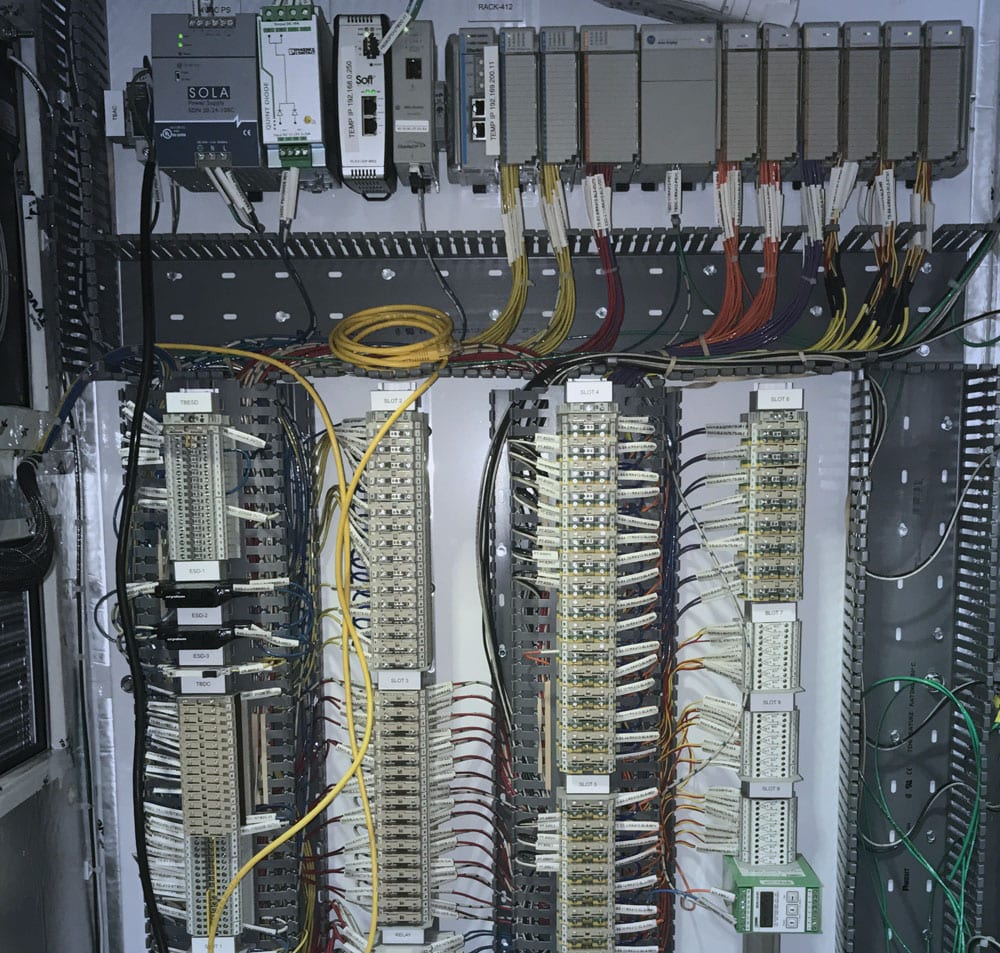
Manufacturers and industrial operators depend on precision, consistency, and control. These demands are challenging to meet using manual processes or traditional mechanical systems. That’s where Programmable Logic Controllers (PLCs) make a difference. These compact, specialized computers are designed to control everything from motors and pumps to complex production lines.
A PLC system integrator plays a key role in building, customizing, and maintaining these systems. From initial planning to long-term maintenance, integrators align PLC functionality with business goals. With the right configuration, a PLC setup can drive measurable improvements in productivity, safety, and uptime.
What a PLC Actually Does
A PLC is a digital controller built for industrial environments. It receives inputs from sensors, processes them based on prewritten logic, and sends commands to outputs such as valves, motors, or alarms. This process happens in milliseconds, enabling precise control over complex systems.
The programming behind a PLC is created using specialized languages such as ladder logic or structured text. These programs are designed to execute commands based on real-time data from the physical environment. That includes temperature readings, part positioning, pressure levels, or any other variable that must be monitored and controlled.
Because PLCs are designed for real-time operation, they offer reliability in environments where failure isn’t an option. They’re also built to resist electrical noise, heat, humidity, and vibration. This durability, along with their deterministic behavior, makes them the default choice for mission-critical applications.
Use Cases in Manufacturing
In the manufacturing sector, PLCs are essential for automation and quality control. They manage production lines, control robotic arms, synchronize conveyor belts, and enforce safety interlocks. Their logic governs the sequencing of tasks, reducing manual intervention and increasing throughput.
One common use case is assembly line coordination. A PLC can handle input from sensors that detect the position of a part, initiate the correct tooling response, and ensure operations occur in the correct order. If a problem is detected, such as a missing component or jammed part, the PLC halts the process and issues a fault signal to prevent damage or defects.
In food processing and pharmaceutical facilities, PLCs help maintain strict hygiene and safety standards. They ensure consistent dosing, control mixing times, and regulate temperatures. When integrated with Human-Machine Interfaces (HMI) or SCADA systems, they also provide operators with clear visual feedback and control options.
Use Cases Beyond the Factory Floor
PLCs are equally valuable outside traditional manufacturing environments. In the energy sector, they help manage power plants, solar arrays, and wind turbines. They ensure proper synchronization, monitor voltage, and handle emergency shutdown procedures. Water treatment facilities rely on PLCs to control pumps, valves, and filtration systems based on real-time data.
Transportation infrastructure also benefits. PLCs manage traffic lights, tunnel ventilation, and railway crossings. These systems must operate continuously and respond instantly to inputs such as traffic flow, weather conditions, or system failures.
Even in building automation, PLCs play a role. They control HVAC systems, lighting, fire alarms, and access control. Their flexibility allows them to respond dynamically to occupancy, time schedules, or environmental factors, improving energy efficiency and occupant comfort.
Benefits of PLC Systems
The advantages of using PLCs are numerous. First, they improve operational efficiency. By automating routine or complex tasks, they reduce the risk of human error and accelerate production cycles. Programmable logic also allows quick changes to process flow, giving operators more control and flexibility.
Another key benefit is system reliability. PLCs are built to withstand harsh environments and maintain continuous operation with minimal maintenance. When downtime is unacceptable, a well-designed PLC system offers predictable performance.
Security and diagnostics are also strengths. Many PLCs offer advanced monitoring, error logging, and integration with enterprise systems. This enables faster response to issues, real-time visibility into process health, and improved maintenance planning. With remote access capabilities, issues can often be diagnosed or resolved without requiring a site visit.
Future Trends and Emerging Use Cases
PLCs continue to evolve alongside industrial technology. Today’s systems are more connected, scalable, and intelligent than their predecessors. As part of Industry 4.0 strategies, PLCs now integrate with cloud platforms, edge computing devices, and machine learning algorithms.
This creates new use cases involving predictive maintenance, adaptive process control, and real-time analytics. A PLC can feed data into dashboards that help managers track trends and make informed decisions. In smart factories, the PLC acts as the bridge between physical machinery and digital insights.
In logistics and warehousing, PLCs control automated storage systems, picking robots, and conveyor networks. As e-commerce demand grows, so does the need for accurate, scalable automation, making PLCs a central component of modern fulfillment strategies.