
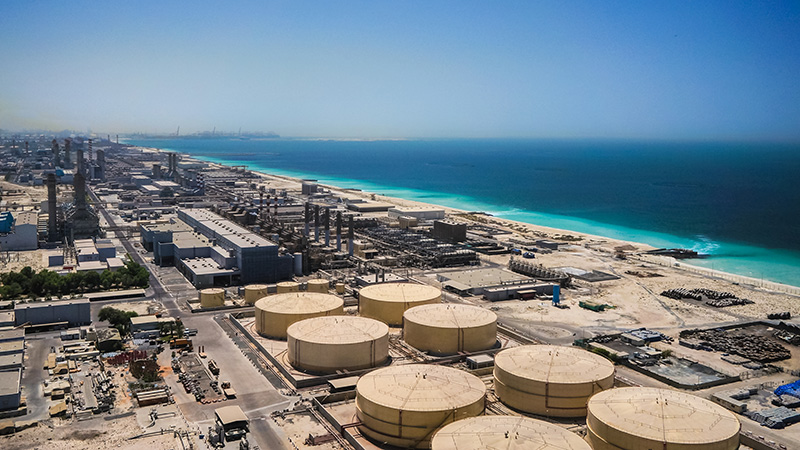
Desalination plants and water treatment facilities are important for supplying potable water to industrial, municipal, and domestic sectors. These facilities operate under constant exposure to water, chemicals, and varying environmental conditions. The long-term serviceability of such structures depends on effective waterproofing, which prevents water ingress, chemical corrosion, structural deterioration, and operational disruptions. Failure to implement proper waterproofing can result in leakage, concrete degradation, reinforcement corrosion, operational downtime, and high maintenance costs.
Waterproofing in these facilities involves multiple approaches, including structural waterproofing, membrane systems, chemical and cementitious grouting, joint sealing, and protective coatings. The selection of the appropriate method depends on facility type, construction material, hydrostatic pressures, water chemistry, and environmental conditions.
Principle of Waterproofing
Waterproofing aims to create a barrier that prevents water penetration through structural elements. In desalination and water treatment facilities, waterproofing achieves:
- Seepage Control: Prevents loss of treated or raw water through concrete or soil.
- Structural Protection: Reduces cracking, spalling, and reinforcement corrosion.
- Operational Reliability: Maintains dry and stable structures for continuous operation.
- Durability Enhancement: Extends the service life of structures exposed to water, salts, and chemicals.
Waterproofing can be incorporated at the design stage for new construction or retrofitted to existing structures, offering flexibility for both preventive and remedial measures.
Applications of Waterproofing in Water Treatment Facilities
1. Water Intake Structures: Intake tunnels, channels, and basins are constantly in contact with seawater or raw water. Waterproofing prevents leakage and protects the structure from chloride-induced corrosion.
2. Pre-treatment and Sedimentation Tanks: Concrete tanks handling high water volumes and suspended solids require internal waterproofing to prevent seepage and deterioration.
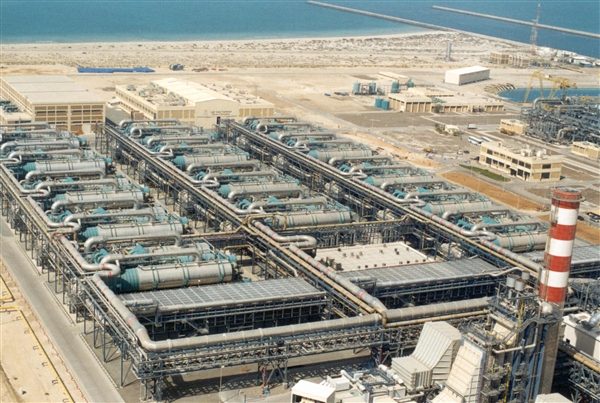
3. Filtration and Reverse Osmosis (RO) Units: RO units operate under high-pressure flows and chemically treated water. Waterproofing ensures efficiency and prevents leakage.
4. Chemical Dosing and Storage Areas: Tanks and pipelines for chlorination, coagulants, or anti-scaling chemicals need chemical-resistant waterproofing to prevent structural damage and environmental contamination.
5. Sludge and Wastewater Handling: Sludge thickening tanks, clarifiers, and sump pits benefit from waterproofing to prevent seepage and contamination.
6. Foundations and Basements: Sub-grade structures face hydrostatic pressure that can cause water ingress through cracks and construction joints. Waterproofing protects foundations against uplift and deterioration.
Advantages of Effective Waterproofing
- Reduced leakage and water loss.
- Extended service life of concrete and steel.
- Improved structural integrity and load-bearing capacity.
- Continuity of operations with minimal downtime.
- Reduced long-term maintenance and repair costs.
- Resistance to aggressive chemicals and saline water.
Common Waterproofing Techniques
1. Membrane Waterproofing:
Membrane systems form continuous barriers against water ingress.
- Sheet Membranes: Pre-formed sheets (PVC, HDPE, or TPO) applied over the substrate. Used in tank linings, roofs, and basements.
- Liquid-Applied Membranes: Polyurethane or acrylic coatings applied as liquid that cure into a seamless, flexible layer. Suitable for complex geometries like tank interiors and pipelines.
Advantages: Provides a continuous barrier, accommodates structural movement, and offers chemical resistance with proper material selection.
2. Integral Waterproofing:
Integral waterproofing involves adding water-repellent or pore-blocking agents directly into the concrete mix.
- Crystalline Admixtures: React with water and unhydrated cement to form insoluble crystals within capillaries, blocking water pathways.
- Hydrophobic Agents: Silicone-based compounds reduce water absorption by coating pore walls.
Applications: Concrete tanks, basins, pipelines, and structures exposed to constant water. Integral waterproofing is effective against micro-leakage and improves concrete durability.
3. Chemical Grouting:
Chemical grouting uses pressure injection to fill voids and cracks, similar in principle to curtain grouting in reservoirs.
- Cementitious Grouts: Fill voids and joints in concrete or soil.
- Polyurethane Grouts: Expanding polyurethane seals fine cracks and leaks.
- Acrylic and Silicate Grouts: Low-viscosity solutions penetrate micro-fissures to create a watertight seal.
Applications: Remedial waterproofing for leaking tanks, foundations, and underground pipelines.
4. Joint Sealing:
Joints in concrete tanks, expansion joints, and pipe penetrations require sealing.
- Elastomeric Sealants: Polyurethane, silicone, or polysulfide sealants provide flexible, durable barriers.
- Waterstops: PVC or hydrophilic waterstops embedded in construction joints expand on contact with water to seal leaks.
5. Protective Coatings:
Protective coatings serve as secondary barriers against water ingress, chemicals, and abrasion.
- Epoxy Coatings: High adhesion and chemical resistance for aggressive water and chemical exposure.
- Polyurethane Coatings: Provide flexibility and water resistance in areas prone to movement.
- Cementitious Coatings: Applied inside tanks for moderate chemical resistance and waterproofing.
Waterproofing Materials and Selection Criteria
The choice of materials depends on:
- Water Chemistry: Salinity, pH, and chemical additives.
- Hydrostatic Pressure: High-pressure zones require robust membranes or chemical grouts.
- Structural Condition: Cracks, voids, or deteriorated concrete dictate injection-based solutions.
- Environmental Conditions: UV exposure, temperature variations, and soil characteristics.
Design Considerations for Waterproofing Systems
- Substrate Preparation: Surfaces must be clean, sound, and properly cured for optimal adhesion.
- Water Pressure Assessment: Hydrostatic and operational pressures influence waterproofing type and thickness.
- Chemical Compatibility: Ensure resistance to chlorides, sulfates, or other chemicals.
- Redundancy: Combining membranes with chemical grouts increases reliability.
- Maintenance Access: Design for inspection and repair without major disruption.
- Environmental and Safety Compliance: Use non-toxic, environmentally safe materials, especially for potable water.
Conclusion
Waterproofing in desalination plants and water treatment facilities is essential to maintain structural integrity, operational efficiency, and long-term durability. Combining membranes, chemical and cementitious grouts, integral admixtures, and joint sealing systems ensures water-tight structures resistant to chemical attack, seepage, and hydrostatic pressures. With proper design, material selection, and execution, waterproofing safeguards these pivotal facilities, ensuring reliable water supply and sustainable operation.



