In commercial construction, time is money. Every hour of delay can increase labor costs, push back deadlines, and affect project profitability. One of the most common but overlooked causes of delay is equipment downtime.
When tools or critical equipment stop working due to damage, loss, or poor storage, work slows down immediately. Surveying devices, laser levels, power tools, tablets, and testing instruments are essential on modern job sites. If they fail, productivity suffers.
Reducing equipment downtime is not only about maintenance, it is also about proper storage and protection.
Let’s look at practical storage solutions that help keep equipment safe, organized, and ready for daily use.
Understanding Equipment Downtime on Job Sites
Equipment downtime happens when tools are unavailable due to:
- Physical damage from drops or impact
- Dust or moisture affecting performance
- Internal damage caused by vibration during transport
- Misplaced or poorly organized tools
- Broken parts from improper storage
On busy commercial job sites, equipment is constantly moved between floors, buildings, and vehicles. Without proper protection, damage becomes almost unavoidable.
Preventing these issues requires a proactive storage strategy.
Why Standard Toolboxes Are Not Enough
Traditional toolboxes are useful for basic organization, but they are often not designed to protect high-value or sensitive equipment.
Modern construction sites rely on advanced tools such as:
- Digital measuring instruments
- Laser alignment tools
- Electrical testing equipment
- Tablets and laptops
- Inspection cameras
These devices require more than simple metal or plastic storage. They need protection against shock, vibration, dust, and environmental exposure.
This is where practical storage upgrades make a difference.
Invest in Rugged Protective Cases
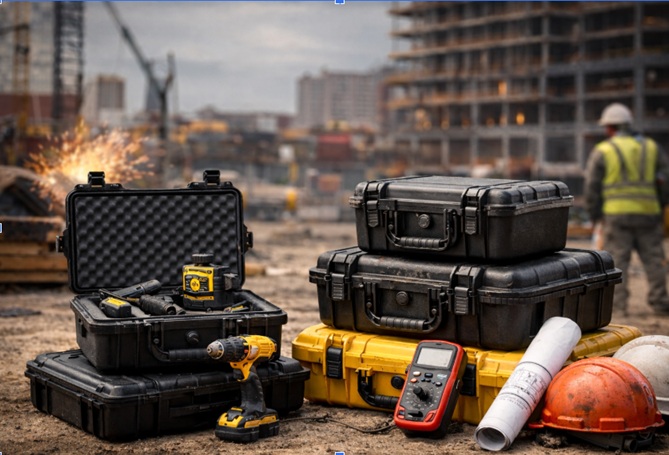
One of the most effective ways to reduce equipment downtime is by using rugged protective hard cases.
Heavy-duty industrial tool cases are designed to handle:
- Job site drops
- Rough handling
- Heavy stacking
- Dust-filled environments
- Outdoor exposure
These cases typically feature impact-resistant outer shells and shock-absorbing foam interiors. The outer shell protects against external damage, while the internal foam secures equipment in place to prevent movement during transport.
For tools that require precise calibration, such as laser levels or measuring instruments, this level of protection is critical.
By preventing physical damage, contractors reduce unexpected repair costs and work delays.
Protect Equipment During Transport
Commercial projects often require tools to move between multiple job sites. Transportation is one of the most common times when equipment gets damaged.
Inside trucks and vans, tools are exposed to:
- Constant vibration
- Sudden braking
- Uneven roads
- Heavy shifting of materials
Using dedicated protective storage solutions ensures equipment remains stable and secure during transit.
Foam inserts, reinforced corners, and durable latches help prevent internal movement and reduce vibration-related wear.
Protecting tools during transport means they arrive ready to work, not ready for repair.
Reduce Environmental Exposure
Construction environments expose equipment to dust, moisture, and temperature changes daily.
Dust can enter sensitive components and affect performance. Moisture can lead to corrosion or electrical failure. Extreme heat or cold can weaken materials and reduce battery life.
Sealed industrial storage cases help reduce environmental exposure by:
- Blocking dust intrusion
- Preventing moisture entry
- Protecting equipment from direct sunlight
- Shielding tools from harsh weather conditions
This added layer of protection extends the lifespan of expensive tools and reduces downtime caused by environmental damage.
Improve Organization to Prevent Delays
Downtime is not always caused by damage. Sometimes it happens simply because tools are misplaced.
Poor organization leads to:
- Time wasted searching for equipment
- Accidental damage from loose tools
- Duplicate purchases of missing tools
Using structured storage systems with designated compartments ensures every tool has its place.
Custom foam inserts or divided storage layouts prevent tools from moving around and make them easy to locate quickly.
Better organization improves workflow efficiency and reduces unnecessary interruptions.
Extend Equipment Lifespan
Replacing damaged equipment is expensive. Frequent repairs increase operating costs and reduce profitability.
By using proper storage solutions, contractors can:
- Extend tool lifespan
- Reduce maintenance frequency
- Lower repair expenses
- Protect long-term investments
Preventive protection is always more cost-effective than reactive repairs.
Over time, durable storage solutions pay for themselves through reduced downtime and replacement costs.
Support Workplace Safety
Damaged equipment can also create safety risks, especially on busy commercial job sites where worker protection is a priority. A faulty power tool or misaligned measuring device can lead to errors, accidents, or structural issues.
Keeping equipment properly stored and protected ensures tools function correctly and safely.
Safe equipment contributes to safer job sites overall.
Building a Proactive Equipment Protection Plan
Reducing equipment downtime requires a simple but structured approach:
- Upgrade from basic toolboxes to heavy-duty protective storage.
- Secure equipment properly during transport.
- Keep tools protected from dust and moisture.
- Organize storage to prevent loss and confusion.
- Inspect cases and tools regularly for wear or damage.
Small changes in storage practices can create measurable improvements in productivity and reliability.
Final Thoughts
Commercial construction projects depend on reliable tools and equipment. When equipment fails, projects slow down, costs increase, and deadlines become harder to meet.
Reducing equipment downtime is not only about maintenance schedules, it starts with proper storage.
Investing in durable, protective storage solutions helps prevent physical damage, environmental exposure, and transport-related wear. It improves organization, extends equipment lifespan, and supports job site efficiency.
In a fast-paced commercial construction environment, protecting your tools is protecting your timeline.
When equipment is secure, teams work faster, safer, and more efficiently and projects stay on track.