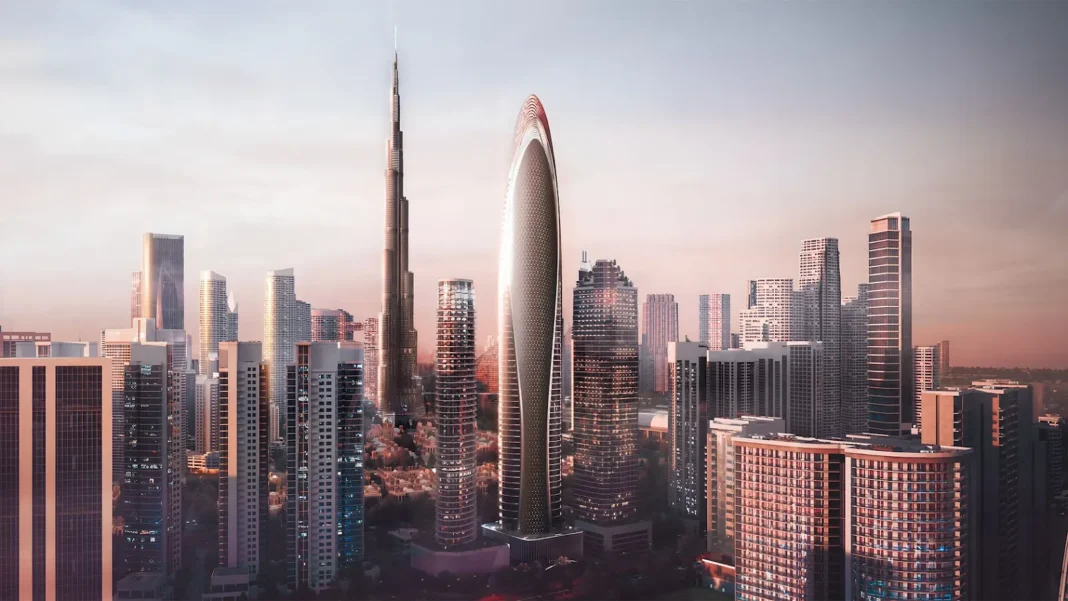
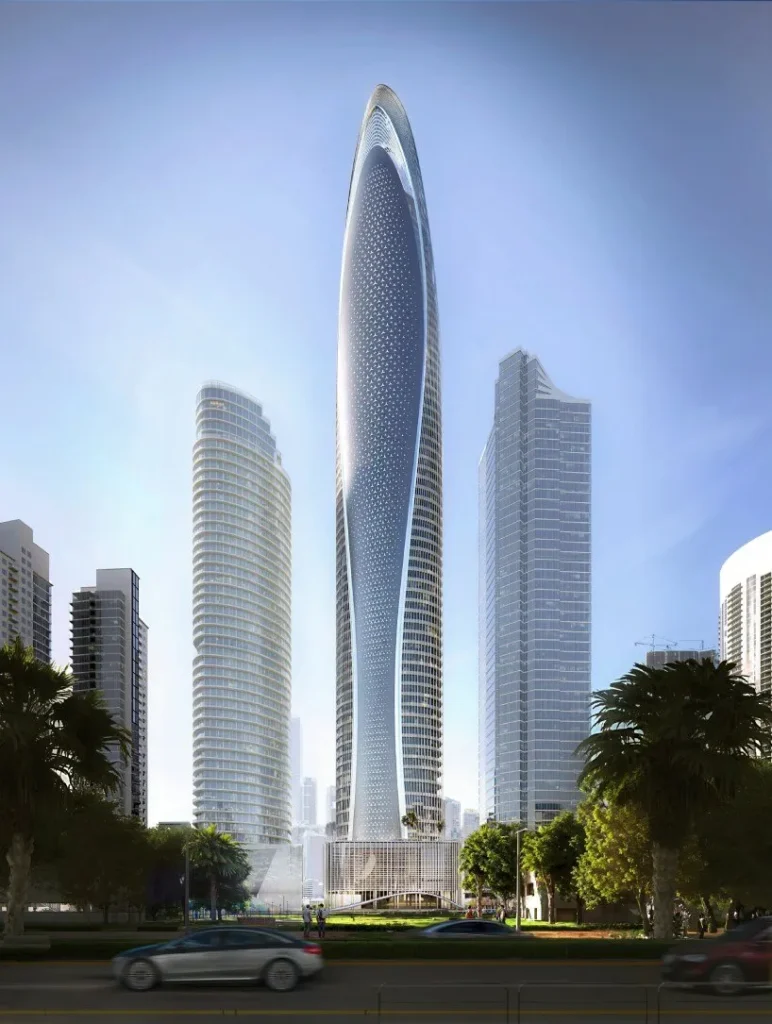
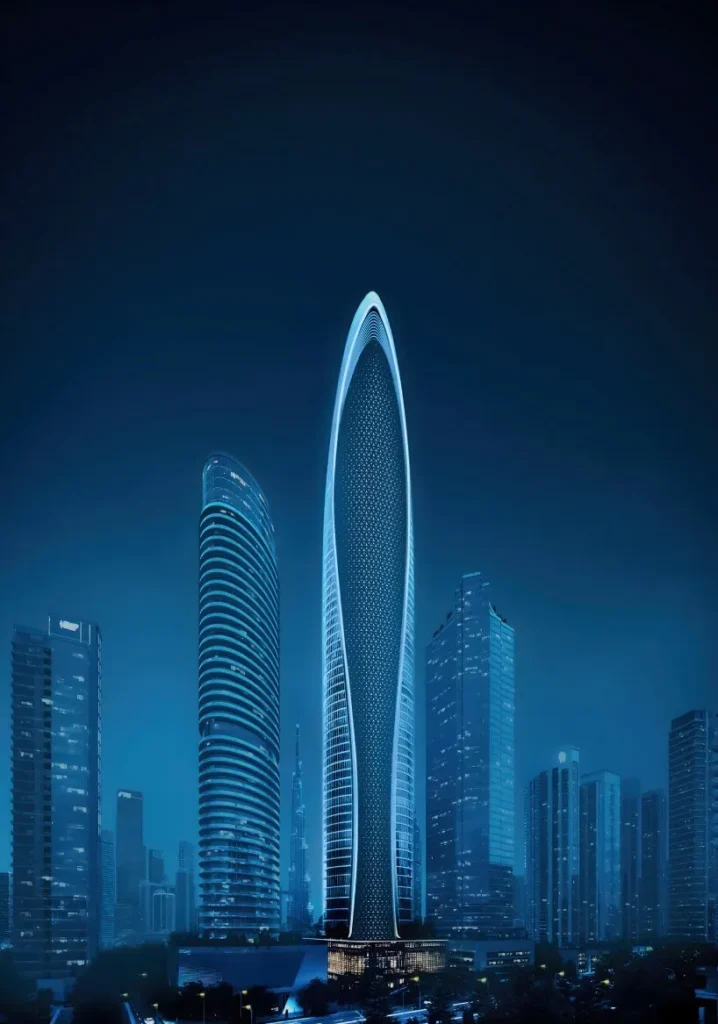
Binghatti, in partnership with Mercedes-Benz, is developing a 65-storey residential tower in Dubai. Located on Sheikh Zayed Road, this high-rise project marks the German automaker’s first entry into the built environment. The tower prioritizes engineering logic, internal flow, and integrated systems over decorative branding. Rising to 341 meters, it will offer around 150 housing units. Apartment sizes vary from two-bedroom layouts to four-bedroom penthouses. Completion is expected in 2026, with construction already underway.
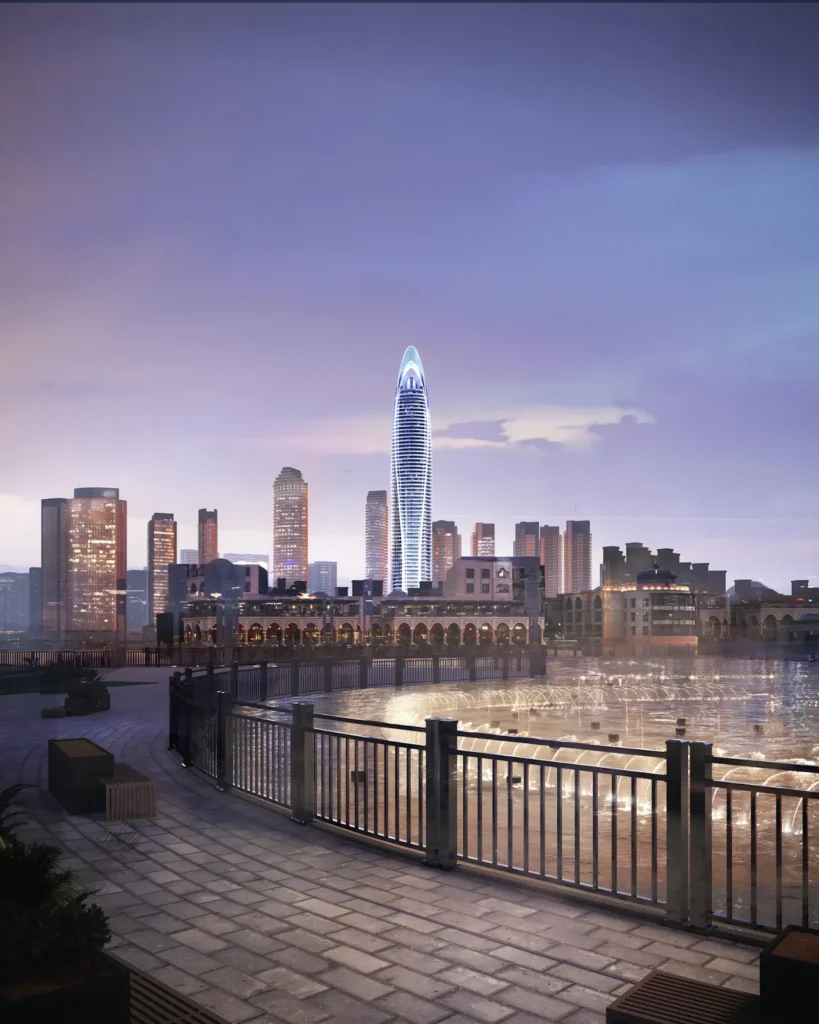
Location and Structure
The tower stands near two of Dubai’s most significant landmarks—the Burj Khalifa and Dubai Mall. Its structural system is based on a reinforced concrete core surrounded by a steel frame. This arrangement handles vertical loads while resisting lateral wind and seismic forces. The structural approach enables wide, open-plan layouts and uninterrupted interior configurations.
Design elements include:
- Curved external geometry shaped with reference to vehicle aerodynamics.
- A central concrete core containing elevators, mechanical shafts, and emergency staircases.
- Steel frameworks around the core for lateral stability.
This structure ensures that the residential levels remain adaptable to multiple interior configurations without requiring internal load-bearing walls.
Material and Façade Features
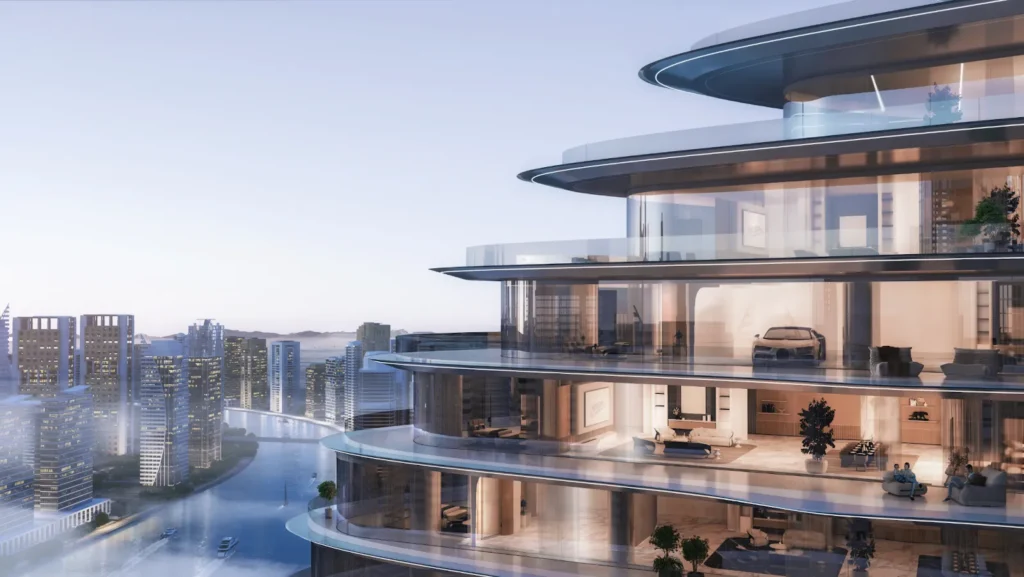
The external skin of the building is designed for both environmental performance and uniform visual appearance. Reflective glass and metal cladding panels form the outer envelope, with built-in elements to address solar radiation and external heat gain. Balconies are cantilevered and positioned to maintain outdoor access without disrupting the envelope design.
Material considerations:
- High-performance glass with solar control coating.
- Shading systems embedded within the façade for passive heat management.
- Metallic finishes selected to align with vehicle manufacturing standards.
Together, these materials help meet thermal efficiency targets while allowing the tower to maintain its formal consistency across all levels.
Planning and Mobility
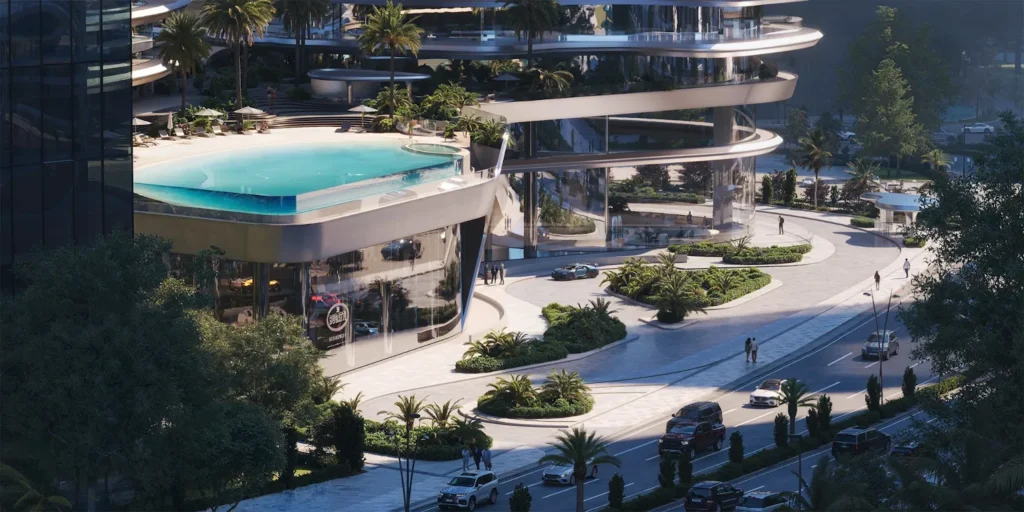
The project’s planning incorporates both vehicular access and internal human movement. Ground-level access is managed through dedicated vehicle entry points, valet services, and structured drop-off zones. Inside, circulation zones are designed for direct and efficient movement to and from residential units.
Mobility planning includes:
- Zoning of elevators for faster service between designated floor groups.
- Wide corridors with minimal directional changes.
- Automated parking systems and dedicated vehicle service areas.
These mobility elements are supported by wayfinding systems and digital access control, reducing transition time between public and private spaces.
Interior Systems and Automation
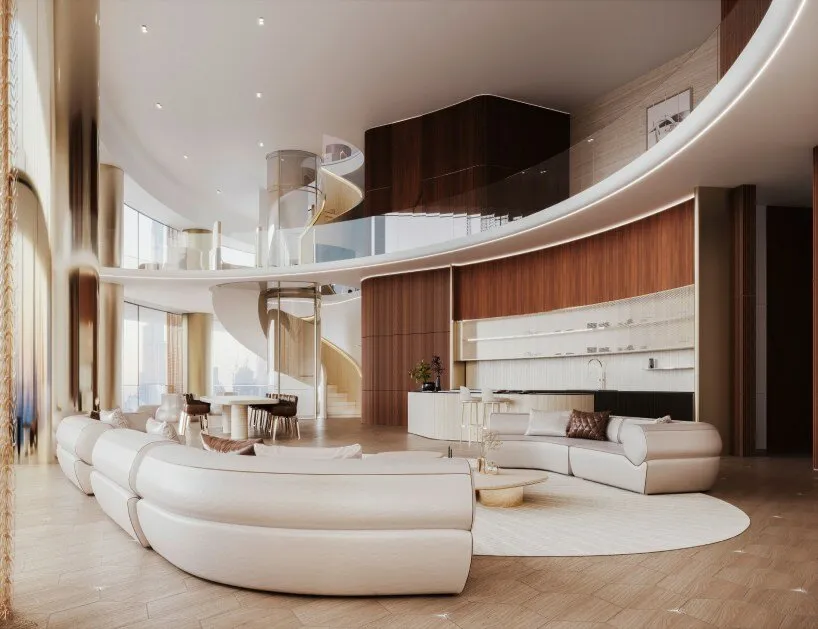
The tower integrates home automation systems from the outset. Residents can control lighting, air conditioning, security, and other features from a centralized platform. This system is modeled on user interface principles found in Mercedes-Benz vehicles, ensuring consistency across devices.
Technology systems include:
- A single user interface for managing all home systems.
- Occupancy sensors that adjust lighting and temperature automatically.
- Remote control of HVAC and appliances through mobile apps or in-wall panels.
This integration improves energy use visibility and offers residents multiple control options.
Amenity Program
Resident facilities are spread across multiple floors, with both indoor and outdoor components. These areas are designed to accommodate personal health, entertainment, and hospitality services.
Key amenities:
- Exercise area with equipment sourced from German manufacturers.
- Screening rooms for private film viewing.
- A rooftop swimming pool facing Downtown Dubai.
- Dedicated staff areas for cleaning, maintenance, and valet support.
- Food and retail options on the podium level.
These features are arranged to ensure minimal overlap between resident and visitor zones.
Environmental Measures
Energy and water systems in the building are optimized to reduce consumption and long-term operational costs. Passive and active sustainability measures are incorporated into the building’s infrastructure and control systems.
Sustainability features:
- Greywater collection and recycling for landscape irrigation and toilet flushing.
- Daylight sensors connected to low-energy lighting systems.
- Real-time energy use tracking through smart metering.
- Façade components selected for thermal insulation and local climate adaptation.
The building targets compliance with local energy codes and international benchmarks for large-scale residential projects.
Market Position and Rollout
The project has received strong initial market response. According to the developer, approximately 50% of the units were reserved within the first 24 hours of launch. This reflects continued demand for branded residential towers in Dubai’s central areas. Location, integration of design systems, and the presence of a known global brand have contributed to early interest.
Conclusion
The Mercedes-Benz Tower by Binghatti introduces a structured approach to branded residential development. The tower avoids ornamental or logo-driven architecture and instead adopts principles from the automotive sector—system thinking, spatial clarity, and technological integration. Its core focus remains on durable construction, efficient use of internal volume, and controlled building performance. As branded real estate grows in Dubai, this project offers an example of engineering-led development within a high-density urban context.
Images- Mercedes-Benz