
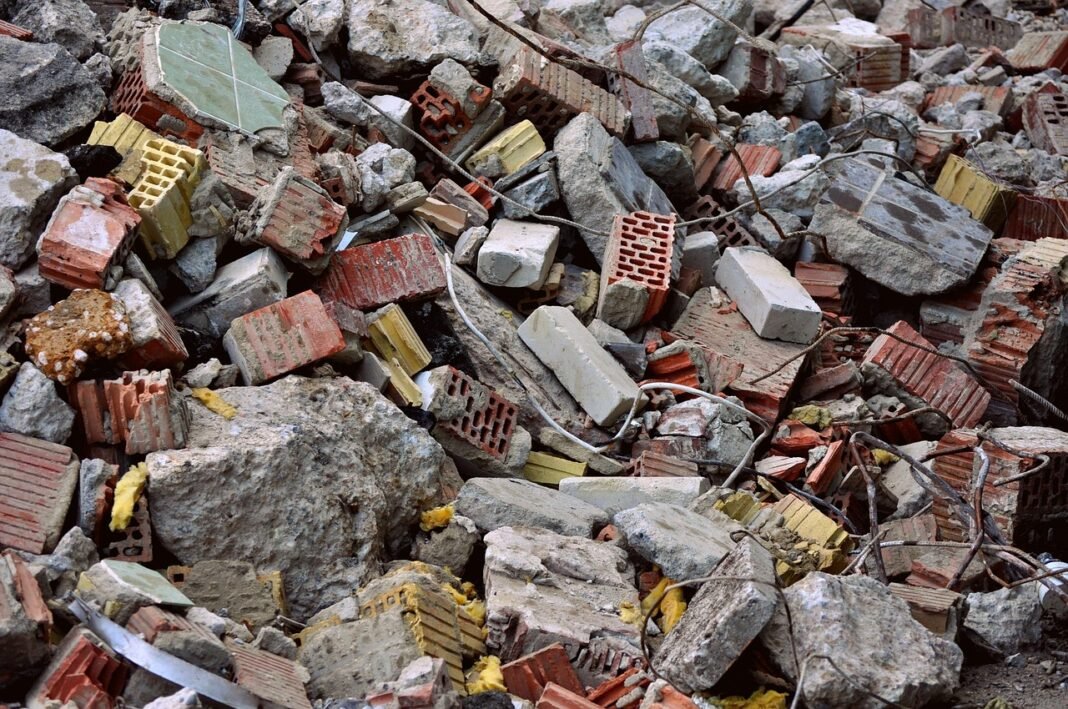
Construction activities are among the largest contributors to waste generation worldwide. As urbanization accelerates and infrastructure projects increase, the volume of construction and demolition (C&D) waste has become an important environmental concern. A key area of focus is the effective management of construction waste through reuse and recycling strategies, which play a important role in reducing landfill use, conserving resources, and minimizing the environmental impact of the construction sector.
Impact of Construction Waste
Globally, the construction industry is responsible for approximately 35% of total solid waste. The World Bank’s report on “What a Waste 2.0” indicates that the world will generate 3.4 billion tonnes of waste annually by 2050, a significant increase from the 2.01 billion tonnes generated today.
By 2030, it’s projected that global construction waste will reach 2.2 billion tonnes annually, according to a report by Transparency Market Research. China, the U.S., and India are the top three generators of construction waste.
In India:
- The Central Pollution Control Board (CPCB) estimates that India generates over 150 million tonnes of C&D waste annually, although only 1% to 5% is officially processed.
- The Ministry of Housing and Urban Affairs (MoHUA) reports that less than 30 C&D waste recycling plants are operational across India as of 2023.
- Cities like Delhi and Ahmedabad have formal recycling facilities, but most Indian cities lack even basic infrastructure to collect and segregate construction debris.
- In major urban redevelopment and highway projects, C&D waste contributes to nearly 50% of total solid waste generated on-site.
This mismatch between waste generated and processed highlights the urgent need for comprehensive construction waste management.
Understanding Construction Waste
Construction waste includes a wide range of materials generated during the construction, renovation, and demolition of buildings, roads, and other infrastructure. This waste can be broadly categorized as:
- Concrete, bricks, tiles, and ceramics
- Wood, glass, and plastic
- Metals such as steel and aluminum
- Soil, sand, and gravel
- Packaging materials
- Insulation and asbestos waste
- Electrical wiring, pipes, and plumbing fixtures
This type of waste arises at different stages—site preparation, material handling, during construction, and post-construction. Many of these materials are non-biodegradable and can occupy large volumes in landfills, making proper management essential.
Scale of the Problem
Globally, construction and demolition waste accounts for over 30% of total solid waste in many countries. In developing nations, this percentage can be even higher due to rapid infrastructure growth and limited recycling systems. In India, the Central Pollution Control Board (CPCB) estimates the generation of 150 million tonnes of C&D waste annually, though only a small fraction is officially collected and processed.
A major issue is that much of this waste is dumped illegally on vacant plots, roadsides, riverbanks, or landfills, causing environmental degradation. Moreover, the embedded energy and resources used to manufacture these materials are lost when waste is not reused or recycled.

Current Disposal Practices
The conventional approach to construction waste management involves:
- Disposal in landfills: The most common but least sustainable method.
- Illegal dumping: Especially in unregulated urban fringes.
- On-site stockpiling: Temporarily storing waste for later disposal, often leading to long-term environmental hazards.
- Partial reuse: In limited cases, materials like bricks or metal scraps are reused or sold off informally.
These methods are inadequate for sustainable development. Landfilling not only takes up valuable land but also contributes to soil and groundwater pollution. Informal recycling exists, but lacks regulation, safety, and efficiency.
Importance of Reuse and Recycling
Reusing and recycling construction materials can help reduce demand for new raw materials, conserve energy, and lower greenhouse gas emissions. It also reduces the burden on landfills and illegal dumping sites.
Reuse:
- Bricks and concrete can be cleaned and reused in non-load-bearing structures.
- Wood can be repurposed for scaffolding or formwork.
- Steel and other metals can be melted down and re-fabricated.
- Doors, windows, and fixtures can be salvaged during demolition and installed in new or temporary structures.
Recycling:
- Crushed concrete can be used as aggregate in road construction.
- Recycled asphalt pavement (RAP) can be used in new asphalt layers.
- Wood chips can be turned into particle boards or fuel.
- Plastic and glass waste can be melted and remolded for various industrial applications.
These practices also reduce the embodied carbon in construction by avoiding the energy-intensive production of new materials.
Barriers to Effective Waste Management
Despite the benefits, construction waste reuse and recycling face several hurdles:
- Lack of awareness: Many builders and contractors are unaware of sustainable waste practices or their economic benefits.
- Absence of segregation: Waste is often mixed on-site, making recycling difficult.
- Limited infrastructure: There are few authorized C&D waste processing facilities, especially in smaller cities and towns.
- Cost concerns: Although long-term savings exist, upfront costs for sorting, transporting, and processing may discourage some stakeholders.
- Regulatory gaps: In many regions, enforcement of waste management rules is weak or inconsistent.
- Design limitations: Projects are rarely designed with deconstruction or recyclability in mind.
Regulatory Framework and Policy
To address the issue, several governments have introduced guidelines and regulations. In India, the Construction and Demolition Waste Management Rules, 2016, outline responsibilities for waste generators, local bodies, and recycling facility operators. Key provisions include:
- Segregation of waste into different categories at source.
- Storing waste on-site in containers or designated areas.
- Transporting waste to authorized processing facilities.
- Promoting the use of recycled materials in construction projects.
- Setting up of collection and recycling centers by urban local bodies.
However, the implementation has been uneven. Many municipalities lack the resources or motivation to enforce the rules effectively.
Strategies for Sustainable Waste Management
A comprehensive approach is needed to manage construction waste effectively. This includes planning, execution, and policy interventions.
1. Waste Audit and Planning
Before starting a project, developers should conduct a waste audit to identify potential waste streams. Waste management plans can then be integrated into the project timeline and budget.
2. On-Site Waste Segregation
Segregation of materials at the source is the foundation of effective recycling. Dedicated bins or containers for metal, concrete, plastic, wood, and general waste should be provided on-site.
3. Material Selection and Design
Choosing materials that are recyclable or reusable, and designing buildings for easier deconstruction, can reduce future waste. Modular designs and prefabricated components also generate less on-site waste.
4. Training and Awareness
Workers, supervisors, and project managers should be trained in sustainable construction techniques. Awareness campaigns can help in spreading the message across the industry.
5. Incentivizing Recycled Products
Governments and developers should promote the use of recycled aggregates, tiles, and concrete in non-critical structures. Certifications or tax benefits could encourage wider adoption.
6. Developing Infrastructure
Municipalities need to invest in or partner with private players to set up authorized waste collection and recycling facilities. Mobile recycling units can also serve smaller or remote projects.
7. Technology Integration
Digital tools like Building Information Modeling (BIM) can help reduce material wastage by optimizing quantities and enabling better coordination. IoT devices can track waste generation in real-time.
Role of Stakeholders
Builders and Developers
They play a central role by integrating waste management into project planning and execution. By choosing sustainable materials, following regulatory guidelines, and promoting on-site waste practices, they can lead the change.
Government Bodies
Policymakers must strengthen enforcement, provide infrastructure, and offer incentives. Public procurement policies should prioritize contractors who use recycled materials or follow zero-waste practices.
Recycling Industry
Waste processing companies need support in the form of clear regulations, land for setting up plants, and access to sorted waste. They must also ensure environmental compliance in their operations.
Citizens and End Users
Buyers and users can influence the market by demanding transparency in construction practices and supporting developers that prioritize sustainability.
Conclusion
The construction industry must evaluate its environmental footprint and commit to improvement. In construction, embracing reuse and recycling is not just a sustainable practice—it is a necessity for long-term viability. By aligning regulations, market mechanisms, and project-level strategies, the construction sector can move toward a more circular economy. This transformation requires a shift in mindset—from treating waste as a byproduct to seeing it as a resource.



