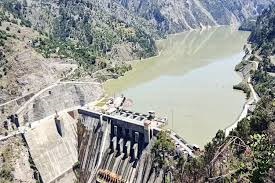
India has initiated global tenders for the construction of the long-pending 1,856 MW Sawalkote Hydroelectric Project on the Chenab River, marking a significant development following the current suspension of the Indus Waters Treaty. The project, stuck for decades due to objections from Pakistan and administrative roadblocks, now sees momentum with international competitive bidding opened by the National Hydroelectric Power Corporation (NHPC) for its planning, design, and engineering. The deadline for submission is 10 September.
Originally conceptualised in 1984, the Sawalkote project is set to become India’s largest run-of-river hydropower installation. Located near Sidhu village in Jammu and Kashmir’s Ramban district, the project holds strategic relevance in maximising India’s usage of the Indus basin waters during the suspension of treaty constraints. The 1960 treaty had granted India control over the Ravi, Beas, and Sutlej rivers, while limiting Indian usage of the western rivers — Indus, Chenab, and Jhelum — which were allocated to Pakistan.
Jammu & Kashmir Chief Minister Omar Abdullah termed the tendering a long-overdue breakthrough. He recounted multiple attempts to revive the project, including efforts by Dr Farooq Abdullah in 1996 and his own earlier tenure, both of which faced setbacks due to administrative and environmental hurdles. During the intervening years, key bottlenecks including compensation for 13 affected villages, clearance of forest land, and relocation of an Army transit camp remained unresolved.
However, with in-principle approval granted earlier this month by the Forest Advisory Committee for diversion of 847 hectares of forest land, and NHPC receiving a waiver on the controversial water cess, major procedural hurdles have now been cleared. The estimated cost of the project stands at ₹22,704.8 crore, and it will be implemented in two phases under a build-own-operate-transfer (BOOT) model.
Ramban MLA Arjun Singh Raju, who first disclosed the tendering development, called the project “historic,” and said its completion would deliver long-term benefits not only to Jammu & Kashmir but to the entire nation. Raju credited CM Abdullah for unlocking the long-standing deadlock and confirmed that all major compliance issues have now been resolved.
Though NHPC was originally handed the project in 1985, it was transferred to the Jammu & Kashmir State Power Development Corporation (JKSPDC) in 1997. Despite ₹430 crore being spent on enabling infrastructure, core construction had not begun. A revival push came in 2021 via an MoU with NHPC, aligning with India’s broader hydropower ambitions and its reassertion of rights under the Indus basin framework.
With the Indus Waters Treaty under suspension and critical clearances in place, India’s renewed thrust on Sawalkote signals a strategic shift in regional water utilisation policy.
Image- awazthevoice.in