India’s infrastructure growth story is closely tied to the project development models it adopts. From highways and bridges to metro rail, ports, airports, and urban infrastructure, the choice of execution and financing model determines not only project timelines and costs but also risk allocation, private sector participation, and long-term asset sustainability.
Among the most widely used infrastructure development frameworks in India are EPC (Engineering, Procurement and Construction), HAM (Hybrid Annuity Model), and BOT (Build-Operate-Transfer). Each model has evolved in response to changing market conditions, fiscal realities, and the government’s objective of balancing public funding with private expertise.
Understanding Infrastructure Project Delivery Models
Infrastructure projects involve high capital expenditure, long gestation periods, regulatory complexity, and operational risks. To manage these challenges, governments design project delivery models that define:
- Who finances the project
- Who designs and constructs it
- Who operates and maintains it
- Who bears key risks (cost, traffic, revenue, time)
- When ownership is transferred back to the public authority
EPC, HAM, and BOT differ fundamentally in how these responsibilities are allocated.
EPC (Engineering, Procurement and Construction) Model
What is the EPC Model?
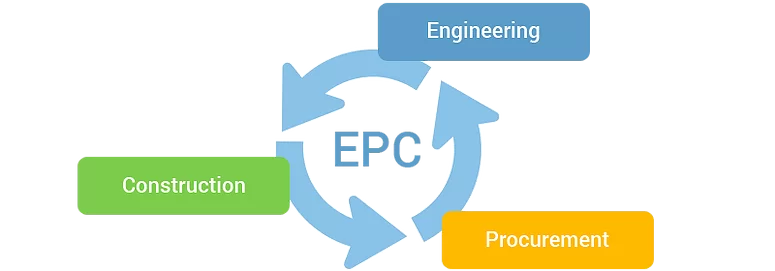
Under the EPC model, the government or public authority fully finances the project. A private contractor is appointed to design, procure materials, and construct the asset for a fixed price and timeline. Once construction is completed, the asset is handed over to the authority, which is also responsible for operation and maintenance.
Key Characteristics of EPC
- Funding: 100% government-funded
- Private sector role: Construction only
- Revenue risk: Government
- Traffic risk: Government
- Ownership: Government from day one
How EPC Works in Practice
The government prepares the detailed project report (DPR), secures funding (budgetary allocation, multilateral loans, or bonds), and awards the project to the lowest or most competitive bidder. Payments are usually milestone-based.
Advantages of EPC
- Low private sector risk
Contractors are insulated from traffic, revenue, and long-term operational risks. - Predictability and control
The government retains full control over project design and outcomes. - Suitable for strategic or low-revenue projects
EPC is ideal for rural roads, border infrastructure, and social infrastructure where tolling or user charges are not viable. - Fast execution in stable environments
With funding assured, projects can move quickly if land acquisition and approvals are in place.
Limitations of EPC
- High fiscal burden on government
Large-scale EPC adoption strains public finances. - Limited innovation
Contractors have little incentive to optimize life-cycle costs. - Maintenance challenges
Since the contractor exits after construction, long-term asset quality can suffer.
Typical EPC Applications
- Rural roads (PMGSY)
- Government buildings
- Defence and border infrastructure
- Water supply and sanitation projects

BOT (Build-Operate-Transfer) Model
What is the BOT Model?
Under the BOT model, a private concessionaire finances, builds, operates, and maintains the infrastructure asset for a fixed concession period. The concessionaire recovers investment through user charges (tolls, tariffs) or government annuities. After the concession period, the asset is transferred back to the authority.
BOT has two major variants:
- BOT (Toll) – Revenue from users
- BOT (Annuity) – Fixed payments from government
Key Characteristics of BOT
- Funding: Primarily private
- Private sector role: Build + operate + maintain
- Revenue risk: Private sector (especially BOT Toll)
- Traffic risk: Private sector
- Ownership: Transferred after concession
Advantages of BOT
- Reduces government funding burden
Private capital finances project development. - Operational efficiency
Since revenue depends on asset performance, operators focus on quality and maintenance. - Lifecycle cost optimization
Design and construction are optimized for long-term performance. - Market-driven discipline
Projects are scrutinized for viability, encouraging realistic demand assessment.
Limitations of BOT
- High risk for developers
Traffic, revenue, regulatory, and financing risks can be significant. - Financing challenges
Banks are cautious due to long tenures and uncertain cash flows. - Vulnerability to policy changes
Toll policies, competing roads, or economic downturns can impact returns.
BOT Experience in India
BOT (Toll) was widely adopted during the mid-2000s highway boom. However, aggressive bidding, traffic overestimation, and delays in land acquisition led to stressed assets and stalled projects, prompting a shift away from pure BOT.

HAM (Hybrid Annuity Model)
What is the HAM Model?
The Hybrid Annuity Model (HAM) was introduced to strike a balance between EPC and BOT by sharing risks between the government and private sector.
Under HAM:
- The government pays 40% of project cost during construction
- The private developer funds the remaining 60%
- The government pays fixed annuities over the concession period
- O&M is the responsibility of the private player
- There is no traffic or toll risk for the developer
Key Characteristics of HAM
- Funding: Shared (40% government, 60% private)
- Revenue risk: Government
- Traffic risk: Government
- O&M responsibility: Private
- Ownership: Government
Advantages of HAM
- Balanced risk allocation
Developers are protected from traffic volatility. - Improved bankability
Assured annuity payments make projects attractive to lenders. - Better asset quality
Long-term O&M obligations incentivize durable construction. - Lower fiscal stress than EPC
Government funding is staggered over time.
Limitations of HAM
- Government payment risk
Developers depend on timely annuity payments. - Limited upside for developers
Since revenue is fixed, there is no gain from higher-than-expected traffic. - Higher contingent liabilities
Long-term annuity commitments add to future government obligations.
Typical HAM Applications
- National highways (NHAI projects)
- State highways
- Road widening and upgradation projects
EPC vs HAM vs BOT: Comparative Overview
| Parameter | EPC | HAM | BOT |
| Project funding | 100% Government | 40% Govt + 60% Private | Mostly Private |
| Traffic risk | Government | Government | Private |
| Revenue risk | Government | Government | Private |
| O&M responsibility | Government | Private | Private |
| Private sector exposure | Low | Medium | High |
| Government fiscal burden | High (upfront) | Medium (spread) | Low |
| Suitable for | Social & strategic projects | Highways, roads | Revenue-generating assets |

Choosing the Right Model: Strategic Considerations
The choice between EPC, HAM, and BOT depends on multiple factors:
1. Project Viability
- Low or uncertain revenue → EPC or HAM
- Strong, predictable revenue → BOT
2. Government Fiscal Capacity
- Limited budgets favor HAM or BOT over EPC.
3. Risk Appetite of Private Sector
- Conservative investors prefer HAM
- Aggressive investors may opt for BOT
4. Sector Type
- Roads: EPC, HAM, BOT
- Metro rail: EPC + O&M concessions
- Airports & ports: BOT/PPP
- Social infrastructure: EPC
The Future of Infrastructure Models in India
India’s infrastructure strategy is moving toward risk-balanced PPP frameworks rather than extreme risk transfer. HAM has emerged as a preferred model for highways, while BOT remains relevant for airports, ports, logistics parks, and renewable energy projects where revenue streams are strong.
Going forward, we may see:
- Innovative PPP hybrids
- Asset monetisation (TOT, InvITs)
- Greater role of institutional capital
- Performance-based O&M contracts
Conclusion
EPC, HAM, and BOT are not competing models but complementary tools in infrastructure development. EPC ensures execution certainty, BOT drives efficiency and private capital, while HAM bridges the gap by balancing risk and reward. Understanding the strengths and limitations of each model is essential for sustainable infrastructure growth. The success of future projects will depend not just on funding availability but on choosing the right model for the right project at the right time.