
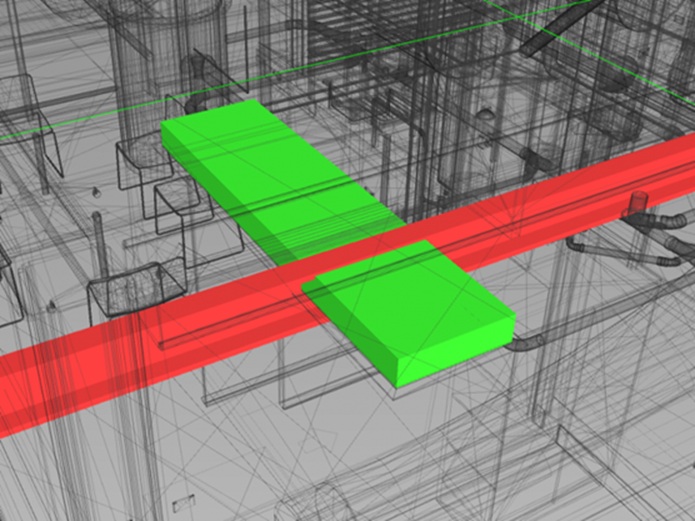
Many construction projects see architectural, structural, and MEP teams create their plans separately. Integrating these models in a BIM coordination model can reveal disagreements between systems like ducts going across beams or pipes traversing electrical trays. During the design phase, BIM clash detection enables engineers to spot these problems, hence enabling corrections prior to construction beginning and so lowering the risk of expensive modifications on site.
Why Clash Detection Matters in BIM Projects
Construction projects feature several systems including structural elements, HVAC ducts, plumbing lines, electrical conduits, and fire protection services. Coordination becomes essential during the design phase since all of these systems need to fit within a restricted building area. Depending only on individual 2D sketches sometimes causes one to miss overlaps or clearance issues.
BIM coordination brings these discipline models together in a shared 3D environment. Engineers can review how different systems run through the building and verify that routing, spacing, and service zones are properly planned before construction starts.
Key benefits include:
- Detects physical clashes between building elements before construction documents are finalized
- Helps maintain accurate routing for ducts, pipes, and cable trays within service space
- Supports better installation planning for contractors and site teams
- Improves design verification during model review and coordination checks
- Helps maintain project schedule stability by resolving issues earlier in the design phase
Common Types of Clashes Identified in BIM Models
Clashes during BIM coordination are arranged according to how model elements relate to one other. Determining the kind of conflict enables designers to grasp the problem and determine during design coordination how it should be handled.
Conflicts usually involve physical crossovers, inadequate service area, or installation restrictions seen when several systems are put inside the same building area in most projects.
Typical clashes include:
- Structural clashes between beams, columns, and service systems
- MEP clashes involving HVAC ducts, pipes, conduits, and cable trays
- Equipment clearance issues affecting maintenance access
- Ceiling space conflicts caused by multiple services sharing the same area
- Service routing conflicts where utilities pass through restricted zones
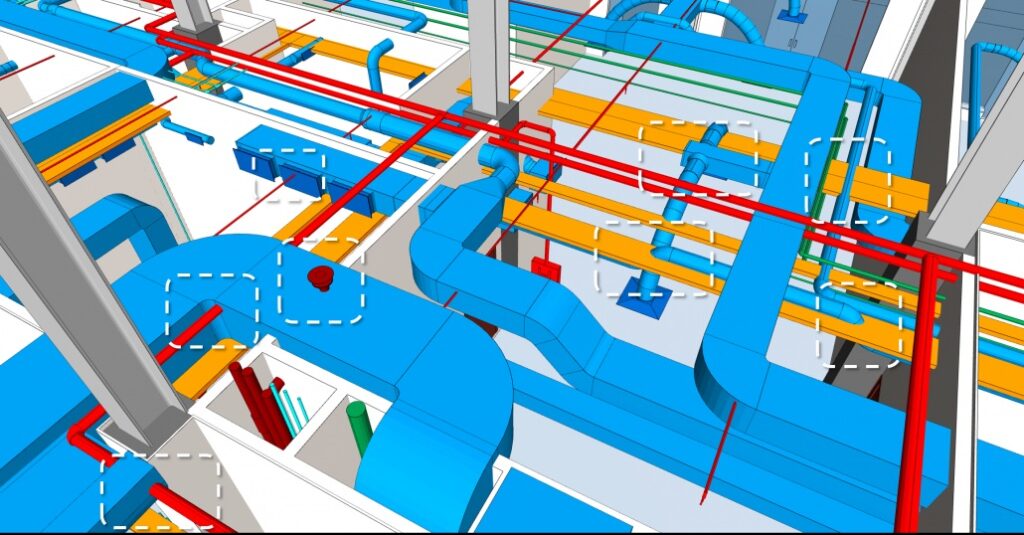
Clash Detection Workflow in BIM Coordination
Clash detection becomes part of the BIM coordination stage once discipline models are prepared. These models are combined into a federated BIM model where automated checks can detect conflicts between elements.
Engineers and consultants review these conflicts during coordination meetings and update their designs accordingly. The process continues until most critical clashes are resolved before construction documentation is finalized.
Typical clash detection process includes:
- Combining architectural, structural, and MEP models into a coordinated BIM model
- Running automated clash detection checks using BIM coordination tools
- Generating clash reports for design review meetings
- Assigning design corrections to the responsible discipline
- Re-running clash tests to confirm that conflicts are resolved
Benefits of Clash Detection in BIM Coordination
BIM clash detection provides engineers, consultants, and project owners with a clear understanding of how building systems fit within the available space. It supports better technical review before construction begins.
By resolving coordination issues early, project teams can maintain construction schedules and avoid unexpected design changes during execution. It also improves collaboration between consultants responsible for different project systems.
Key practical benefits include:
- Improved design accuracy before releasing construction drawings
- Better coordination between multidisciplinary engineering teams
- Reduced risk of cost impact from late design corrections
- More efficient design review and approval process
- Greater confidence in coordinated BIM models used for construction
Final Takeaway
For many construction projects, clash detection is now a standard element of BIM coordination. Project teams can resolve coordination problems before they arrive at the construction site by looking at system conflicts during the design phase.
This strategy improves design clarity for engineers, consultants, and project owners and lets projects start construction with less unforeseen modifications.



