
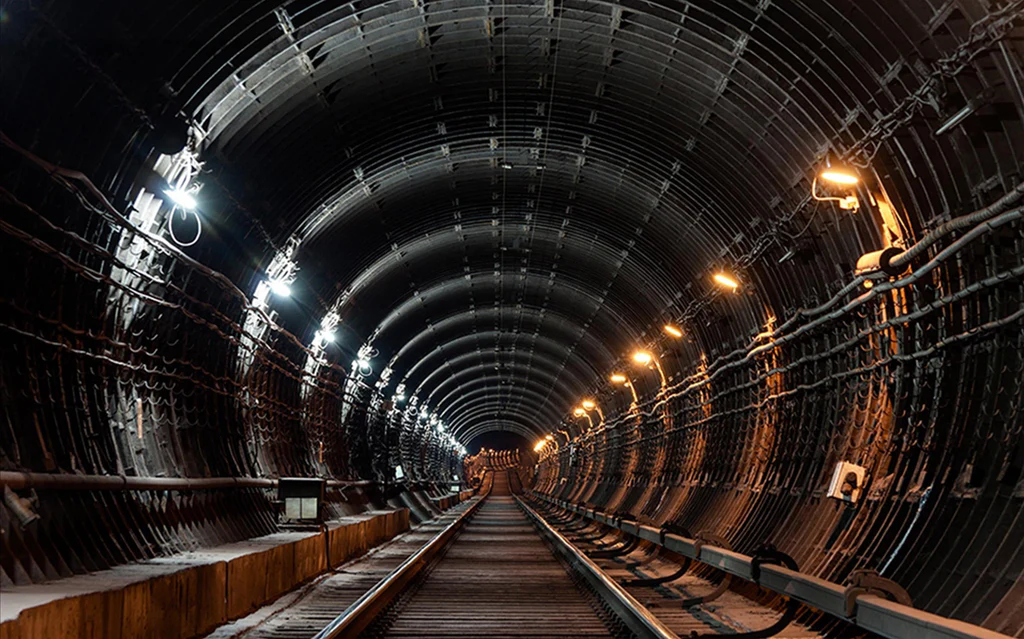
Chennai Metro Rail Limited (CMRL) is constructing the city’s deepest underground Metro station at Thirumayilai, marking a major milestone in the Phase II expansion of the Chennai Metro network. Once completed, the station will descend 38.79 metres below street level, making it the deepest Metro station in Chennai and one of the most complex underground transit structures in the country.
Located in a densely built and historically significant part of the city, Thirumayilai presents extraordinary construction challenges. Narrow roads, continuous surface activity, and tightly packed buildings made conventional construction methods unviable. To overcome these constraints without disturbing life above ground, CMRL adopted a stacked tunnel and multi-layered station design, allowing multiple Metro corridors to pass vertically beneath the same stretch of land.
Why Thirumayilai Is a First for Chennai Metro
Unlike most underground Metro stations that typically have two or three levels, Thirumayilai will be built with four underground levels, including concourse and platforms. The depth and vertical complexity are driven by the need to accommodate two major Metro corridors crossing each other at different elevations.
Key engineering highlights include:
- Deepest point: 38.79 metres below street level
- Total underground levels: Four, including concourse and platforms
- Station type: Fully underground, stacked interchange station
- Construction approach: Vertical tunnelling to avoid surface disruption
This vertical configuration allows Metro trains to run one above the other, a solution rarely used in Indian cities but essential in areas where land acquisition is not feasible.

Corridor 3 and Corridor 4: Crossing Underground
Thirumayilai will serve as a critical interchange between Corridor 3 (Madhavaram–SIPCOT) and Corridor 4 (Lighthouse–Poonamallee). Instead of crossing horizontally, the two corridors intersect at different depths, creating a compact yet highly efficient underground junction.
- Corridor 3 tunnels pass through the station at the lowest depth
- Corridor 4 tunnels run above and below Corridor 3 in a vertical stack
- Trains approaching the station gradually descend and ascend, ensuring a smooth ride with no perceptible changes for passengers
Although the underground track alignment is highly complex, the design ensures that commuters experience seamless travel without sudden gradients or discomfort.
Designed Around Narrow Roads and Dense Neighbourhoods
One of the biggest challenges in building the Thirumayilai station has been the lack of available space along roads such as Kutcheri Road and Royapettah High Road. These corridors are narrow, heavily congested, and lined with closely packed buildings, leaving no room for land acquisition or large construction zones.
To address this, CMRL opted for a vertical alignment that:
- Avoids demolition of existing buildings
- Minimises disruption to traffic and daily life
- Preserves the character of the surrounding neighbourhood
- Allows Metro construction beneath active urban areas
The removal of the proposed Foreshore Estate station further increased the importance of Thirumayilai as a key stop, making its inclusion and design critical to maintaining network connectivity.
Passenger-Friendly Interchange Design
Despite the station’s depth and complexity, passenger convenience remains a central focus. The stacked tunnel configuration allows for shorter interchange distances, reducing the effort and time required to switch between corridors.
Commuter-focused design elements include:
- Compact vertical transfers between Corridor 3 and Corridor 4
- Reduced walking distances compared to horizontal interchanges
- A centrally located concourse connecting both lines
- Efficient passenger flow management during peak hours
This design is expected to benefit daily commuters, senior citizens, and passengers carrying luggage by simplifying movement within the station.
Multiple Tunnel Boring Machines in Operation
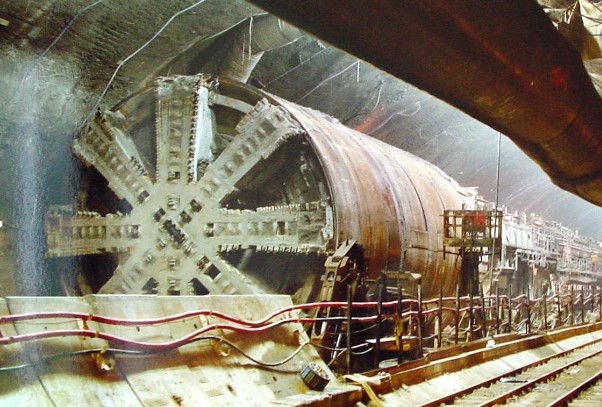
Construction at Thirumayilai is being carried out using four tunnel boring machines (TBMs) working simultaneously from different directions. TBMs named Thamirabarani, Vaigai, Eagle and Flamingo are advancing toward the station from areas including RK Salai, Mandaveli and Lighthouse.
The use of multiple TBMs helps:
- Speed up construction on this critical stretch
- Maintain precision in tunnel alignment and depth
- Safely manage complex tunnel crossings at different elevations
Given the station’s depth and proximity to existing buildings, tunnelling operations require continuous monitoring to ensure structural safety and accuracy.
A Major Interchange for Chennai’s Metro Phase II
Once operational, Thirumayilai will emerge as a major interchange station, significantly improving connectivity across Chennai. The crossing of Corridor 3 and Corridor 4 at this location will enable faster east–west and north–south travel, reducing dependence on surface transport in some of the city’s busiest areas.
Targeted Completion Around 2028
The Thirumayilai station and its associated tunnel sections are targeted for completion and inauguration around 2028. When opened, it will stand as a landmark achievement in Chennai’s Metro journey,demonstrating how advanced engineering and thoughtful design can overcome space constraints while keeping commuter convenience at the core.
Image Credit: oneindia.com, constructionweekonline.in

