Gypsum-based wall putty is a dry, powdered finishing compound used primarily for smoothing interior wall and ceiling surfaces prior to painting. It is made from calcined gypsum (calcium sulfate hemihydrate), which reacts with water to set and harden by rehydrating into the dihydrate form. With added polymers and setting regulators, the product offers good adhesion, smooth workability, and consistent surface coverage over cement plaster, gypsum boards, and POP.
The absence of curing requirements and reduced shrinkage during drying makes it preferable for fast-paced interior construction projects. It has gained wide use in residential buildings, institutional facilities, and commercial fit-outs where consistent surface quality is important for subsequent emulsion or texture finishes.
Where is Gypsum Wall Putty Used?
- Skim coating over internal cement plaster in residences and offices
- Surface preparation for repainting projects on old plastered walls
- Final leveling of precast concrete wall elements in PEB structures
- Surface smoothing of interior gypsum boards and partition walls
- Putty finishing for ceilings in bedrooms, halls, and corridors
- Touch-up leveling in interior renovation or remodelling works
- Application over POP to create a uniform substrate for paints

Advantages of Gypsum-Based Wall Putty
- Creates a smooth and uniform surface for paint application
- Fast setting and drying supports rapid project completion
- Minimal shrinkage reduces the chance of cracks and flaking
- Eliminates the need for post-application water curing
- Compatible with cementitious substrates and gypsum-based boards
- Easy to sand, resulting in cleaner final finishes
- Reduces paint consumption by minimizing surface absorption
- Suitable for both machine spray and manual trowel application
- Offers consistent whiteness for enhancing light-toned paints
- Emits low VOCs, supporting indoor air quality compliance
Types of Gypsum Wall Putty
Gypsum wall putties are available in different formulations to suit varying project needs, surface conditions, and finish expectations. Below is an overview of the commonly used types:
- Standard Gypsum Wall Putty- This is a conventional gypsum-based putty designed for internal wall leveling. Typically mixed with water on-site, it is applied in 1–2 mm thickness over plastered substrates. It provides a smooth base for subsequent coats of acrylic or emulsion paints and is widely used in residential flats, commercial interiors, and general-purpose wall finishing.
- Polymer-Modified Gypsum Putty- Modified with synthetic polymer binders, this variant offers enhanced adhesion, surface flexibility, and crack resistance. It creates a stronger bond with the substrate and improves long-term paint performance by minimizing dusting and flaking. Suitable for high-quality interior finishes in premium housing, commercial spaces, and hospitality interiors.
- Ready-Mix Gypsum Putty- Supplied as a pre-blended paste in sealed buckets or containers, this variant eliminates the need for water mixing on-site. It is best suited for small repairs, renovation works, or areas where time and labor are constrained. While convenient, it has a shorter shelf life and is not typically recommended for extensive applications due to cost and storage limitations.
- Fine-Finish Gypsum Putty- This is a high-refinement top-coat putty used after the leveling coat to achieve a perfectly smooth and uniform surface. It is particularly effective for designer finishes, luxury emulsion paints, or decorative textures. It enhances surface gloss and paint consistency while improving the final aesthetic appearance.
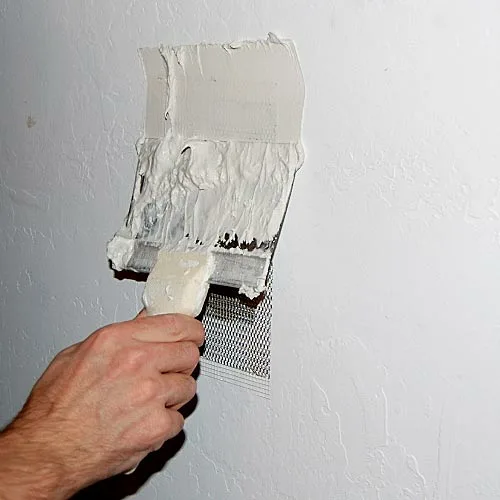
Key Considerations for Selection and Application
- Substrate Compatibility: Ensure the putty is suitable for the type of base surface (e.g., cement plaster, gypsum board); avoid use on damp or untreated surfaces.
- Ambient Conditions: Evaluate temperature and humidity; avoid application in high-moisture environments or during rain-prone periods.
- Water Quality: Use clean, potable water for mixing to prevent contamination or setting issues.
- Mixing Consistency: Maintain a consistent powder-to-water ratio across batches to ensure uniform performance.
- Layer Control: Assess project needs to determine the number of coats required without exceeding the total thickness limit.
- Tool Suitability: Choose tools that match application scope—stainless steel for finish quality and corrosion resistance.
- Drying Environment: Verify ventilation and airflow in enclosed spaces to facilitate uniform drying and avoid patchy surfaces.
- Compatibility with Paint Systems: Confirm that the cured surface is compatible with the intended primer and paint type.
- Application Area Classification: Restrict use to dry-zone interiors; avoid in bathrooms, kitchens, or wet walls unless the putty is rated for moisture resistance.
- Shelf Life and Storage Conditions: Consider the product’s storage stability under local climate conditions; avoid using material beyond its shelf life.
Application Procedure
- Clean surface: Remove dust, loose particles, oil, old paint.
- Ensure dryness: The surface must be completely dry and moisture-free.
- Apply primer (if required): Let it dry for 6–8 hours.
- Mix putty: Add water to powder; stir to creamy consistency.
- First coat: Apply 1–1.5 mm with trowel; let dry 4–6 hours.[ depends on project requirement]
- Light sanding: Use 320–400 grit; remove ridges.
- Second coat: Repeat with another 1–1.5 mm layer.[if neede]
- Final drying: Allow 8–10 hours or overnight.
- Final sanding: Smoothen surface; clean off dust.
- Painting: Apply primer and emulsion after 24 hours.
Conclusion
Gypsum-based wall putty has become a preferred choice for interior wall preparation due to its ease of application, smooth finish, and compatibility with fast-track construction. Its suitability for direct painting, without the delays of curing or multiple base layers, enhances project efficiency across projects.