As climate events, earthquakes, and conflicts continue to displace millions across Asia, the need for housing that is fast to build, affordable, and structurally reliable has become urgent. Conventional construction methods often fail to meet these demands due to high costs, long timelines, and dependence on complex supply chains. In this context, modular bamboo housing is emerging as a practical alternative, offering a combination of speed, resilience, and local adaptability.
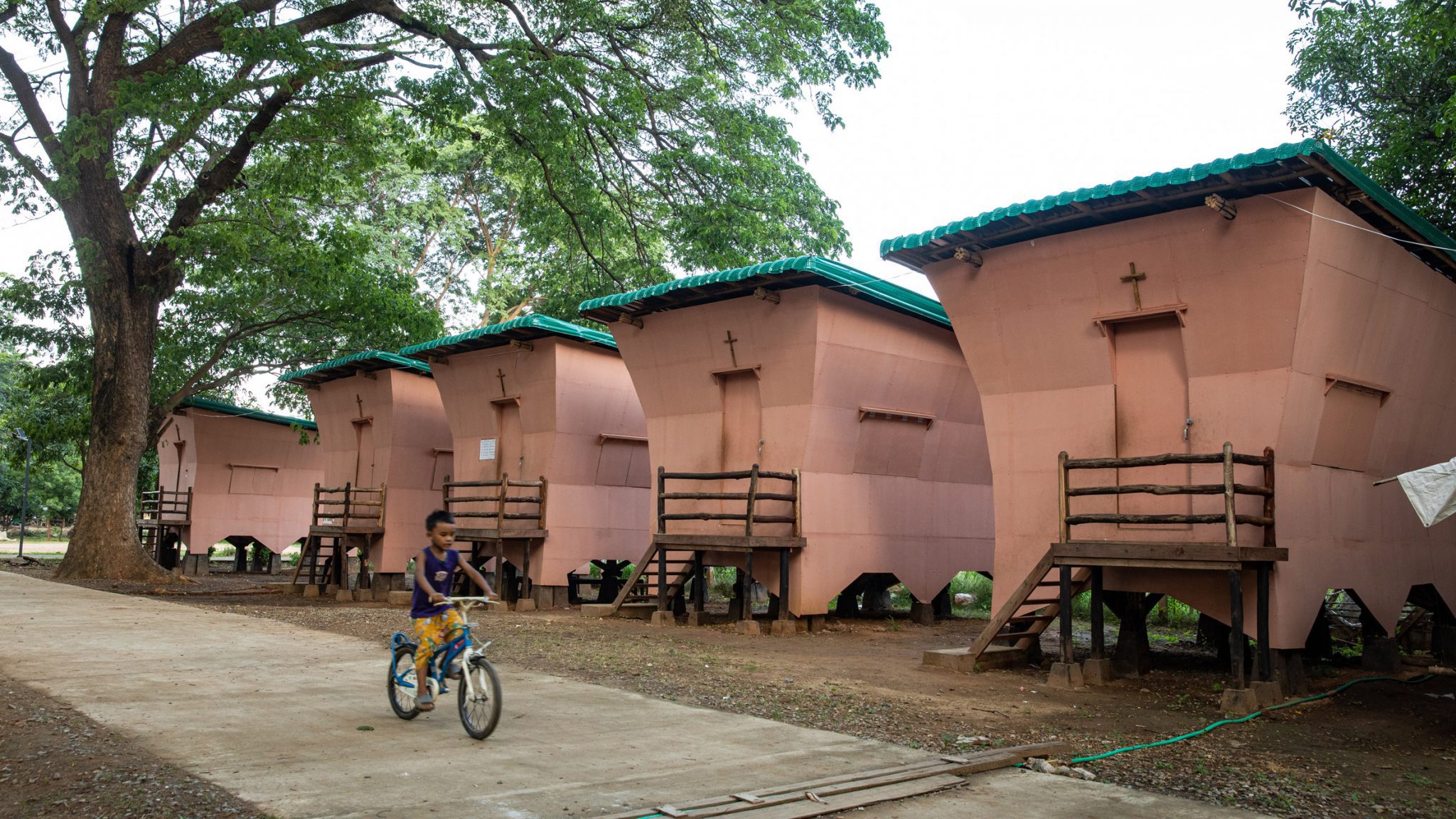
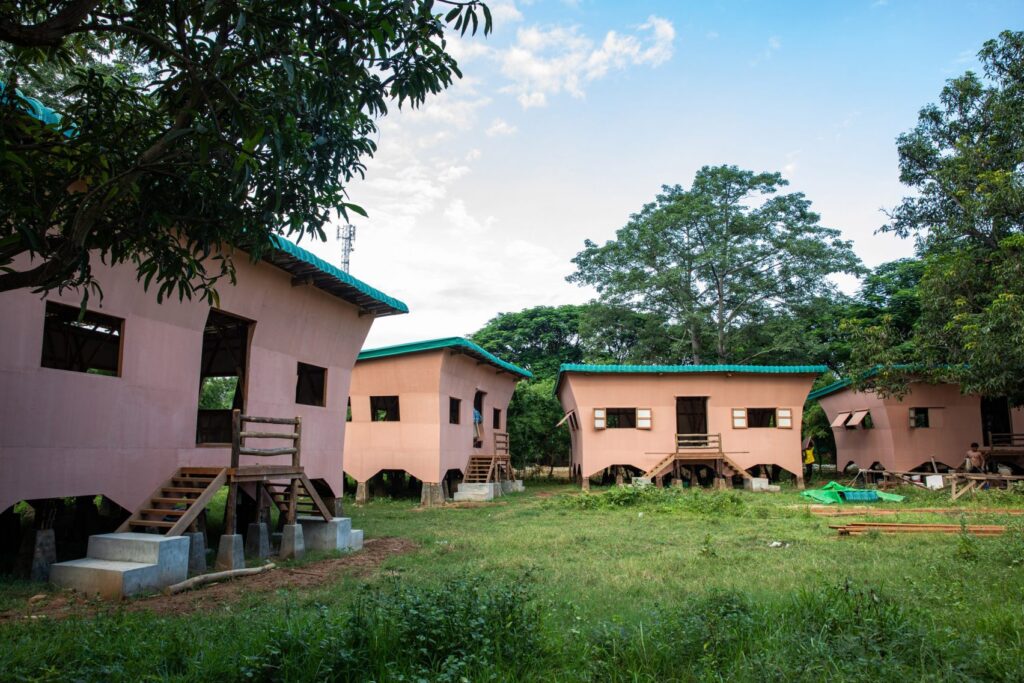
A notable example comes from Myanmar’s Bago region, where architecture studio Blue Temple collaborated with construction firm Housing Now to develop a series of modular bamboo homes designed specifically for disaster-prone and conflict-affected areas. The project demonstrates how prefabrication, local materials, and simple engineering logic can deliver dignified housing at extremely low costs.
Building under extreme constraints
The Housing Now Modular Bamboo Housing project was conceived to address the realities of displacement in Myanmar, where earthquakes, floods, and political instability have made permanent housing inaccessible for many families. Rather than focusing on aesthetics or experimental form, the project prioritised structural safety, ease of assembly, and affordability.
Each housing unit costs approximately USD 1,000 and can be assembled within seven days. Despite the low budget, the homes have already proven their performance by withstanding a 7.7-magnitude earthquake without structural failure. This outcome challenges the assumption that safety and durability must come at high financial or material costs.
The approach reflects a broader shift in architectural thinking, where performance and accessibility take precedence over formal expression.
Structural logic and modular design
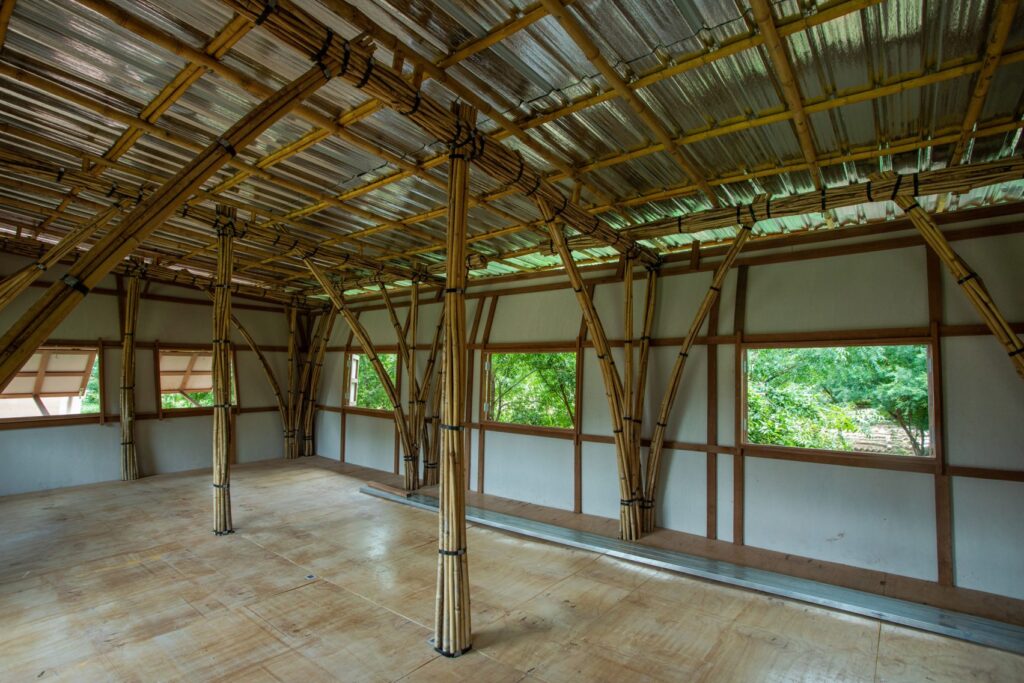
At the core of the project is a prefabricated structural system designed to handle seismic loads independently from internal layouts. The homes rely on modular bamboo frames that are assembled off-site and installed quickly on location.
Key structural features include:
- Interlocking arched frames made from bundled bamboo
- Small-diameter bamboo elements arranged to achieve timber-grade strength
- Jig-guided assembly to ensure consistency and accuracy
- Load-bearing frames that isolate seismic forces from non-structural components
This system allows the structure to remain stable during earthquakes while giving occupants flexibility inside the home. Internal partitions are non-structural, meaning residents can adapt layouts without compromising safety.
Why bamboo works
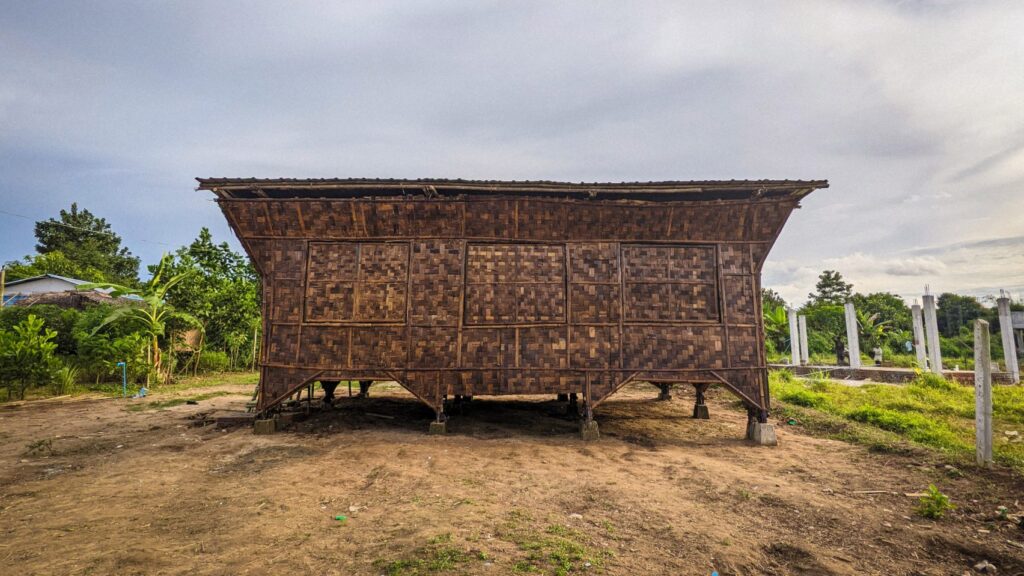
Bamboo was chosen not as a symbolic material, but as a practical one. In Myanmar, bamboo is widely available, inexpensive, and familiar to local labour. Small-diameter bamboo species, often overlooked in construction, were used in bundled configurations to increase strength and reliability.
The advantages of bamboo in this context include:
- High strength-to-weight ratio
- Rapid renewability compared to timber
- Low embodied energy
- Compatibility with manual construction methods
- Minimal dependence on imported materials
By bundling and overlapping bamboo elements, the designers were able to achieve structural performance comparable to conventional timber, while maintaining a fully local supply chain.
Assembly, participation, and speed
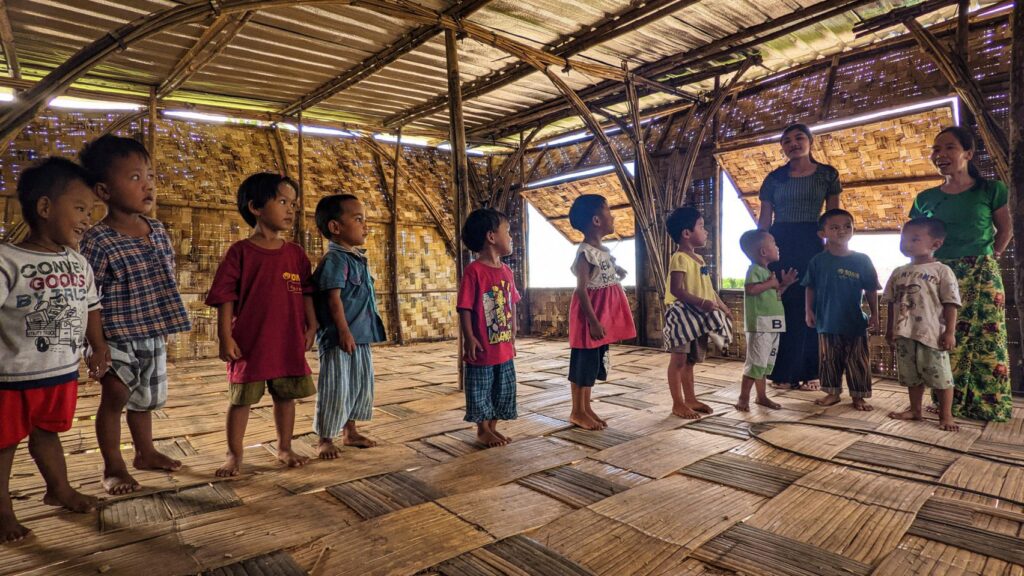
One of the defining aspects of the project is its construction process. The homes were assembled with the involvement of local families, reducing labour costs and increasing community ownership. Prefabricated components ensured that construction could proceed quickly even in challenging conditions.
The typical construction sequence includes:
- Preparation of simple concrete plinths
- Installation of prefabricated bamboo frames
- Roofing and external enclosure
- Installation of non-structural internal panels
This process reduces on-site complexity and allows multiple units to be built simultaneously. In emergency or post-disaster scenarios, such speed can significantly improve recovery timelines.
Design outcomes driven by necessity
The visual character of the homes is a direct result of structural geometry and material logic rather than stylistic intent. Sloping roofs with extended eaves provide protection from heavy rain and heat, while raised plinths help manage flooding risks.
Large operable windows improve ventilation and daylight, reducing the need for mechanical systems. Textured bamboo facades reflect the construction method rather than applied finishes.
According to the design team, this approach ensures that the architecture remains understandable, repairable, and replicable.
A model meant to be copied
Rather than positioning the project as a one-off solution, the Housing Now initiative aims to establish a repeatable construction model that others can adopt and adapt. The emphasis on open systems, local skills, and readily available materials makes the approach relevant beyond Myanmar.
Potential applications include:
- Post-disaster housing
- Temporary settlements transitioning to permanent use
- Rural housing programmes
- Community infrastructure such as schools and clinics
The project aligns with a growing global interest in low-cost modular housing systems that prioritise resilience and scalability over formal complexity.
Implications for affordable housing globally
As housing shortages intensify across developing regions, projects like this highlight the role of prefabrication and alternative materials in meeting large-scale demand. Bamboo, when engineered correctly, offers a viable structural solution that challenges conventional material hierarchies. More importantly, the project demonstrates that affordability does not require sacrificing safety or dignity. By focusing on clear structural logic, community participation, and local resources, modular bamboo housing offers a pathway toward more inclusive and resilient built environments.
In a world increasingly shaped by uncertainty, such approaches may become less of an exception and more of a necessity.

