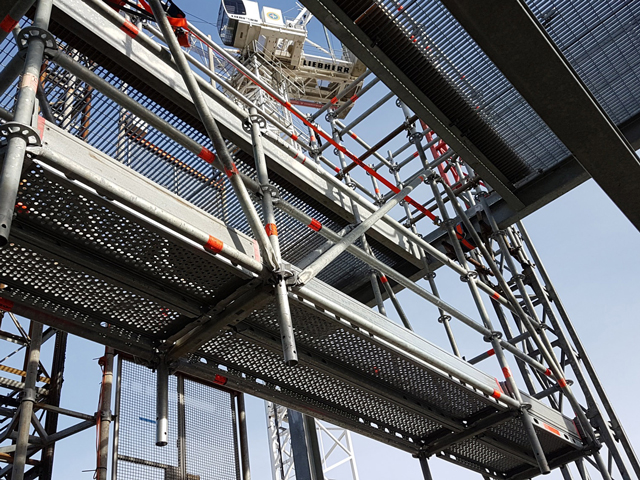
Suspended scaffolding – also called hanging scaffolding – is a highly efficient, flexible, and safe access system widely used in high-rise construction, façade work, maintenance, and industrial structures. Unlike traditional ground-supported scaffolds, suspended platforms are hung from the top of a building using ropes, cables, or mechanical hoists, allowing smooth vertical movement for workers and materials.
Applications of Suspended (Hanging) Scaffolding
High-Rise Building Façades
Used for cladding, glazing, painting, and cleaning exterior surfaces of tall buildings where ground-based scaffolds are impractical.
Bridge Maintenance and Inspections
Favoured for under-deck access and repair works due to its ability to reach difficult angles and heights safely.
Industrial Chimneys and Silos
Used for structural inspections, coating, repair, and surface preparation in tall industrial structures.
Dams and Power Plants
Enables workers to access vertical surfaces and cavities for repair, sealing, and maintenance.
Shipbuilding and Offshore Platforms
Offers flexible access to hull surfaces, offshore structures, and marine installations.
Heritage Structure Restoration
Reduces load on fragile surfaces, making it ideal for monuments and conservation projects.
Telecommunication Towers
Used for antenna installation, cable fixing, and tower inspections.
Advantages of Suspended (Hanging) Scaffolding
Highly Efficient for Vertical Movement
Platforms can be raised or lowered easily using electrically or manually operated hoists, improving work speed and accessibility.
Cost-Effective for Tall Structures
Suspended scaffolding drastically reduces material usage compared to frame scaffolds, lowering overall project costs.
Minimal Ground Obstruction
Since the system hangs from above, it frees up floor space for workers, equipment, and pedestrian movement.
Safer for High Elevation Work
Modern suspended scaffolds come with automatic locking devices, overload sensors, and emergency stop features to prevent accidents.
Flexible for Complex Designs
Curved facades, tight spaces, and irregular geometries can be accessed with ease.
Reduced Erection and Dismantling Time
Installation is quicker, allowing contractors to start façade work earlier and shorten project timelines.
Lightweight Components
Wire ropes, aluminium platforms, and modular hoists reduce the overall load on the structure.
Eco-Friendly Option
Consumes fewer materials and reduces the carbon footprint compared to bulky scaffolding systems.

Types of Suspended (Hanging) Scaffolding
Two-Point Adjustable Suspended Scaffold
The most common system, supported by two ropes on either side and operated by electric or manual hoists. Ideal for painting, window installation, and exterior finishing.
Multi-Point Adjustable Suspended Scaffold
Used for large façades, tanks, storage silos, and chimneys. Multiple suspension points distribute load evenly.
Single-Point Adjustable Scaffold (Boatswain’s Chair)
A compact seat-like setup used for small-area repairs, inspections, and cleaning tasks.
Catenary Scaffold
Platforms supported by overhead horizontal cables. Mainly used in maintenance of structures like bridges and tunnels.
Interior Hung Scaffolds
Common in malls, atriums, and auditoriums where platforms hang from ceiling beams or trusses.
Key Safety Requirements for Suspended Scaffolding
Safety regulations for suspended scaffolding are stringent due to the nature of the work at height. OSHA and global standards highlight the following essentials:
- Each suspension rope must support six times the intended load.
- Guardrails, midrails, and toe boards are mandatory.
- Hoists must contain automatic emergency braking systems.
- Workers must wear full-body harnesses connected to independent lifelines.
- Platforms must be inspected daily before use.
- Electrical systems should be grounded to prevent shocks.
- Rigging should be performed by trained and certified personnel.
Modern Trends in Suspended Scaffolding
Urban regions like the Middle East and Asia Pacific continue to adopt advanced suspended access systems for façade installation and maintenance.
Key innovations shaping the industry include:
- Motorised platforms with smart load monitoring
- Anti-sway stabilisation systems for windy conditions
- Lightweight aluminium alloy platforms
- Remote-controlled scaffold movement
- AI-based monitoring for safety compliance
Conclusion
Suspended (hanging) scaffolding has become an essential access solution for modern construction, industrial maintenance, façade engineering, and large-scale infrastructure projects. Its unmatched flexibility, superior safety features, minimal ground obstruction, and cost advantages make it the preferred choice for high-rise and complex structures. As technology continues to evolve, suspended scaffolding systems will play an even more important role in enabling efficient, safe, and high-quality work across the construction industry.
Image credit: gurbuziskele.com.tr,

