In the fast-paced world of construction, efficiency is often the deciding factor between a project that runs smoothly and one that faces costly delays. Among the wide array of equipment available, material spreaders have emerged as essential tools for contractors looking to streamline material distribution across sites. From road building to landscaping, these machines ensure even, accurate application of gravel, sand, soil, fertilizer, or other bulk materials.
Why Material Spreaders Are Essential
Traditional manual methods of distributing construction or landscaping materials require significant labor and time. Workers equipped with shovels and wheelbarrows not only risk fatigue but also produce inconsistent results. A material spreader, on the other hand, guarantees uniform application, reducing waste and ensuring that surfaces are prepared according to exact specifications.
For large-scale projects—such as highway construction or agricultural development—the efficiency gain can be immense. Contractors save on labor costs while maintaining consistent material coverage, which is particularly critical in applications like road base compaction or soil conditioning.
Key Applications in Construction
Material spreaders are versatile, and their use extends across multiple industries:
- Road Construction: Ensures even distribution of aggregates for compaction layers.
- Landscaping Projects: Helps spread soil, mulch, or fertilizer efficiently across wide areas.
- Agriculture: Assists in controlled fertilizer distribution, which improves crop yield.
- Infrastructure Development: Supports foundation preparation by spreading gravel or sand with precision.
Such flexibility makes them a valuable long-term investment for contractors who manage a variety of project types.
Improving Accuracy and Reducing Waste
One of the most important advantages of using a spreader is accuracy. Manual spreading often results in uneven patches, which can compromise surface stability or plant health. With a mechanical spreader, operators can calibrate the distribution rate, ensuring consistent coverage. This not only improves outcomes but also reduces material waste—an important factor as construction costs rise and environmental sustainability becomes a greater priority.
Example of a Modern Spreader
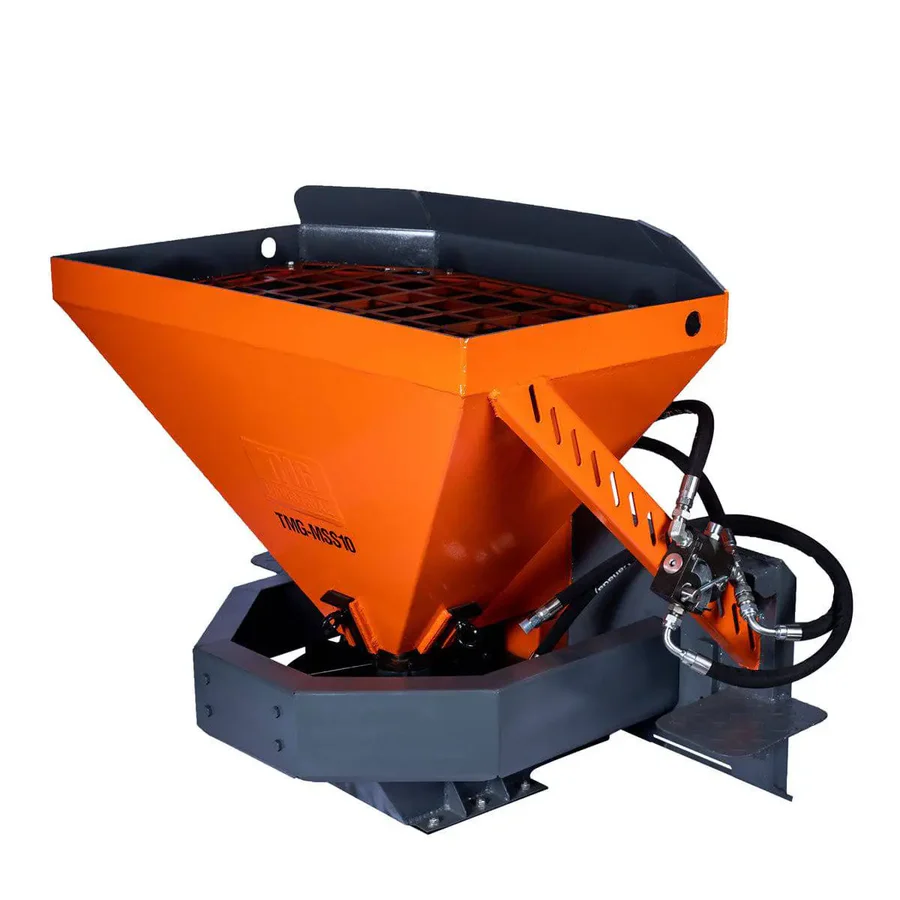
An example of advanced equipment in this category is the Material Spreader TMG-MSS10. Built for durability and efficiency, it is designed to handle heavy-duty use while maintaining precision. Tools like this highlight how modern construction continues to rely on practical innovations that balance performance and cost-effectiveness.
Looking Ahead: The Future of Material Distribution
With construction increasingly leaning toward automation and sustainability, material spreaders are likely to see further enhancements. GPS integration, smart calibration systems, and reduced fuel consumption are areas where future models may innovate. Contractors who invest in this kind of equipment today position themselves to stay competitive as the industry evolves.
Final Thoughts
While cranes, excavators, and bulldozers often steal the spotlight, it is often the smaller, specialized tools that make the most difference in day-to-day efficiency. Material spreaders represent a blend of simplicity and effectiveness, reducing human effort, lowering costs, and ensuring precision. For contractors and project managers seeking to optimize their operations, investing in reliable material spreaders is a strategic move that pays dividends in the long run.
Explore more about modern spreaders and their role in today’s construction industry at TMG Industrial, Material Spreader, TMG-MSS10, Construction Equipment, Road Construction Tools, Landscaping Equipment, Aggregate Spreader, Fertilizer Spreader, Soil Spreading Machine, Heavy-Duty Spreader, Precision Material Distribution.