
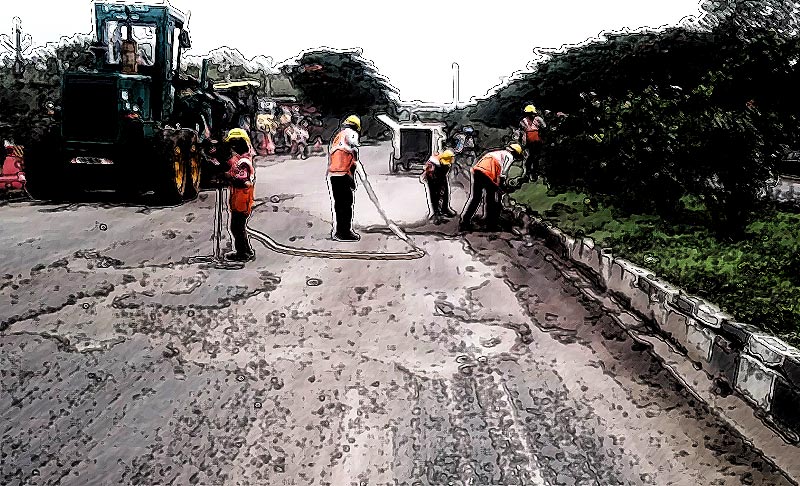
National highways form the core of a country’s transport network, enabling long-distance travel, goods movement, and inter-state access. As traffic density increases and environmental conditions shift, maintaining these roads has become more complex. Effective highway maintenance depends on timely planning, suitable interventions, and appropriate use of equipments to ensure road usability, structural performance, and safety.
Challenges in Maintaining National Highways
- Heavy and Continuous Traffic Load: High-speed and overloaded traffic complicates safe and timely maintenance execution.
- Rapid Surface Deterioration: Distress like rutting and potholes develops quickly due to axle loads, temperature shifts, and poor drainage.
- Drainage and Waterlogging Issues: Blocked culverts and silted drains weaken sub-base layers and accelerate pavement failure.
- Inadequate Preventive Maintenance: Lack of structured preventive interventions leads to costly reactive repairs.
- Geographical and Climatic Constraints: Diverse terrains and extreme climates require specialized methods and machinery.
- Delays in Clearances and Budget Approvals: Bureaucratic hold-ups affect timely execution of essential maintenance tasks.

Types of Maintenance Activities
National highway maintenance includes:
- Routine Maintenance: Includes vegetation clearing, signage replacement, drainage cleaning, and road marking repainting.
- Periodic Maintenance: Such as surface overlays or seal coats to improve ride quality and extend service life.
- Special Repairs: Structural repairs to bridges, culverts, embankments, or retaining walls.
- Rehabilitation Works: Involving milling, strengthening of base/sub-base, and full-depth reclamation.
- Emergency Repairs: For landslides, major washouts, or pavement collapse following natural disasters.
Each category demands specialized tools and machinery for safe, rapid, and cost-effective execution.
Key Equipments Used for National Highway Maintenance
1. Crack Sealing Machine
Crack sealing machines are important in the preventive maintenance of highway pavements. These machines are engineered to fill cracks on asphalt surfaces with hot-applied rubberized sealants that prevent the ingress of water and incompressible materials. Mounted on trailers or self-propelled units, they typically come equipped with crack routers to widen and shape the cracks, air compressors for cleaning, and heated hoses and nozzles for precise sealant application. Temperature control systems help maintain the sealant at the ideal viscosity throughout the process. Timely crack sealing prevents moisture from penetrating the pavement layers, halting the progression of distress and delaying the formation of potholes and fatigue cracks. Their deployment on national highways is a cost-effective method to extend pavement life and avoid large-scale repairs.
2. Pothole Patching Machine
Pothole patching machines are designed to perform fast, durable, and efficient pothole repairs, especially on high-speed corridors where rapid interventions are essential. These self-contained machines are equipped with components such as aggregate hoppers, bitumen tanks, heating chambers, and compaction rollers. They allow for the preparation and placement of hot mix or cold mix asphalt directly at the site. The patching process includes cleaning the pothole, applying a tack coat, filling it with asphalt mix, and compacting it to the desired density. Some advanced models, like spray injection patchers, perform all steps in a single pass with minimal manual intervention. This technology ensures high bonding, reduced water ingress, and long-lasting repairs, even under high traffic loads and adverse weather conditions.
3. Bitumen Sprayer
Bitumen sprayers, commonly referred to as distributor trucks, are vital for surface preparation before applying overlays or surface dressings. These trucks are fitted with insulated bitumen storage tanks, burners for heating, calibrated spray bars, and pressure-regulated pumps that ensure a uniform application of bitumen or bitumen emulsion. The tack coat applied by these sprayers serves as a bonding layer between the existing pavement and the new asphalt overlay. Uniform and controlled spraying minimizes delamination risks and enhances load transfer between layers. These machines are especially important for national highway resurfacing projects where large areas must be treated efficiently and consistently to maintain structural integrity.
4. Cold Milling Machine
Cold milling machines are heavy-duty planers used to remove worn-out or damaged asphalt layers from the pavement surface. Equipped with rotating drums fitted with tungsten carbide cutting tools, these machines grind the pavement to a specified depth while leaving the underlying base intact. The milled asphalt is collected via conveyor belts and can be transported for recycling as Reclaimed Asphalt Pavement (RAP). Cold milling is often used prior to resurfacing operations to restore cross-sectional profiles, eliminate surface irregularities, and improve drainage. On national highways, these machines ensure that overlays are placed over a sound and uniform substrate, improving the durability of the new surface.
5. Pneumatic Tyre Roller (PTR)
Pneumatic tyre rollers are widely used in compaction operations during the construction and maintenance of flexible pavements. These machines feature multiple rows of rubber-tired wheels mounted on front and rear axles. The inflation pressure in the tyres can be adjusted to control the contact pressure and achieve the desired compaction density. Unlike steel drum rollers, PTRs exert both static and kneading forces, which help in compacting the material around the aggregate particles and in the voids between them. This makes them ideal for compacting asphalt overlays, patch repairs, and base layers. In highway maintenance, they play an important role in ensuring the long-term stability and performance of resurfaced sections.
6. Motor Grader
Motor graders are precision earthmoving machines equipped with a long adjustable blade (moldboard) used for fine grading and leveling operations. In the context of highway maintenance, motor graders are primarily deployed to maintain shoulders, reshape side slopes, restore drainage channels, and fine-tune base layers prior to overlaying. GPS-enabled graders offer real-time grade control, ensuring profile accuracy and consistency across the entire work section. They are also instrumental in reshaping gravel shoulders, which can erode or settle due to vehicular loads and weather conditions. By restoring proper cross slopes and drainage gradients, motor graders help prevent water accumulation on the pavement surface, thus reducing the chances of pavement failures.
7. Hydraulic Excavator and Backhoe Loader
Hydraulic excavators and backhoe loaders are indispensable support machines in highway maintenance operations. Their versatility allows them to handle tasks such as drainage trench excavation, removal of debris, reinstatement of shoulder layers, and culvert rehabilitation. Excavators, especially those with long-reach arms, are used to clear waterways and perform slope stabilization work in hilly terrains. Backhoe loaders, with their dual-functionality buckets and diggers, are particularly effective for minor excavation and material loading in confined spaces or near traffic. These machines enable quick deployment during emergency maintenance situations like landslides, washouts, or structural failures.
8. Mini Pavers
Mini pavers are compact asphalt paving machines used for narrow-width applications along national highways, such as hard shoulders, medians, footpaths, and service lanes. Their smaller footprint allows them to work in restricted areas where full-size pavers cannot operate efficiently. Despite their size, mini pavers are equipped with features like hydraulic screeds, variable paving widths, electronic controls, and material heating systems to ensure a smooth and consistent mat. In maintenance operations, they are used to restore shoulders, widen carriageways, or pave new feeder lanes, especially in urban segments of national highways where space constraints are significant.
9. Hot Mix Asphalt Recycler
Hot mix asphalt recyclers are mobile or stationary units that reprocess existing pavement material on-site. These machines heat the old asphalt surface using infrared heaters, scarify the softened material, mix it with rejuvenators or fresh aggregates, and recompact it to form a new wearing surface. Hot in-place recycling (HIR) is particularly effective in medium-deterioration sections where the structural layers remain intact. By reusing the in-situ materials, these recyclers eliminate the need for new aggregates and significantly reduce hauling, making the process more sustainable and economical. On high-traffic national highways, they help reduce construction time and environmental impact without compromising performance.
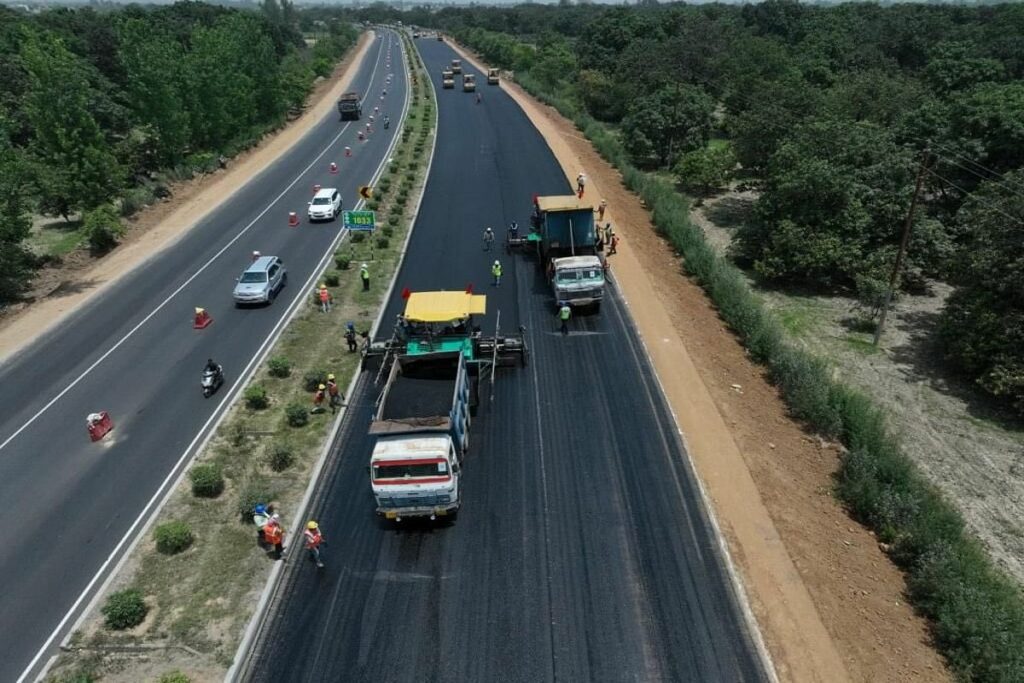
Intelligent Maintenance Support Technologies
Modern highway maintenance is also supported by digital tools and smart technologies:
- Pavement Management Systems (PMS): These software platforms analyze pavement condition data to optimize maintenance schedules.
- Mobile Mapping Systems: Used to capture 3D surface condition data and identify maintenance needs with GPS tagging.
- Road Condition Survey Vehicles: Fitted with cameras, GPR, and laser profilers to assess distress, rutting, IRI, and faulting.
- Drones and GIS Tools: Used for large-scale inspections of slopes, bridges, and remote segments where access is difficult.
Sustainable Maintenance Practices on Highways
Given the scale and environmental impact of highway maintenance, sustainability measures are gaining ground:
- Use of Recycled Asphalt (RAP): Minimizes virgin material use in overlays and patch repairs.
- Cold In-Place Recycling (CIR): Allows on-site reprocessing of pavement without heating.
- LED Road Signs and Solar Lighting: Reduce maintenance energy consumption on signages and lighting poles.
- Bio-based Binders: Adoption of non-petroleum sealants and bitumen substitutes.
- Emission-Controlled Equipment: New equipment with Tier IV/BS-VI engines reduce carbon footprint.
- Night-Time Maintenance: Scheduled work during low-traffic hours to minimize congestion and fuel loss from idling.
Conclusion
Maintaining national highways is essential for safe and smooth transport across the country. Given the challenges of traffic, weather, and terrain, regular and well-planned maintenance is necessary. Using the right equipment and technology can improve road quality, reduce costs, and extend pavement life. As infrastructure needs grow, efficient highway maintenance will continue to play a key role in supporting India’s infrastructure growth.

