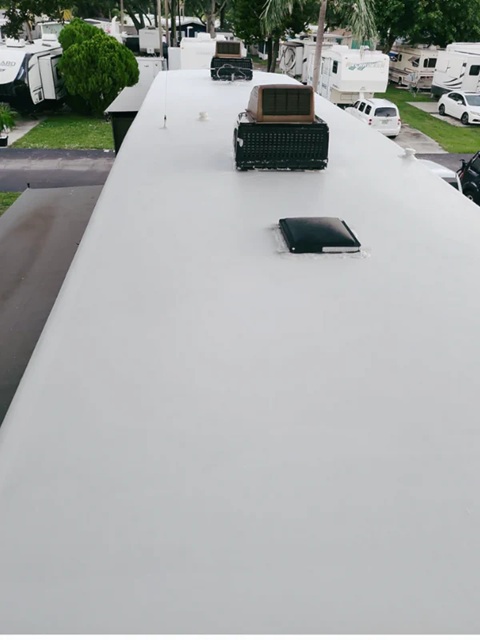
Recreational vehicles bring a sense of freedom that few other forms of travel can match. Yet, with that freedom comes exposure to sun, rain, wind, and temperature swings that test every part of an RV’s exterior—especially the roof. Over time, owners have seen sealants crack, coatings peel, and leaks form in places once thought watertight. In this space, polyurea has emerged not as a trend but as a dependable shift toward lasting protection.
The Nature of Polyurea and Why It Fits the RV Roof
Polyurea is a spray-applied elastomer created by the reaction of an isocyanate component and an amine resin. When these two meet, the result is a seamless membrane that bonds tightly to most surfaces. The chemistry cures in seconds and forms a tough, flexible layer that resists water, UV light, and chemical wear.
On an RV roof, that matters. The constant expansion and contraction from heat and cold put strain on seams and coatings. Polyurea stretches and returns to shape without tearing, which prevents leaks before they start. It clings to metal, fiberglass, and even old rubber membranes, turning what was once a weak point into a continuous barrier.
A Shift from Temporary Fixes to Permanent Protection
Older roof systems often depend on caulks and rolled membranes. These work for a time, but each season introduces new weak spots that call for more patches. Polyurea breaks that cycle. Once applied, it locks out moisture and stands firm under direct sunlight. That durability comes not from thickness alone but from the way it bonds at the molecular level. It does not sit on top of a surface—it becomes part of it.
RV owners used to accept roof repairs as routine maintenance. With polyurea, many discover that one proper coating replaces years of sealing and resealing. It’s not maintenance-free, but the difference between periodic inspection and constant repair is significant.
Performance in Real Conditions
The test of a roof coating lies not in the lab but on the open road. RVs encounter vibration, rainstorms, coastal salt, and mountain cold—all within a single trip. Polyurea’s structure handles those conditions without softening or becoming brittle. The coating sheds water, blocks UV degradation, and resists staining from tree sap and road grime.
Many coatings lose their properties when temperatures swing, but polyurea remains consistent. It neither chalks under the sun nor absorbs moisture in humid air. Owners who store their RVs outdoors see the benefit most. Instead of watching a roof fade and crack, they find it looks and performs much the same years later.
Application That Matches Modern Expectations
The speed of polyurea application surprises many. A skilled installer sprays the liquid, and it cures within seconds. There’s no need to wait days for drying. This fast cure allows uniform coverage without the brush marks or uneven layers common with rolled-on coatings. The finished surface is smooth, continuous, and firm to the touch.
For those who care about environmental safety, polyurea contains no solvents that release harmful fumes. The process is clean and controlled, suitable for both factory and mobile applications. Professional rv roof coating systems based on polyurea meet strict performance and safety standards while offering a low-maintenance finish.
Longevity That Changes Ownership Costs
Replacing or repairing an RV roof can become expensive over time. A single full replacement often costs more than a quality polyurea application. The key advantage lies in lifespan. Polyurea coatings can last more than a decade with basic care. That means fewer interruptions, lower upkeep costs, and less worry about water intrusion damaging the interior.
Owners who plan to keep their vehicles for years appreciate this stability. It turns a once-recurring expense into a one-time investment. The coating’s strength also adds resale value, as future buyers see a roof in sound condition as a sign of proper upkeep.
The Broader Shift Toward Durable Coatings
The growing use of polyurea for RVs mirrors its rise in industrial, marine, and construction fields. Where water and weather challenge structures, polyurea finds purpose. Tank linings, decks, and bridges rely on the same chemistry to prevent corrosion and leaks. RV owners now benefit from a technology proven in far harsher environments.
In the coatings industry, this move reflects a wider preference for sustainable and long-term solutions. Polyurea’s long service life reduces waste, since fewer materials end up being removed or replaced. Its ability to extend the life of existing roofs also limits the need for new production and disposal.
Practical Results and Real-World Trust
Stories from the field carry more weight than test results alone. RV owners who once worried about seasonal leaks now travel through heavy rain without concern. Service centers report fewer warranty claims and less need for emergency sealing. It’s not marketing—it’s performance observed over time.
The coating’s resilience also brings peace of mind. When owners park for the winter or leave the vehicle stored, they trust the roof to stay sealed. They no longer see water stains inside or feel soft spots forming underfoot. The sense of reliability becomes part of the RV experience itself.
Where Expertise Makes the Difference
A quality coating depends on both material and skill. Not all products labeled “polyurea” meet the same standards. Professional applicators trained in surface preparation, mixing ratios, and spray technique deliver consistent results. Companies that specialize in protective coatings, such as ArmorThane, focus on the chemistry and equipment that make the difference between short-term coverage and long-term protection.
When owners look for reliable rv roof protection, they should choose experienced applicators familiar with polyurea systems. The process requires precision, but when done right, the results speak for themselves.
Conclusion
Polyurea has not become the go-to solution for RV roofs by chance. Its rise comes from proven reliability, practical performance, and clear value. It protects against water, sun, and wear in a way that traditional coatings struggle to match. It offers owners fewer repairs, less downtime, and more confidence on the road.
In a world where time and trust matter, polyurea stands out not as a new product but as a smarter way to protect what people care about. It answers the simple question every RV owner asks: how can I make my roof last? The answer now comes with calm certainty—polyurea.