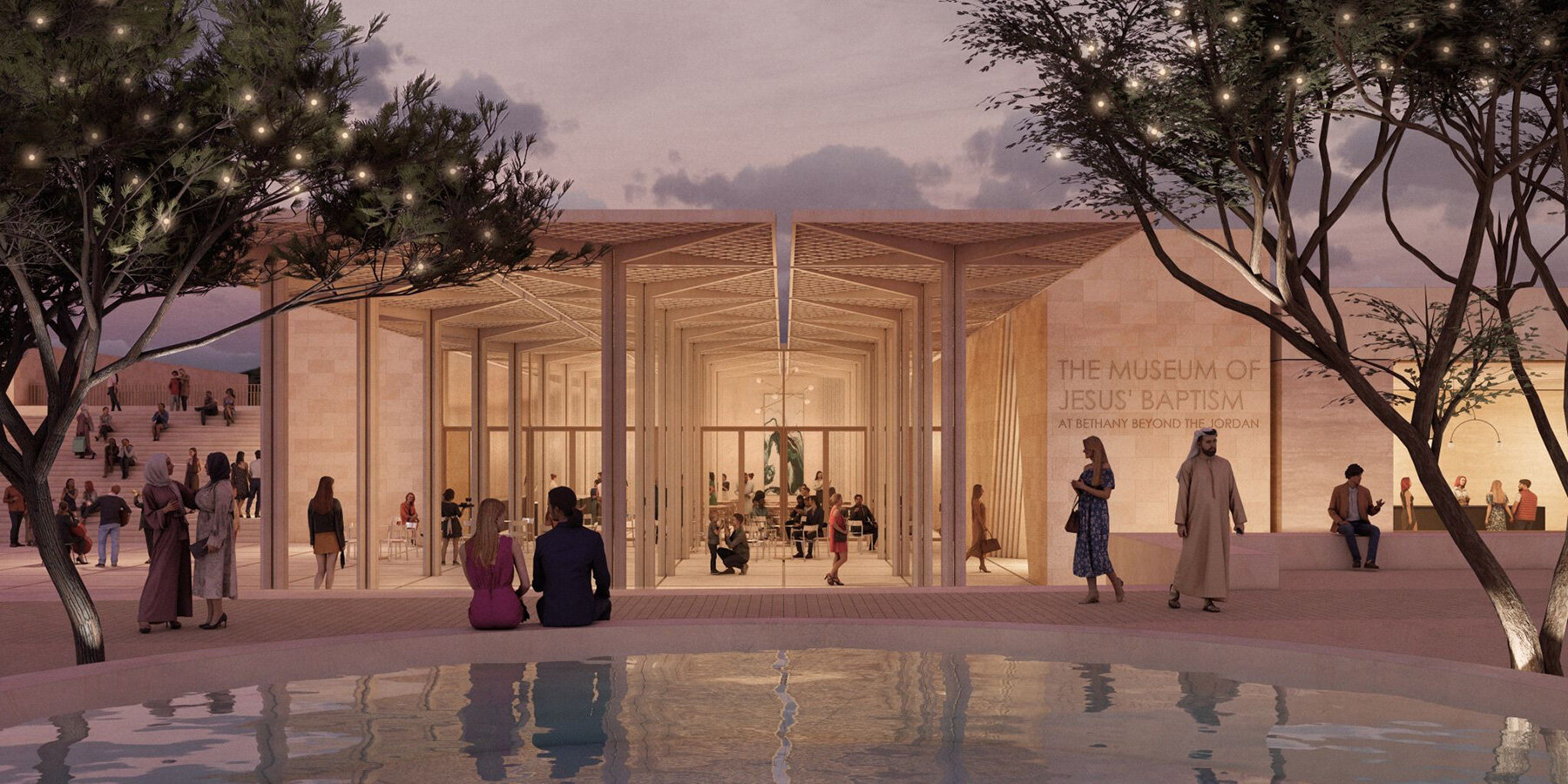
The Museum of Jesus’ Baptism at Bethany in Jordan will mark a significant addition to the country’s cultural and spiritual infrastructure. Designed by Níall McLaughlin Architects, the project will be built near the UNESCO-listed Baptism Site at Bethany Beyond the Jordan, traditionally recognized as the location of Jesus Christ’s baptism in the River Jordan. The museum is scheduled to open in 2030 to coincide with the bimillennial of this event.
The design was selected through an international competition organized by Malcolm Reading Consultants and commissioned by The Foundation for the Museum of Jesus’ Baptism. The jury cited the proposal’s ability to communicate the meaning of baptism through spatial sequencing, landscape integration, and material clarity rather than through monumental form.
Architecture as Journey
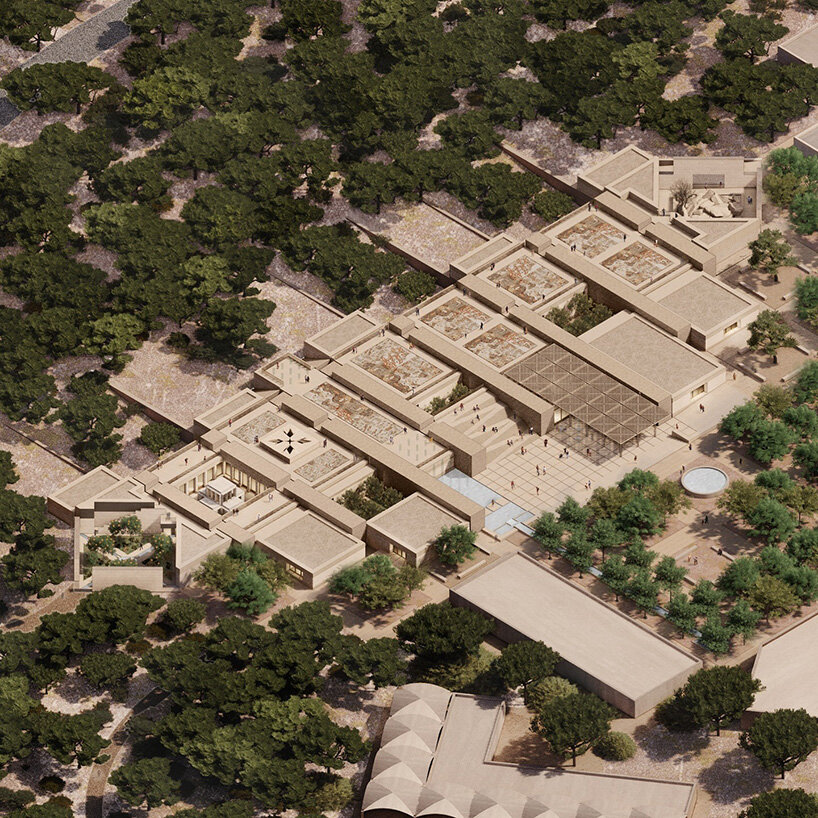
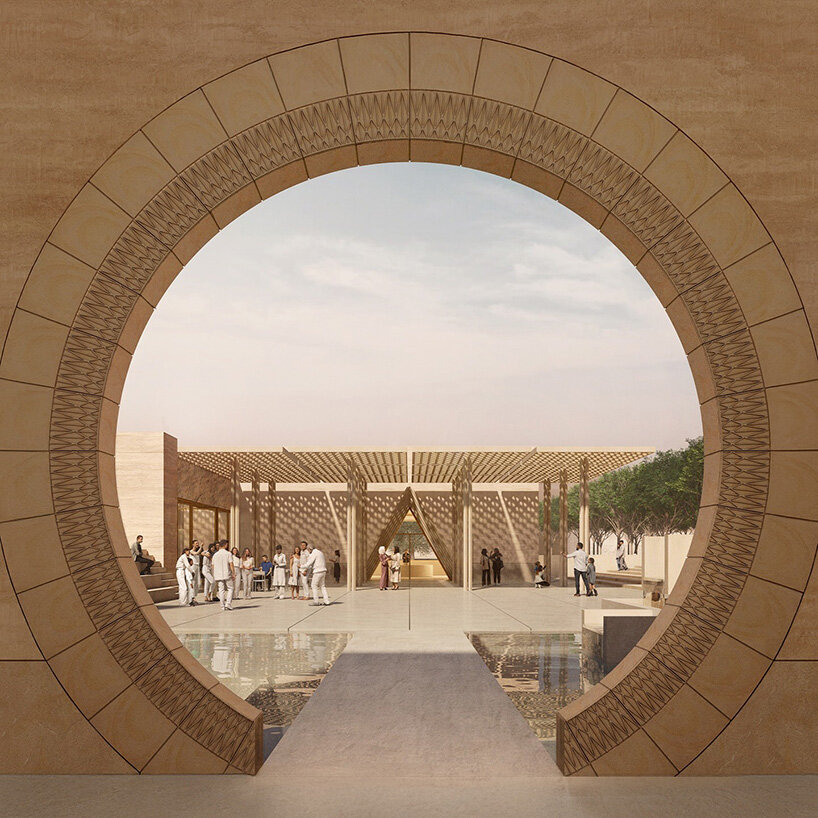
The project is organized along a strong east–west axis. This directional alignment structures the visitor experience as a procession. The entrance lies to the east, and the exit to the west, facing one another across a public square. These points are marked symbolically by a triangle and a circle, referencing theological concepts of beginning and completion.
Visitors begin in an arid garden that reflects the surrounding desert terrain. From there, they descend into the building, moving below ground level. This descent leads to a crossing over a narrow, water-filled rift — a gesture that references the Jordan River without replicating it literally. After crossing, visitors rise gradually into a brighter, cultivated garden space.
This sequence reinforces themes of transition and renewal associated with baptism. Rather than presenting exhibits in isolation, the architecture itself forms part of the narrative structure.
Key spatial components include:
- A controlled descent from landscape into interior
- Integrated circulation embedded within thick walls
- Framed openings toward the Jordan River valley
- A roofscape accessible as a public viewing platform
The roof is treated as a continuation of the terrain. Stepped surfaces, mosaic inlays, and low stone walls evoke archaeological remains. From this elevated plane, visitors can see the broader pilgrimage route leading to the Baptism Site, strengthening the link between the museum and its context.
Material Strategy and Construction
The primary materials are rammed earth and locally sourced stone. These materials define the building’s structural system and visual character. Thick rammed earth walls provide thermal mass suited to the desert climate, reducing reliance on mechanical cooling. The use of local soil minimizes transportation impacts and supports regional construction expertise.
The environmental approach focuses on reducing embodied carbon and integrating social responsibility. The project emphasizes:
- Use of regional materials
- Engagement of local labor and craftsmanship
- Passive climate control strategies
- Reduced reliance on high-energy construction systems
Engineering support for daylight and environmental performance is provided by Arup. Their studies inform how natural light enters the galleries and circulation areas, ensuring controlled illumination while maintaining energy efficiency.
Rather than separating sustainability from design, the architects embed environmental decisions within the conceptual framework. The building’s form, material thickness, and orientation are all shaped by climate considerations.
Exhibition and Interpretation
Exhibition design is led by Nissen Richards Studio, with lighting design by Studio ZNA. The curatorial approach combines permanent allegorical elements with flexible gallery spaces capable of hosting temporary exhibitions.
Instead of neutral white galleries, displays are integrated into the depth of the structural walls. Circulation routes, service spaces, and exhibition zones are layered together. This approach produces spaces that feel embedded rather than detached from the architecture.
The museum aims to serve multiple audiences:
- Religious pilgrims
- Academic researchers
- Tourists and secular visitors
- Local communities
By accommodating diverse perspectives, the institution positions itself as both a faith-based and cultural destination.


Landscape and Broader Context
Landscape architecture is developed by Kim Wilkie Landscape. The surrounding gardens balance native planting with cultivated areas, reflecting the broader desert ecology. The integration of water, shade, and planting responds to environmental constraints while reinforcing symbolic themes.
The Baptism Site at Bethany is one of Jordan’s most important heritage locations, drawing international visitors each year. The museum’s proximity strengthens the site’s educational and interpretive infrastructure. Rather than competing with the sacred landscape, the building maintains a low profile and embeds itself within the terrain.
Project Information
- Name: Museum of Jesus’ Baptism at Bethany
- Architect: Níall McLaughlin Architects
- Location: Bethany Beyond the Jordan
- Competition Organizer: Malcolm Reading Consultants
- Client: The Foundation for the Museum of Jesus’ Baptism
- Local Consultant: Engicon
- Landscape Architect: Kim Wilkie Landscape
- Exhibition Design: Nissen Richards Studio
- Lighting Design: Studio ZNA
- Engineering (Daylight & Shadow): Arup
- Planned Opening: 2030
With its emphasis on rammed earth construction, spatial procession, and landscape integration, the museum reflects a direction in contemporary architecture that combines environmental responsibility with cultural meaning. The project demonstrates how material choice, site alignment, and narrative structure can work together to create a grounded and context-driven institution.
Images- designboom.com