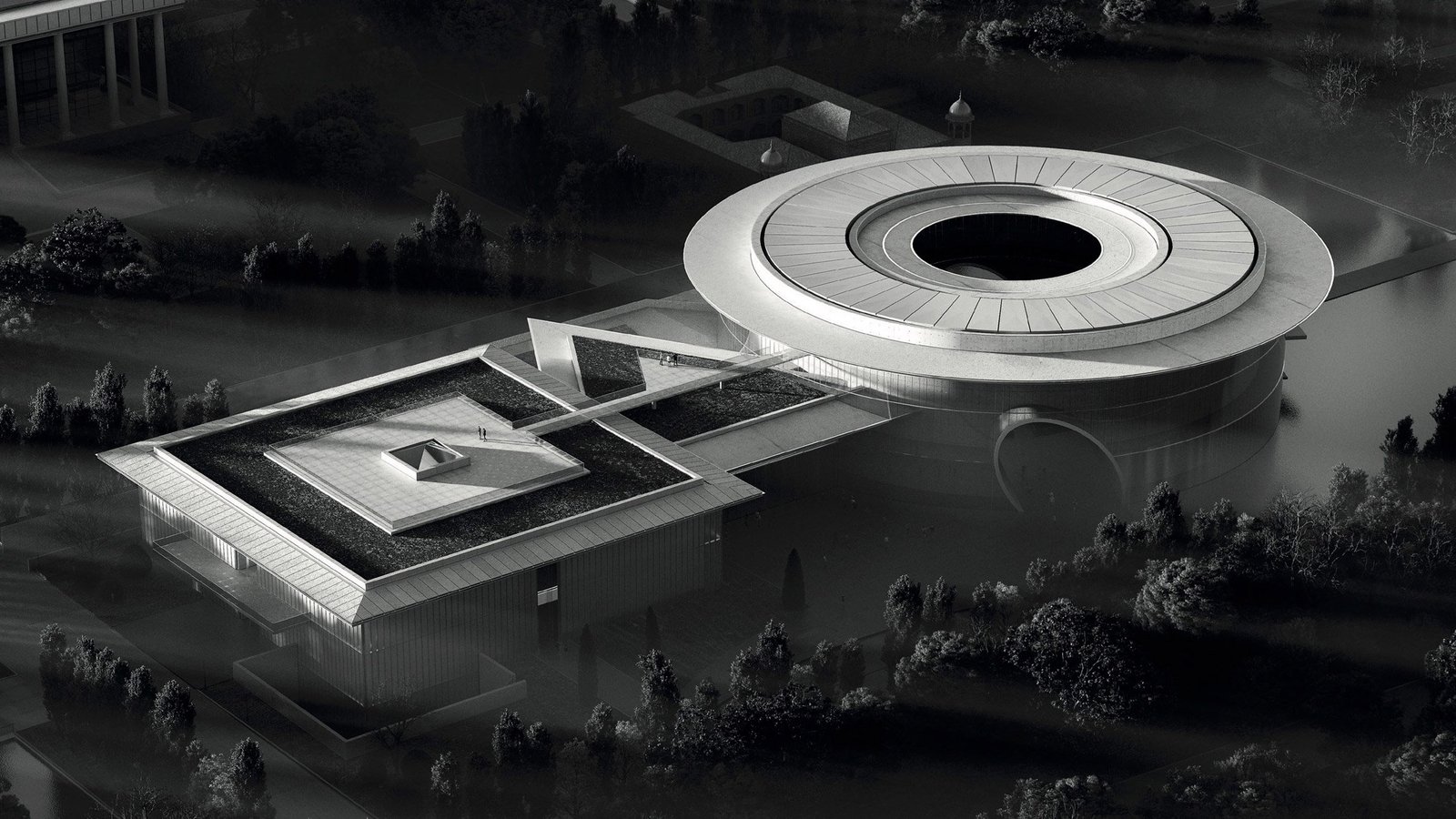
Construction has begun on the National Museum of Uzbekistan in Tashkent, designed by the Japanese architect Tadao Ando. The museum will consist of interconnected geometric forms, including squares, circles, and triangles, reflecting Uzbekistan’s architectural heritage while creating a central hub for culture and learning in the city. The project is being led by the Uzbekistan Art and Culture Development Foundation (ACDF) and marks Ando’s first major undertaking in Central Asia.

The site is situated in central Tashkent, offering convenient access for residents, visitors, and scholars. The museum will house the national collection alongside a library, combining exhibition space with research and public learning facilities. This dual function is designed to support both cultural preservation and civic engagement.

Architectural Concept
The National Museum of Uzbekistan is designed around three primary forms:
- Square building: Serves as the main museum block, containing significant portions of the exhibition space.
- Circular building: Complements the square structure and provides additional galleries and exhibition areas.
- Triangular central building: Connects the square and circular blocks and functions as the main entrance and circulation hub.
The interconnection of these forms allows for fluid movement between different sections of the museum. Ando has stated that the use of pure geometric forms is intended to “return to the origins of thought” and create a space from which ideas can radiate outward. The design also emphasizes continuity between spaces and encourages visitors to explore different areas while maintaining visual and spatial connections.

Interior and Visitor Experience
The interior layout prioritizes light, open circulation, and flexibility of exhibition spaces. Key features include:
- Natural lighting: Large oval-shaped voids open the interior spaces to the outside, ensuring that exhibitions benefit from natural light.
- Walkable roofs: Terraces on the square-shaped building and connections across the roofs of all three buildings allow for pedestrian movement and public access.
- Exterior staircase: Provides direct access from ground level to the museum entrances, facilitating circulation for visitors.
- Concrete walls: Ando’s signature concrete surfaces create uniform backgrounds for exhibitions, providing visual consistency across the museum.
The exhibition design has been developed in collaboration with Atelier Brückner, a German studio that designed the Uzbekistan Pavilion at Expo 2025 Osaka. Their approach combines narrative and sensory elements to create an immersive experience that engages visitors both visually and conceptually.

Cultural Significance
The museum is intended to reflect Uzbekistan’s cultural history and contemporary identity. It will exhibit both national collections and new acquisitions that highlight the country’s evolving artistic and cultural narratives. By integrating public access, library facilities, and immersive exhibitions, the project aims to support education, research, and community engagement.
According to the Uzbekistan president, the museum represents a strategic effort to create a cultural landmark that inspires future generations and reinforces the country’s commitment to cultural development. It is expected to act as a focal point for creative expression and public gatherings in the capital.
Project Highlights
- First major Tadao Ando project in Central Asia.
- Integration of square, circular, and triangular building forms.
- Extensive use of natural light through large openings and voids.
- Walkable roof terraces connecting all three buildings.
- Large exterior staircase linking the museum to the surrounding city.
- Exhibition design by Atelier Brückner, focusing on immersive storytelling.
- Museum and library combined for cultural preservation and public engagement.

Recent Works by Tadao Ando
Ando’s recent projects demonstrate a consistent focus on material clarity, geometric forms, and interaction with the environment. These include a subterranean concrete dome for an Antony Gormley installation and the design of a Bulgari watch informed by serpentine forms. The National Museum of Uzbekistan continues this exploration of geometric and spatial relationships while extending his work into a Central Asian context.

Timeline and Opening
Construction began in 2025, and the museum is scheduled to open in March 2028. Once completed, it will provide exhibition space, library facilities, and public areas accessible from multiple points, including roof terraces and a central courtyard.
Conclusion
The National Museum of Uzbekistan is positioned to become a central cultural institution in Tashkent. Through the use of geometric architectural forms, natural lighting, and immersive exhibition design, the museum will combine historical preservation with contemporary cultural engagement. The project demonstrates Uzbekistan’s commitment to developing public cultural infrastructure while integrating international architectural practice into its urban landscape.
Images- deezen.com