The surge in India’s infrastructure investment and the rise of large-scale construction projects across the country are driving robust demand for construction equipment. The Indian construction market is now poised for strong growth, with manufacturers witnessing a revival in business sentiment and a return to near-normal operations after a challenging period.
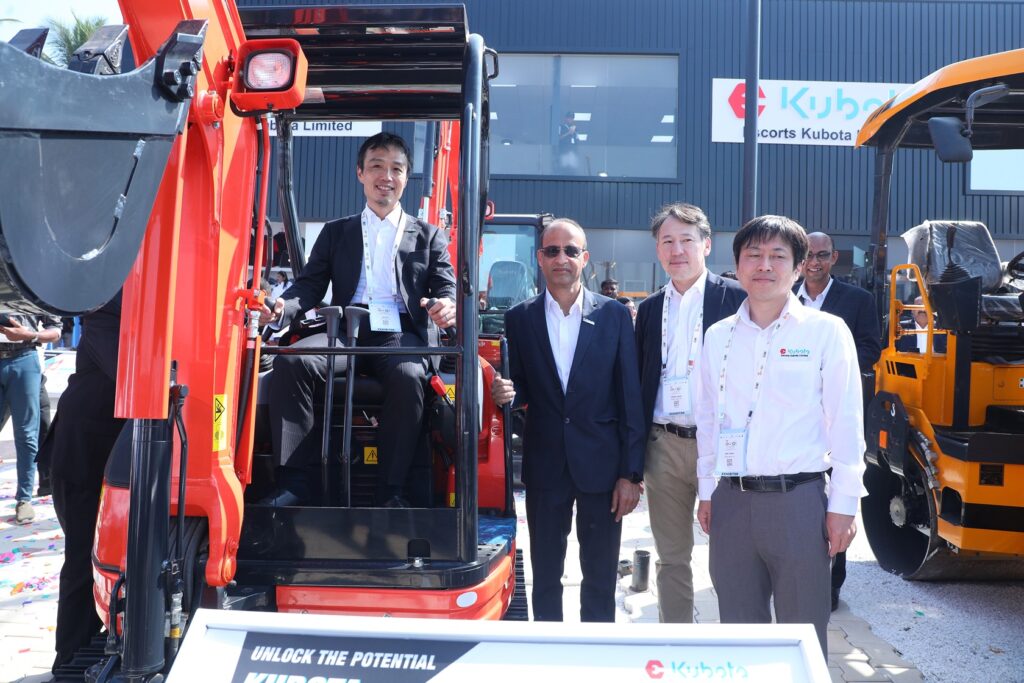
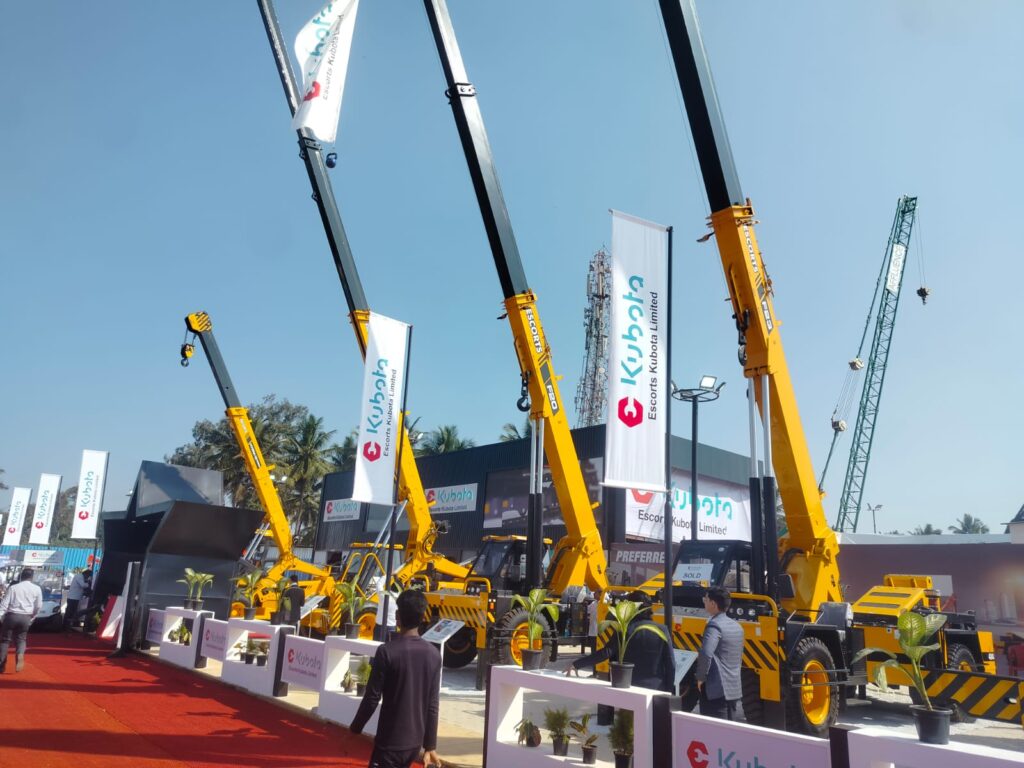
In this context, Escorts Kubota Ltd. presented its advanced construction equipment portfolio at EXCON 2025, highlighting its commitment to innovation and efficiency. The exhibition included newly launched Backhoe Loaders, Mini Excavators, and Pick & Carry Cranes, catering to diverse operational requirements across urban, industrial, and mining projects.

During the exhibition, Constro Facilitator conducted an exclusive conversation with Sanjeev Bajaj, Chief Officer – Construction Equipment Division, Escorts Kubota Ltd., where he shared insights on the newly launched machines, sectoral trends, market potential, technological adoption, and the evolving needs of India’s construction and infrastructure landscape. The discussion also covered emerging segments such as precast construction, highlighting how specialized, high-precision equipment is increasingly pivotal for efficient and safe project execution.
1. Could you provide an overview of the new range of construction equipment Escorts Kubota is launching at EXCON 2025?
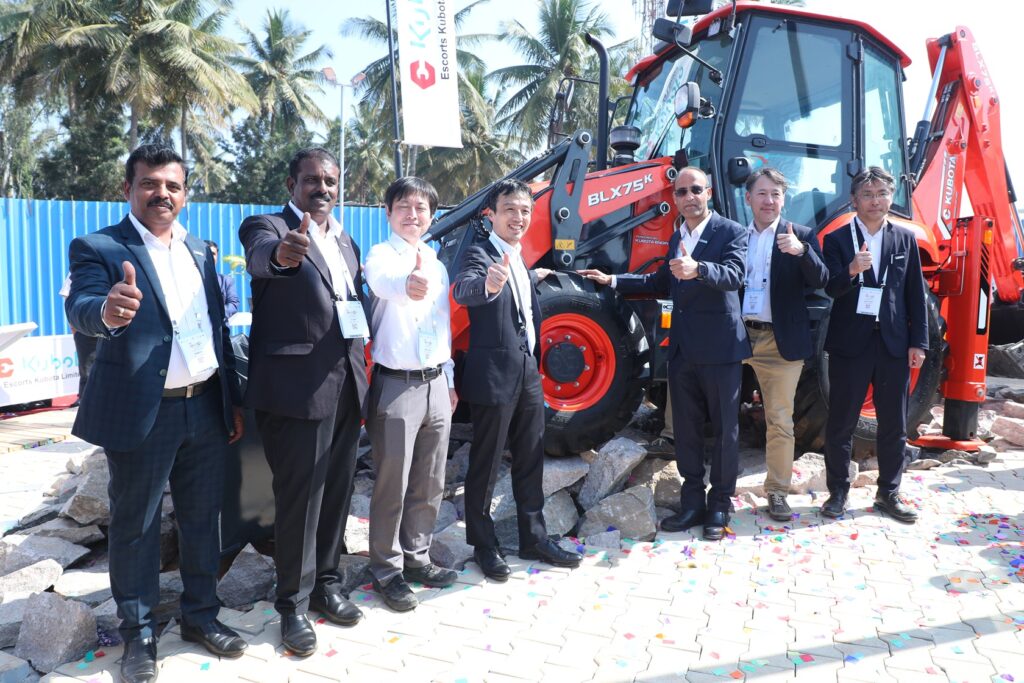
At EXCON 2025, we are introducing an advanced lineup of construction equipment, including the U22-6 Mini Excavator, BLX75K Backhoe Loader, Hydra 15 Mining variant, and the Hydra 72 concept crane. Each machine has been designed with application-specific features to meet the diverse demands of urban construction, mining, industrial logistics, and high-rise material handling. These machines combine durability, operator comfort, high precision, and fuel efficiency, while minimizing the total cost of ownership for our customers. This launch reflects our ongoing commitment to innovation and adapting global technology for Indian operational conditions.
2. Escorts Kubota has shifted from general-purpose machines to application-specific solutions. What prompted this transition?
The construction landscape in India is evolving rapidly, with projects becoming more specialized and complex. Customers are increasingly looking for machines optimized for their specific operational requirements, rather than generic solutions that may not perform efficiently in every scenario. By focusing on application-specific equipment, we can deliver higher productivity, better fuel efficiency, reduced maintenance costs, and safer operations. This approach also allows us to design machines that handle unique conditions, such as confined urban sites, underground construction, or high-impact mining environments.
3. How have BS-V emission norms influenced the design and development of these machines?
BS-V norms have played a significant role in shaping our product strategy. Compliance with these norms requires integrating cleaner, more fuel-efficient engines while maintaining high performance. Our engineering teams have worked to ensure that our machines not only meet environmental standards but also continue to deliver reliability, productivity, and durability. For instance, engines are designed to optimize power output while reducing emissions, and hydraulic systems have been upgraded for smoother operation, even under challenging working conditions.
4. How is the integration of Kubota technology shaping Escorts Kubota’s product and engineering strategy?
The integration of Kubota’s global engineering expertise has strengthened our capability to deliver technologically advanced, reliable, and efficient machines. Japanese precision engineering, when combined with our understanding of Indian job site conditions, allows us to optimize machine performance and reliability. The co-developed BLX75K Backhoe Loader, for example, benefits from superior fuel efficiency, advanced hydraulics, and ergonomic design. This collaboration ensures that our machines address local market requirements while incorporating global best practices in safety, durability, and operator comfort.
5. What measures have been taken to enhance operator safety and comfort across the new range?
Safety and comfort are at the core of our design philosophy. Our machines include ROPS/FOPS-certified cabins, ergonomic controls, air-conditioned operator cabins, reinforced booms, safety valves, and advanced hydraulic systems. For instance, the Hydra 15 Mining variant features a reinforced front bumper, lift-jack guard, and a cabin optimized for long-duty cycles in harsh mining conditions. These features not only protect operators but also reduce fatigue, allowing them to perform efficiently and safely for extended periods.
6. Could you explain the role of digital interfaces and advanced technology in these machines?
Technology plays an important role in maximizing efficiency and usability. Machines like the U22-6 Mini Excavator feature intuitive digital interfaces that allow operators to monitor machine health, performance, and maintenance requirements in real time. Advanced sensors, hydraulic controls, and automated systems reduce human error, optimize operations, and improve fuel efficiency. These technology-driven solutions help minimize unplanned downtime, ensuring productivity remains high on demanding sites.
7. How do you see the Escorts Kubota product lineup impacting the construction equipment industry in India?
Our new lineup reinforces Escorts Kubota’s position as a solutions-oriented brand focused on customer needs. By providing application-specific, environmentally compliant, and technologically advanced machines, we aim to enhance productivity, lower operating costs, and improve safety standards across the sector. These products also encourage innovation in construction practices, as operators and contractors can adopt specialized equipment tailored to precise tasks. Ultimately, our goal is to support India’s infrastructure growth while ensuring sustainability and operational excellence.
8. How is the demand from the precast construction sector influencing Escorts Kubota’s equipment strategy?
The precast construction sector in India is growing rapidly due to the need for faster, modular, and high-quality infrastructure delivery. This is driving demand for compact, versatile, and high-precision equipment such as mini excavators, loaders, and cranes designed for material handling and assembly of precast components. Escorts Kubota is responding by tailoring machines to meet the operational and spatial requirements of precast projects, ensuring efficiency, safety, and productivity. The focus is on reducing cycle times, improving maneuverability in confined sites, and enhancing operator comfort, helping builders execute large-scale precast projects effectively.
9. Could you elaborate on the demand outlook for the construction equipment sector over the next quarter and next year?
The outlook for the construction equipment sector is positive, driven by government infrastructure initiatives like the National Infrastructure Pipeline and Gati Shakti Mission, as well as private sector urban development projects. We are seeing strong demand for compact machines such as the U22-6 Mini Excavator, which is ideal for urban construction and basement excavation, and high-reach cranes like the Hydra 72 for industrial and material-handling applications. Overall, growth will be supported by the need for high-productivity, low-maintenance, and safe equipment across diverse applications.
10. What is the long-term vision for Escorts Kubota in the Indian construction equipment sector?
Our long-term vision is to continually provide advanced, reliable, and sustainable equipment that meets India’s evolving construction needs. By combining innovation, operator-centric design, and global engineering standards, we aim to empower customers with tools that enhance project efficiency and performance. We are committed to continuous R&D, adopting emerging technologies, and offering after-sales support to ensure our machines remain productive and dependable over their lifecycle.